
CBD for athlete recovery: weak claims, real product risk
CBD is exempt from WADA's cannabinoid ban, but recovery benefits remain uncertain, products may contain prohibited cannabinoids and interactions matter.
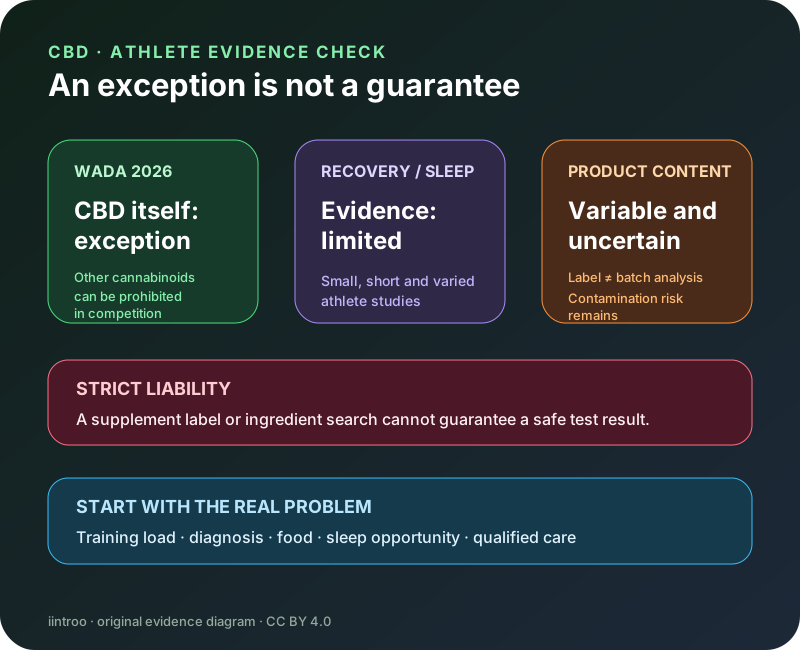
Key points
- The WADA 2026 Prohibited List exempts cannabidiol itself, while other natural and synthetic cannabinoids remain prohibited in competition.
- Small trials and a seven-study review do not establish CBD as a reliable performance, muscle-recovery, pain or sleep aid for athletes.
- Broad-spectrum or mislabeled products may expose an athlete to prohibited cannabinoids; a label or ingredient search cannot guarantee an anti-doping-safe product.
Start with the claim, not the label
CBD oils, capsules, gummies and topical products are marketed to athletes for soreness, sleep, anxiety and recovery. These are different outcomes, and evidence for one cannot be transferred automatically to another. Product route, content, timing and co-ingredients vary, while a consumer label does not establish pharmaceutical quality or clinical benefit.
A 2024 systematic review found only seven eligible exercise and recovery studies and described limited, inconsistent effects. A 2025 randomized crossover trial in 25 trained runners found that acute low or moderate CBD did not change time to exhaustion, perceived effort, pain or most measured physiological responses. Neither source supports a dependable performance or recovery promise.
Small trials cannot answer personal treatment questions
Most sports studies are short, small and focused on healthy participants. They do not establish long-term safety, treatment of a diagnosed injury, improved sleep in an athlete with insomnia or benefit after concussion. Changes in a blood marker are not the same as faster healing, safer return or better competition performance.
Pain, poor sleep and anxiety can signal conditions that deserve assessment. Using CBD to suppress symptoms may delay diagnosis or mask worsening load intolerance. A clinician and sports pharmacist should review medicines, pregnancy, liver disease, sedation risk and other health factors; this article does not prescribe a dose or replace licensed care.
Know what the anti-doping exception does not mean
The 2026 WADA List names cannabidiol as an exception within the in-competition cannabinoid class. Other natural and synthetic cannabinoids, including THC, remain prohibited in competition. That wording concerns anti-doping status; it is not an endorsement, a safety statement or proof that a commercial CBD product contains only CBD.
Global DRO warns that supplements may contain undeclared substances and that searching listed ingredients cannot prove a product is safe. Strict liability remains with the athlete. Local law, federation rules, team policies and travel restrictions can also differ from the WADA classification.
Broad-spectrum products create a specific warning
In a 2025 study, 31 participants used a broad-spectrum CBD product for 10 weeks. Prohibited cannabinoids CBG and CBDV were detectable in many urine samples, and detection increased after exercise; THC was not detected in that study. The small product-specific trial does not predict every batch, but it demonstrates why 'THC-free' or 'broad-spectrum' is not the same as anti-doping-safe.
Independent batch testing can reduce, not eliminate, risk. Record the exact product and batch, check the testing body's scope and keep documentation if qualified staff decide use is justified. A certificate from the manufacturer alone is not equivalent to independent analysis, and no retailer can waive an anti-doping violation.
Choose lower-risk ways to solve the real problem
For recovery, first review training load, food, hydration, sleep opportunity and the diagnosis. For persistent pain, anxiety or sleep disturbance, use appropriate clinical pathways. Evidence-based treatment may include rehabilitation, psychological care, sleep assessment or medication prescribed and checked for the athlete's situation rather than a multi-claim supplement.
Seek urgent help for severe allergic symptoms, collapse, breathing difficulty, marked confusion or thoughts of self-harm. Stop use and obtain advice after significant sedation, vomiting, jaundice, worsening symptoms or a suspected medicine interaction. This guide does not recommend a brand, dose or therapeutic use.