
Adrenal insufficiency in sport: build the emergency plan before the start line
Athletes with adrenal insufficiency need clinician-led steroid and emergency plans, plus travel and anti-doping checks that never delay urgent care.
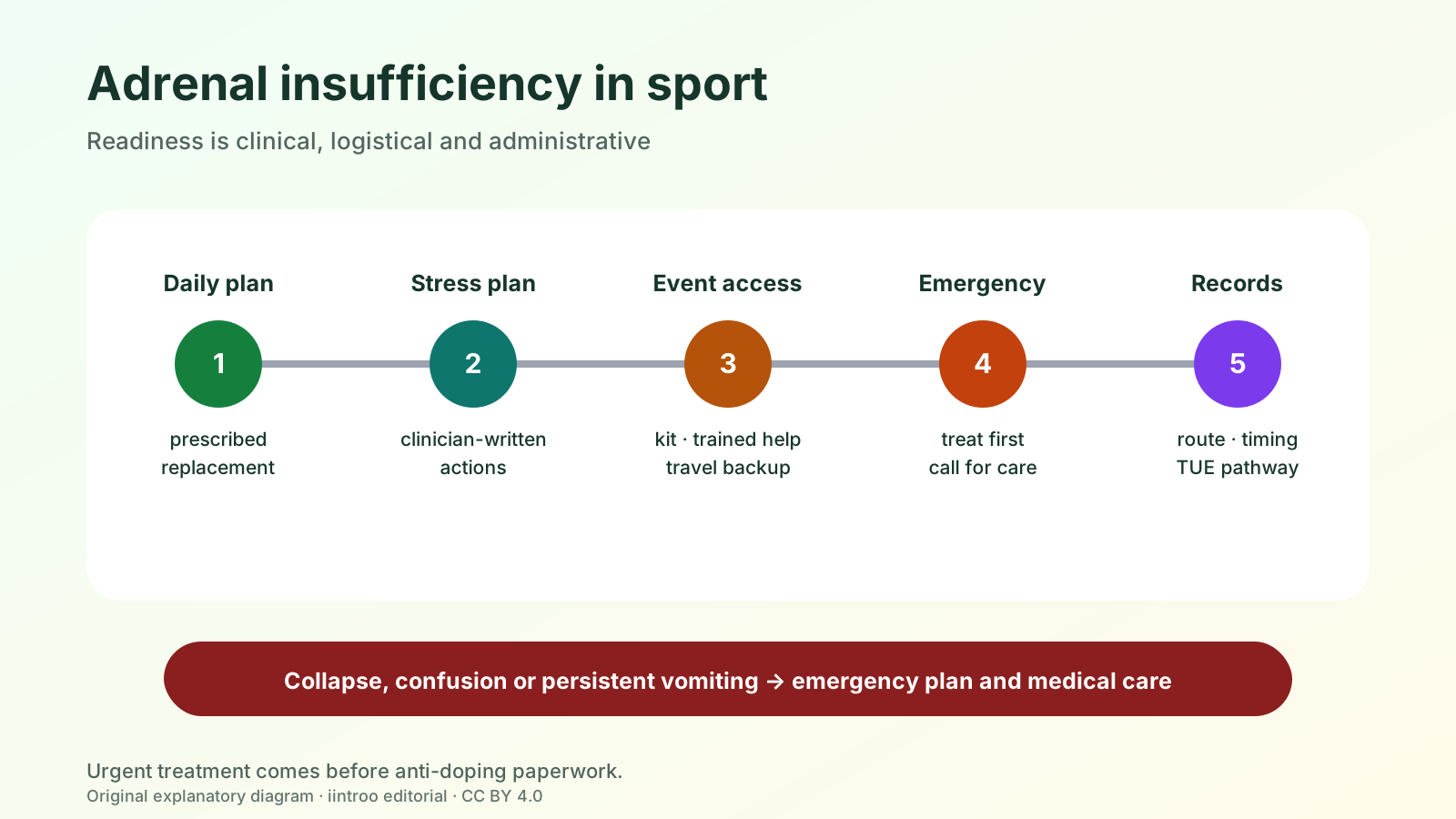
Key points
- Prescribed glucocorticoid replacement must not be stopped for sport; illness, injury and other physiological stress need a clinician-authored sick-day and emergency plan.
- Severe weakness, persistent vomiting, confusion, collapse or shock can indicate adrenal crisis and requires emergency treatment and medical services.
- Anti-doping rules depend on medication, route and timing, but lifesaving treatment comes first and documentation follows the applicable emergency process.
Separate ordinary training from physiological crisis
This guide is for athletes with primary, secondary or glucocorticoid-induced adrenal insufficiency and for the people supporting them. The condition means the body cannot produce an adequate cortisol response. Regular prescribed replacement, a written sick-day plan and access to emergency treatment are foundational; training motivation cannot compensate for missing hormone replacement. The diagnosis, cause, medication and individual response vary, so an endocrinologist or responsible clinician must author the plan.
Ordinary exercise is not automatically an adrenal crisis, and athletes should not improvise extra doses for every hard session. Evidence for routine pre-exercise supplementation is limited. In a small randomised crossover study of ten women with Addison's disease, an extra pre-exercise hydrocortisone dose did not improve short, strenuous exercise performance. That narrow result cannot settle longer events, heat, altitude, illness or individual symptoms, but it warns against turning a physiological theory into a universal performance protocol.
Write the sick-day and emergency actions before competition
Current NICE and endocrine guidance recommends education on dose adjustment during illness or other stress, emergency identification and access to injectable hydrocortisone where prescribed. The athlete's plan should state the situations that require oral dose adjustment, when oral medicine may not be absorbed, who gives the emergency injection, and when emergency services are called. Those details depend on the person's prescription and local care pathway; a coach must not invent them from an article.
Severe weakness, repeated vomiting or diarrhoea, abdominal pain, confusion, marked drowsiness, fainting, low blood pressure, collapse or shock may signal adrenal crisis. Give clinician-prescribed emergency treatment according to the written plan and activate emergency medical care. Do not wait for a lab test, try to finish the event or delay treatment for anti-doping permission. After any emergency dose, the athlete still needs urgent assessment because fluids, monitoring and treatment of the trigger may be required.
Design redundancy for training, travel and event day
Carry the prescribed daily medicine and emergency kit where they are immediately accessible, not in checked baggage or a locked vehicle. Check expiry dates, storage instructions and whether a trained companion can recognise the plan and use the device. Medical identification, a copy of the prescription, translated emergency wording and details of local care are useful for travel. Plan across time zones with the treating team rather than shifting doses by guesswork.
Heat, gastrointestinal illness, injury, altitude, disrupted meals and long transfers can change risk without having a sport-specific solution. Venue staff should know the location of the kit and the emergency route while respecting privacy. An athlete who has vomiting, fever, unusual weakness or a pattern outside the agreed plan should stop and seek clinical advice. Review arrangements after an illness, crisis, medication or device change, and practise the non-medical logistics before the season.
Handle anti-doping paperwork without compromising care
For tested athletes, glucocorticoid status under the WADA Prohibited List depends on the substance, route and in-competition timing. Systemic replacement or an emergency injection may therefore require a Therapeutic Use Exemption or retrospective application under the applicable rules. Check the current list, the athlete's testing-pool obligations and competition definition with the national anti-doping organisation or federation well before travel. Keep diagnosis, prescription, route and relevant clinical records available.
Anti-doping organisations are explicit that emergency medical treatment should not be withheld. Stabilise the athlete, document what was given and why, then follow the relevant TUE process. Never stop prescribed replacement, substitute an unapproved product or change route merely to avoid paperwork. This article does not set a dose, define stress dosing for a particular event or guarantee TUE approval; it links the clinical emergency plan with early administrative preparation so neither is discovered at the start line.