
CBD for athlete recovery: permitted does not mean proven or contamination-free
CBD is excepted from WADA's cannabinoid ban, but recovery evidence is limited and products may contain prohibited cannabinoids or interact with medicines.
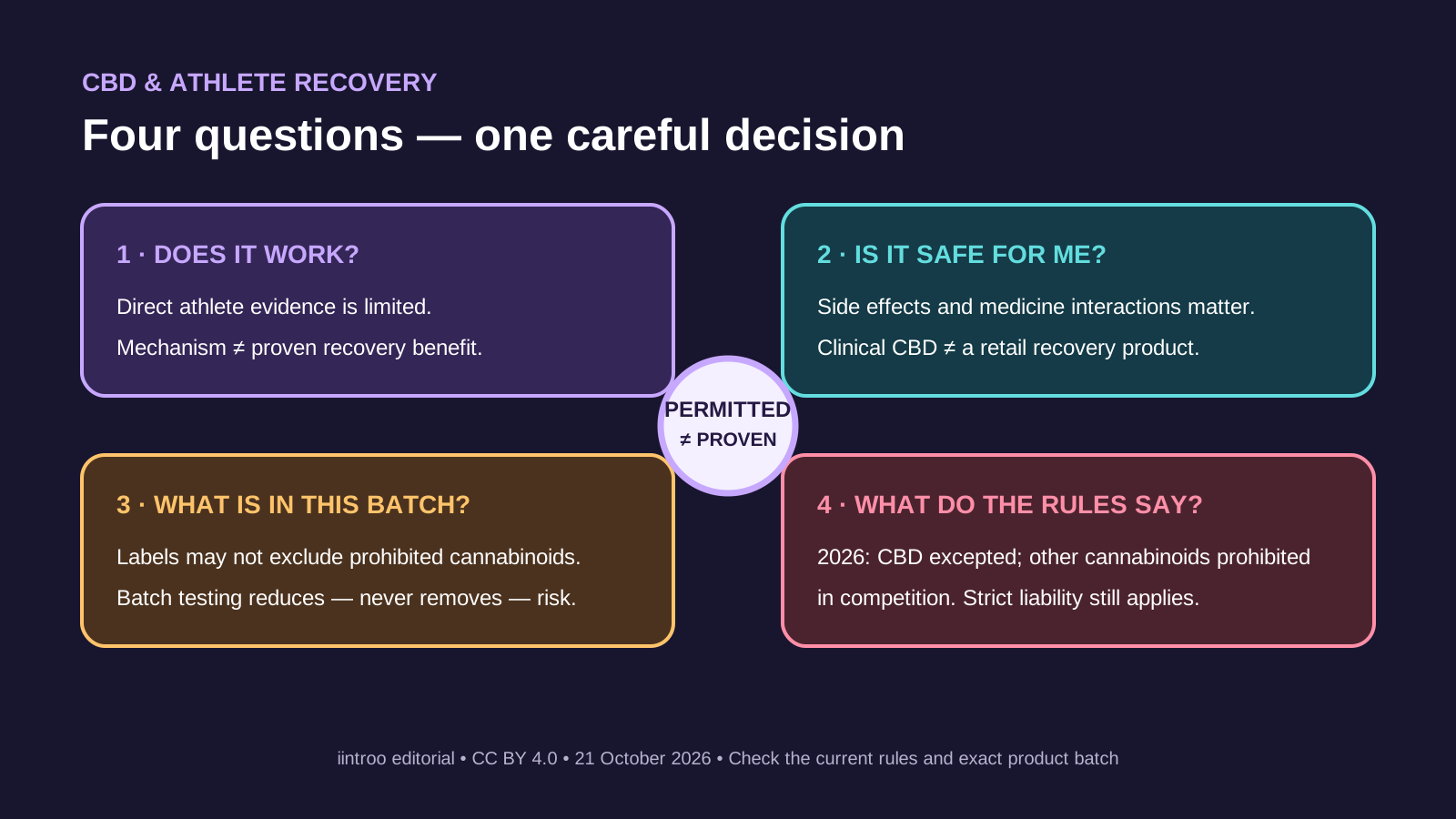
Key points
- The 2026 WADA List excepts cannabidiol, while other natural and synthetic cannabinoids remain prohibited in competition.
- Direct evidence for CBD improving athletic recovery or performance remains limited.
- A CBD label cannot guarantee absence of THC or other prohibited cannabinoids; strict liability still applies.
Separate the molecule, product and marketing claim
This guide is for athletes, coaches and clinicians considering oils, gummies, capsules, drinks or topical products sold as cannabidiol or CBD. Commercial extracts may contain many compounds, and formulations, doses and routes differ. A claim that CBD is natural, non-intoxicating or used by professional athletes is not evidence that one product is effective, legal or safe for one person.
Reviews identify plausible anti-inflammatory, pain, anxiety and sleep mechanisms, but much early evidence came from animals, laboratory work or non-athlete patients. Direct controlled athlete research remains small and outcome-specific. Perceived relaxation in a survey cannot prove that CBD caused better sleep or recovery, and short tolerability research cannot establish long-term benefit.
Read the 2026 anti-doping rule precisely
The 2026 WADA Prohibited List places natural and synthetic cannabinoids in section S8 as prohibited in competition, with cannabidiol as the exception. That narrow exception is not a certificate for every bottle marked CBD. THC, other natural cannabinoids and synthetic cannabinoids may still create an adverse analytical finding, and rules can change.
Athletes are responsible under strict liability for prohibited substances found in samples. A prescription, shop receipt, laboratory certificate or sponsor statement does not automatically remove that responsibility. Check the current WADA List, the national anti-doping organisation and Global DRO where applicable. Do not infer a safe stop date from a label or internet calculator.
Contamination is measurable, not theoretical
WADA warns that CBD oils and tinctures extracted from cannabis may contain THC or other cannabinoids. A controlled administration study of 15 commercial products found variable cannabinoid patterns in urine, especially after full-spectrum products, demonstrating a route to unintentional violations. The study was small and cannot assign the same risk to every batch, dose or route.
Broad-spectrum, THC-free and third-party tested are not absolute guarantees. Batch certification through a recognised sport-supplement programme can reduce uncertainty, but never reduce risk to zero. Testing one sample may not represent another lot, and a certificate must match the exact batch. Tested athletes should involve qualified medical and anti-doping staff before deciding.
Include health risk and medicine interactions
CBD can cause adverse effects and affect drug-metabolising enzymes. Drowsiness, gastrointestinal symptoms and interactions may matter for driving, skill training and recovery. Prescription CBD used for specific seizure disorders is not interchangeable with an over-the-counter recovery product, and topical use does not prove systemic exposure or contamination risk is absent.
Seek clinical advice before use during pregnancy or breastfeeding, with liver disease, before surgery, or alongside medicines with narrow safety margins or sedating effects. New rash, severe vomiting, marked drowsiness, jaundice, fainting or breathing difficulty needs prompt care. Do not stop prescribed treatment or substitute CBD for rehabilitation, sleep assessment or mental-health care.
Use a claim-to-evidence checklist
Define the problem first: pain, poor sleep, anxiety and slow recovery have different causes and evidence-based pathways. Ask whether a trial studied athletes like the user, the same route and dose, an objective outcome, adequate duration and an independently verified product. Check adverse events and conflicts. If unclear, the claim is not ready to drive a high-stakes sporting decision.
Non-tested athletes still face health, legal and product-quality questions because laws differ by jurisdiction. Youth athletes should not be given CBD as a casual recovery supplement. This article does not recommend a product, dose or washout period and cannot guarantee a negative test. ‘CBD is permitted’ is not the same as ‘this product is proven and risk-free.’