
Athletes with Long COVID: rebuild activity without chasing a crash
Long COVID can make symptoms worse after modest effort. Return to sport should separate post-exertional worsening from deconditioning and cardiac red flags.
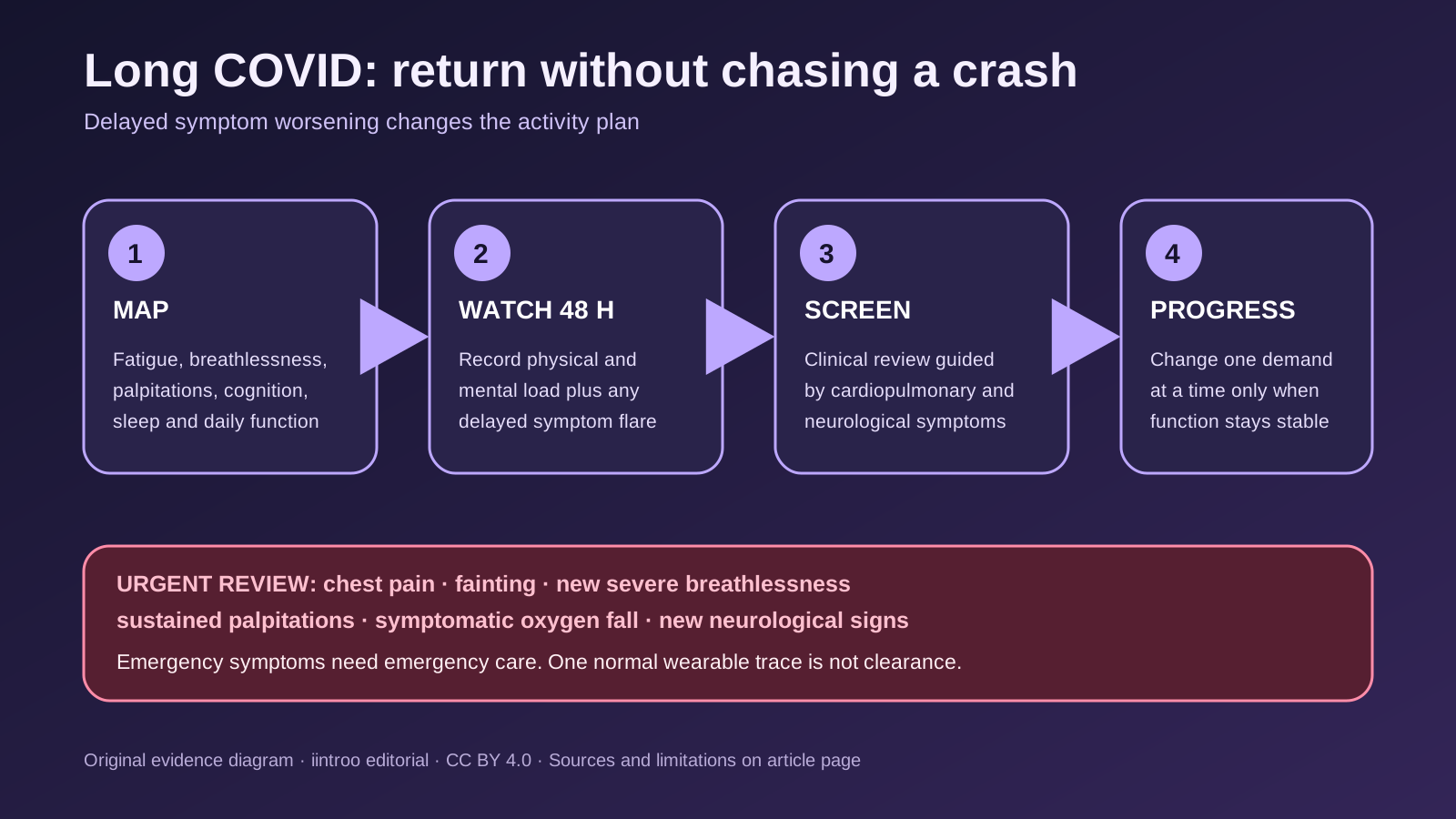
Key points
- Long COVID is not one uniform condition: fatigue, breathlessness, palpitations, cognitive symptoms, sleep disturbance and post-exertional symptom worsening can occur in different combinations.
- A delayed flare after physical or mental effort is not a signal to push harder; it should change assessment and activity planning before a conventional progression is attempted.
- Chest pain, fainting, new marked breathlessness, sustained palpitations, low oxygen readings with symptoms or new neurological signs need prompt clinical assessment.
Start with the symptom pattern, not the old training plan
This guide is for athletes whose fatigue, breathlessness, palpitations, dizziness, concentration problems, sleep disturbance or reduced exercise tolerance continue after COVID-19. Long COVID covers several patterns rather than a single sports diagnosis. The athlete who feels generally deconditioned, the athlete whose heart rate rises excessively on standing and the athlete whose symptoms intensify a day after light activity may need different evaluation and support. Previous fitness does not protect someone from a disabling course or make symptoms a motivation problem.
CDC guidance describes post-exertional malaise or post-exertional symptom exacerbation as worsening after even minor physical or mental effort, often delayed by 12 to 48 hours and lasting days or longer. That delay can mislead an athlete who completes a session but crashes the next day. Record daily function, the type and duration of activity, perceived effort and symptoms for at least the following two days. A diary can reveal a threshold; it cannot prove the cause or replace assessment for other medical conditions.
Check red flags and competing explanations before progression
Chest pain or pressure, fainting, new severe breathlessness, sustained or exercise-triggered palpitations, a clear oxygen fall with symptoms or new focal neurological signs should stop training and prompt timely medical review. Emergency symptoms require emergency care. ACC guidance supports symptom-directed cardiovascular evaluation rather than routine blanket testing for every athlete after COVID-19. Persistent exercise intolerance may also involve anemia, asthma, sleep disorder, medication effects, dysautonomia, infection, mood symptoms or another diagnosis that needs its own pathway.
Do not use one normal smartwatch trace, resting electrocardiogram or easy workout as clearance. Equally, do not assume that every elevated heart rate means heart damage. The clinician may select examination and tests according to the history, severity and cardiopulmonary symptoms. If myocarditis, pericarditis or another cardiac disorder is suspected, sport participation follows that diagnosis and specialist guidance. This article does not provide cardiac clearance or tell an athlete to ignore symptoms because initial tests were reassuring.
Exercise evidence applies to selected people, not every phenotype
Recent systematic reviews report that supervised exercise or rehabilitation can improve selected functional outcomes for some people with Long COVID. Trials differ in eligibility, symptom duration, intervention, monitoring and outcome, and people with prominent post-exertional worsening may be under-represented. Benefits in a selected study population do not justify a fixed graded-exercise schedule for everyone. The American Heart Association scientific statement likewise treats exercise intolerance as multifactorial and emphasizes evaluation and individualized responses rather than a single protocol.
When post-exertional worsening is present, first stabilize ordinary daily activity within a tolerable energy range. Break tasks into smaller units, schedule rest before rather than only after a crash, and include cognitive and emotional load in the plan. Breathing work, recumbent movement, strength, walking or sport-specific drills may each be appropriate for some athletes, but the choice depends on symptoms and professional guidance. Progress only when the current level is repeatedly tolerated without a meaningful delayed flare.
Return by function and recovery, not by a calendar promise
A return pathway can move from stable daily living to controlled low-demand activity, then increasing duration, intensity, cognitive load and sport-specific complexity. Change one main variable at a time and monitor the next 24 to 48 hours. Training partners, coaches and employers should understand that a delayed setback is real even when the athlete looked well during the session. Stop and reassess if function falls, symptoms accumulate across days or cardiopulmonary warning signs appear.
Full return requires more than completing one test: the athlete should tolerate training frequency, travel, warm-up, decision-making and recovery without repeated deterioration. Some people recover steadily, some fluctuate and some need prolonged adaptation or disability support. A relapse is information, not failure. This guide does not diagnose Long COVID, prescribe pacing targets or guarantee a return date; it offers a framework for discussing safe activity with a clinician and rehabilitation team.