
Beta-alanine for athletes: tingling is not proof of better performance
Beta-alanine can raise muscle carnosine, but tingling and laboratory endurance are not race results. Explore the evidence, safety limits and product risks.
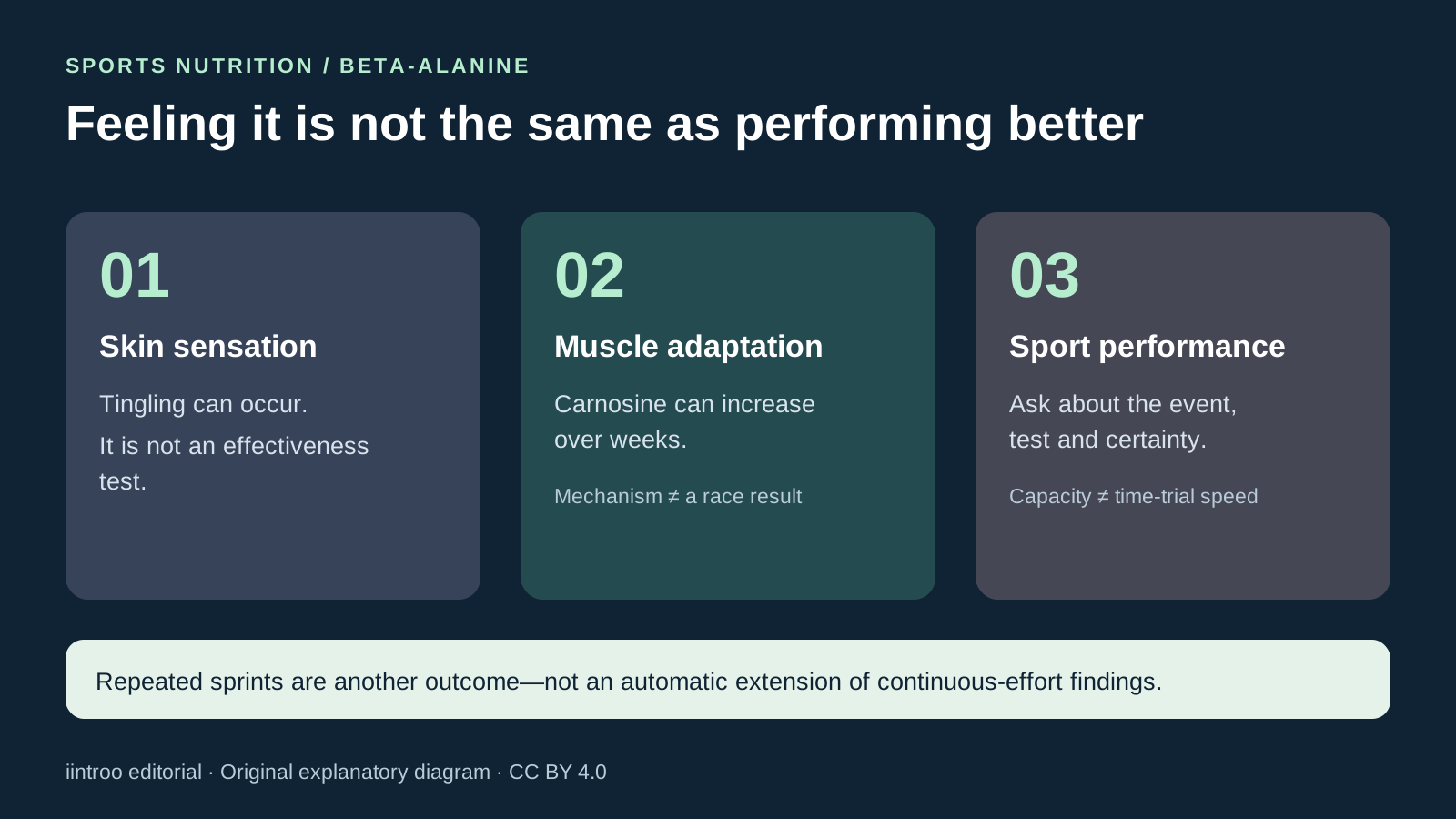
Key points
- A sensation after one serving is not evidence of the chronic muscle adaptation being targeted.
- Exercise capacity, race performance and repeated-sprint ability are different outcomes.
- Batch testing reduces contamination risk; it does not guarantee a supplement is safe or effective.
Start with the event, not the sensation
This guide is for adult athletes, including rowers and other competitors in sustained high-intensity events, evaluating beta-alanine claims. Beta-alanine helps build muscle carnosine, which contributes to buffering acidity during intense exercise. The Australian Institute of Sport includes it in its Group A framework for specific, evidence-informed uses; that classification is not a recommendation for every athlete or every commercial product.
The intended strategy involves adaptation over weeks, not a reliable instant boost from a pre-workout drink. Whether a buffering mechanism is relevant depends on the effort and the performance outcome. A sport's name alone is not enough: a continuous hard effort, one brief sprint and repeated short sprints with recovery place different demands on the athlete.
Laboratory capacity is not the same as winning a race
The 2017 meta-analysis combined 40 studies involving 1,461 participants. It found a small overall benefit, with exercise duration influencing the findings. In the half-minute to ten-minute range, the effect was clearer for exercise-capacity tests than for performance tests.
That distinction is practical. A time-to-exhaustion test asks how long someone can continue at a specified workload; a time trial asks how quickly they complete a fixed task. These are not interchangeable measures. The pooled performance estimate in that duration range was uncertain. It would be misleading to turn the review into a guaranteed percentage improvement in a rowing race, or assume that an individual will reproduce an average laboratory response.
Sources: 2
Why the tingling test fails
Paresthesia—the temporary tingling, prickling or itching that some people experience—is a recognised adverse effect, not a performance measurement. A 2019 systematic risk assessment examined 101 human and 50 animal studies. Although the human findings were broadly reassuring within studied conditions, adverse-event reporting and the available durations limit claims about unrestricted or long-term safety.
A small crossover experiment in eight competitive cyclists separated acute supplementation from what participants were told about it. The study did not establish an improvement in one-kilometre time-trial performance after acute beta-alanine, despite perceptual effects. Eight cyclists cannot settle every question, but the result illustrates why feeling a product work is not a valid substitute for measuring whether it changes the intended outcome.
What the 2026 reviews add
A June 2026 review focused on women included 12 reports representing 11 randomised trials and 312 participants. Time to exhaustion improved on average, while findings for other outcomes were less convincing. The authors rated certainty very low. This is a reason to discuss women-specific evidence and uncertainty, not to promise that all women need beta-alanine or benefit equally.
A separate March 2026 review of 17 randomised trials did not find a clear improvement in repeated-sprint outcomes. Low or very-low certainty again limits firm conclusions. Continuous high-intensity exercise evidence should therefore not be repackaged as an established benefit for repeated accelerations in every team sport. Neither a plausible mechanism nor a positive result on one test resolves another test's uncertainty.
A useful decision is broader than a dosing chart
Before considering supplementation, define the actual performance problem and review training, food intake and recovery with a qualified sports dietitian. Ask whether the research matches the event, whether the outcome matters, and how any change would be judged. This article provides no individual dosing plan, and the evidence for an isolated ingredient should not be transferred to a multi-ingredient blend.
Sport Integrity Australia warns that supplements can contain prohibited substances. Independent batch testing can reduce that risk but cannot eliminate it; athletes remain responsible for what they take. Keep the exact product and batch distinction in mind rather than relying on a brand-level claim. For young athletes, a food-first approach is particularly important. Medical conditions, medicines or concerning symptoms warrant professional advice rather than experimenting with larger servings.