
Beta-blockers in precision sport: protect treatment and check the 2026 rules
Beta-blockers may be medically necessary yet prohibited in selected sports. Check the 2026 list, secure any TUE and never change treatment alone.
Key points
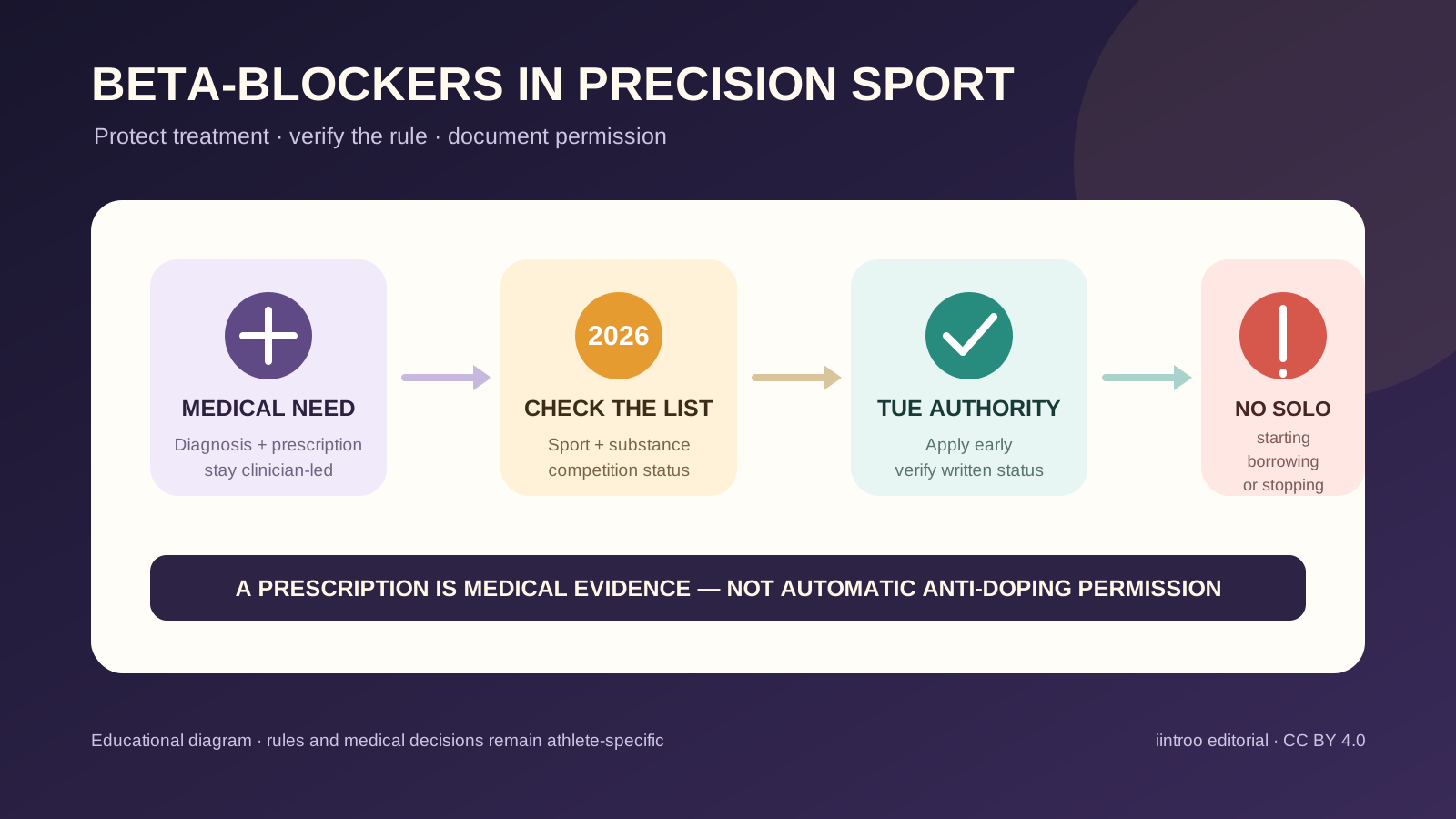
- The 2026 WADA Prohibited List names beta-blockers in selected sports and distinguishes in-competition from additional out-of-competition prohibitions.
- A prescription does not automatically create anti-doping permission; the athlete must check the applicable rule and TUE authority before competing.
- Do not start, borrow, alter or abruptly stop a beta-blocker for sport. Medical need and safe treatment remain clinician-led.
Read the rule for the exact sport and competition status
This guide is for tested athletes, clinicians, coaches and support staff in archery, shooting and other precision sports. WADA's 2026 Prohibited List places beta-blockers in class P1. They are prohibited in competition in archery, automobile, billiards, darts, golf, mini-golf, shooting and specified underwater disciplines. The asterisk in the list means archery, shooting and the named underwater disciplines also prohibit them out of competition. Rules are substance-, sport- and timing-specific, so memory from a previous season is not enough.
Check the active ingredient, not only the brand, using the athlete's anti-doping organisation or an approved medicine-checking service. Confirm which federation has authority, how it defines the competition period and whether national and international requirements differ. Supplements and borrowed medicines add contamination and documentation risk. A coach should not tell an athlete that a low dose, topical product, old prescription or ordinary pharmacy purchase is automatically permitted. Keep the dated check with the medication record.
Separate medical need from anti-doping permission
Beta-blockers are prescribed for conditions that can include rhythm disorders, angina, high blood pressure, migraine and other indications. A legitimate prescription is evidence of care, but it is not by itself a Therapeutic Use Exemption (TUE). Where a prohibited medicine is medically required, start the TUE process early with the correct authority. The application must meet the applicable standard; approval is athlete-, substance- and use-specific, and retrospective routes are limited to defined circumstances.
World Archery warns that a national TUE for a beta-blocker may require a fresh application for international competition. The treating clinician should document the diagnosis, clinical history, prior therapies and why permitted alternatives are not appropriate without changing care merely to satisfy a form. Athletes should verify written approval and conditions before use in competition. Support staff can help with deadlines and records, but neither this article nor a federation website replaces the responsible anti-doping body's decision.
Understand why precision sport treats the class differently
Beta-blockers reduce adrenergic effects such as heart rate and physiological tremor, which can matter when fine motor control and steadiness determine results. A small double-blind crossover study of 33 pistol shooters published in 1986 reported improved performance with metoprolol. A 2021 archery study found no positive performance effect from single doses of selective or non-selective beta-blockers. The different sports, drugs, doses, samples and eras mean neither trial supports a universal performance claim.
The anti-doping rule does not require an individual athlete to demonstrate a benefit before the list applies. Equally, prohibition is not a reason to stigmatise athletes who need treatment. The useful response is transparent medical care and timely rule compliance. Do not conduct informal drug trials, use someone else's tablets to reduce nerves or interpret a steadier hand as proof of safety. Competition anxiety, tremor and palpitations can have different causes and deserve proper assessment.
Protect the patient while managing training
Beta-blockers can cause fatigue, dizziness, cold extremities and a lower heart-rate response; the effect varies by medicine, dose and condition. Athletes beginning or changing prescribed treatment should discuss exercise symptoms and monitoring with the prescriber. Usual watch zones may no longer describe intensity well, so perceived effort or another clinician-agreed method may be more useful. Fainting, severe breathlessness, chest pain, confusion or a concerningly slow pulse with symptoms needs urgent assessment.
Never stop a beta-blocker suddenly to pass a test or meet an event deadline. NHS guidance notes that abrupt propranolol withdrawal can worsen the underlying problem and cause effects including an irregular heart rate, sweating and shaking. Ask the prescriber and anti-doping organisation about safe options while there is still time. This guide does not recommend a beta-blocker, substitute, taper, TUE outcome or performance strategy; it protects continued care while making the compliance steps visible.