
Cardiac amyloidosis and exercise: use rehabilitation, not an endurance template
Cardiac amyloidosis can limit filling, rhythm and blood-pressure responses. Exercise needs specialist assessment, conservative progression and symptom-led review.
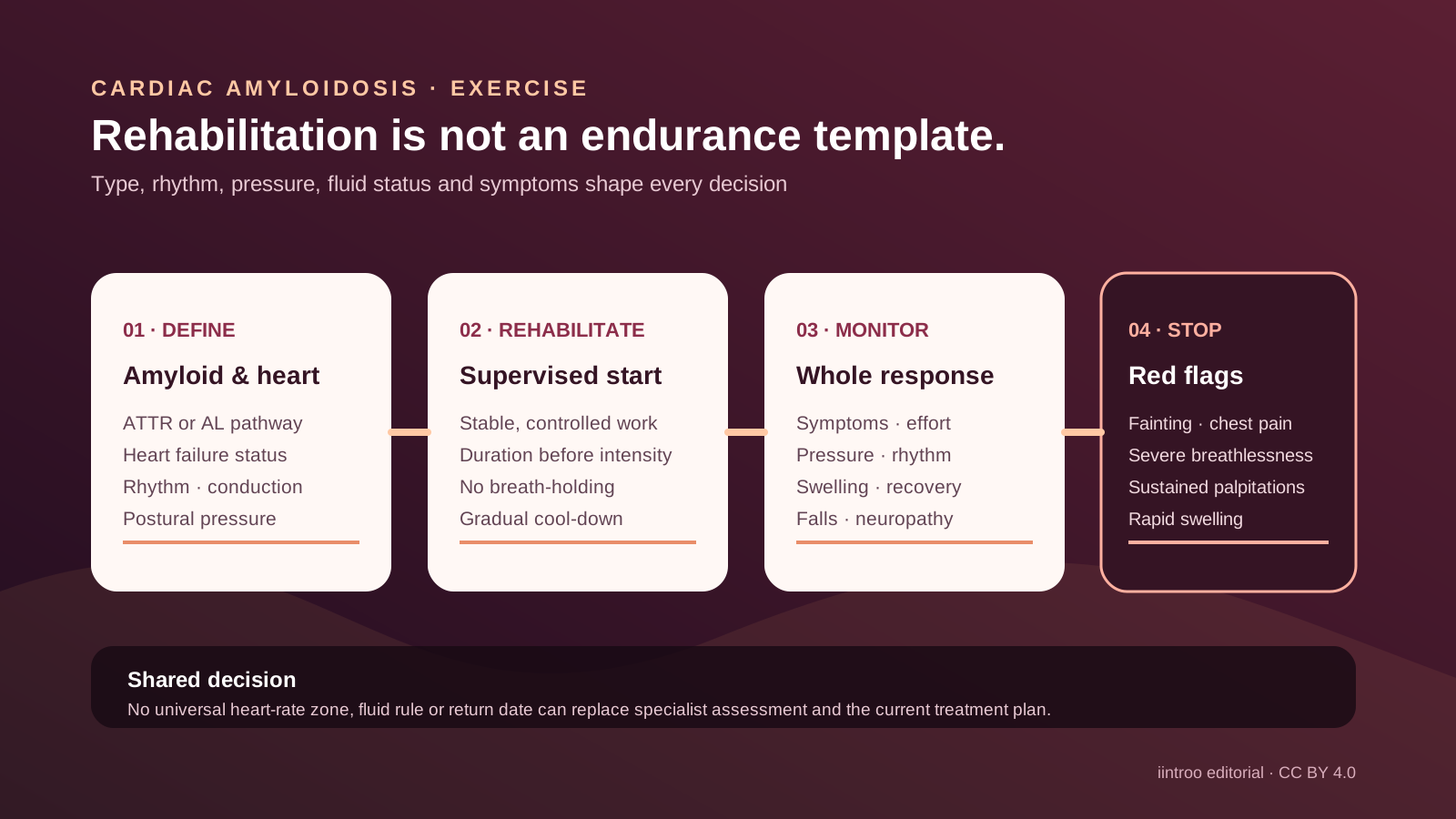
Key points
- Cardiac amyloidosis is not one disease: ATTR and AL amyloidosis have different causes, timelines and treatments, and exertional symptoms require specialist evaluation.
- Exercise evidence is emerging but sparse; one small ATTR pilot and broader heart-failure rehabilitation evidence cannot define a universal training zone.
- Fainting, chest pain, sustained palpitations, severe breathlessness, confusion or rapidly increasing swelling needs urgent assessment, not a fitness test.
Establish the amyloid type and cardiac picture first
This guide is for active adults with diagnosed or suspected cardiac amyloidosis, plus families, coaches and rehabilitation teams. Amyloid fibrils can deposit in the heart and affect filling, rhythm, conduction and blood pressure. The common cardiac forms include transthyretin amyloidosis, which may be hereditary or wild type, and immunoglobulin light-chain amyloidosis, which needs urgent haematology-led treatment. Breathlessness, fatigue, reduced pace, ankle swelling, dizziness or palpitations are not training diagnoses and do not identify the amyloid type.
The ESC diagnostic pathway combines clinical red flags with electrocardiography, imaging and laboratory testing for monoclonal proteins; selected people require scintigraphy, genetic testing or biopsy. A thick heart wall on a scan is not enough for a coach or athlete to label amyloidosis. Before exercise is progressed, the clinical team may review heart-failure status, rhythm and conduction, blood pressure including postural change, neuropathy, kidney involvement, medicines, falls and the underlying treatment plan. The same walking distance can represent very different physiological and treatment contexts.
Treat rehabilitation evidence as a starting point
The 2026 ESC cardiac rehabilitation guideline says evidence for rehabilitation in cardiomyopathies is sparse and recommends nuanced selection. Cardiac amyloidosis is particularly under-studied. A small EXCITE-ATTR-CM pilot reported the feasibility of an exercise intervention, while the ERICA publication describes the design of a controlled study rather than completed outcome evidence. A 2025 review proposes individualized aerobic and strength components, but its suggested ranges synthesize broader rehabilitation practice and limited disease-specific data; they should not be copied as an athlete prescription.
Functional measures can inform care without serving as clearance. A retrospective study of 2,141 people with ATTR cardiac amyloidosis found that shorter six-minute walk distance was associated with higher mortality, but association does not show that increasing the distance through training changes prognosis. Testing should be selected and interpreted by the clinical team. Heart-rate zones may also mislead when conduction disease, atrial fibrillation, autonomic dysfunction, a pacemaker or medicines alter the response. Symptoms, perceived exertion, blood pressure and recovery may all matter.
Control pressure, rhythm, fluid and fall risks
Begin in a supervised setting when symptoms, recent treatment, arrhythmia or blood-pressure instability make unsupervised exercise uncertain. Progress duration and movement quality before hills, intervals or resistance. Avoid breath-holding and abrupt changes of position. Orthostatic hypotension and neuropathy can increase fall risk, so stable equipment, seated options and a gradual cool-down may be useful. These are planning principles, not permission to alter salt, fluid, compression, diuretics or other treatment.
Fluid advice is unusually individual in cardiac amyloidosis. Heart failure may require congestion management, while autonomic dysfunction may contribute to low blood pressure; a generic 'drink more' message can conflict with the medical plan. Record weight, swelling, dizziness and effort only as the clinician has advised. Heat, travel, infection and long standing can amplify symptoms. Coaches should know who to contact and where the automated external defibrillator is, but a venue plan does not replace specialist risk assessment.
Stop for red flags and rebuild without a deadline
Stop exercise and seek urgent care for fainting, new chest pressure, severe or rapidly worsening breathlessness, sustained fast or irregular palpitations with symptoms, confusion, blue or grey colour, coughing blood or collapse. Rapidly increasing swelling, breathlessness at rest, new inability to lie flat, repeated near-fainting or a marked persistent decline needs prompt clinical review. Do not use a wearable's normal reading to rule out arrhythmia, heart failure or another serious cause.
After decompensation, arrhythmia treatment, a fall or a major therapy change, return should follow clinical stability, everyday function and supervised rehabilitation before sport-specific work. Some people may remain active with modification; others may need substantial restriction while treatment is adjusted. This page cannot diagnose amyloidosis, interpret scans or biomarkers, prescribe heart-rate zones, fluid, salt, compression or medicines, or clear competition. It supports shared decisions based on amyloid type, current cardiac status, the person's goals and the acknowledged gaps in exercise evidence.