
Train low, race fuelled? Carbohydrate periodization needs a purpose, not a slogan
Low-carbohydrate sessions can change metabolic signals, but performance benefits are uncertain. Match fuel availability to the session and athlete context.
Key points
- Training with lower carbohydrate availability may alter selected cellular signals, but adaptation markers are not the same as better race performance.
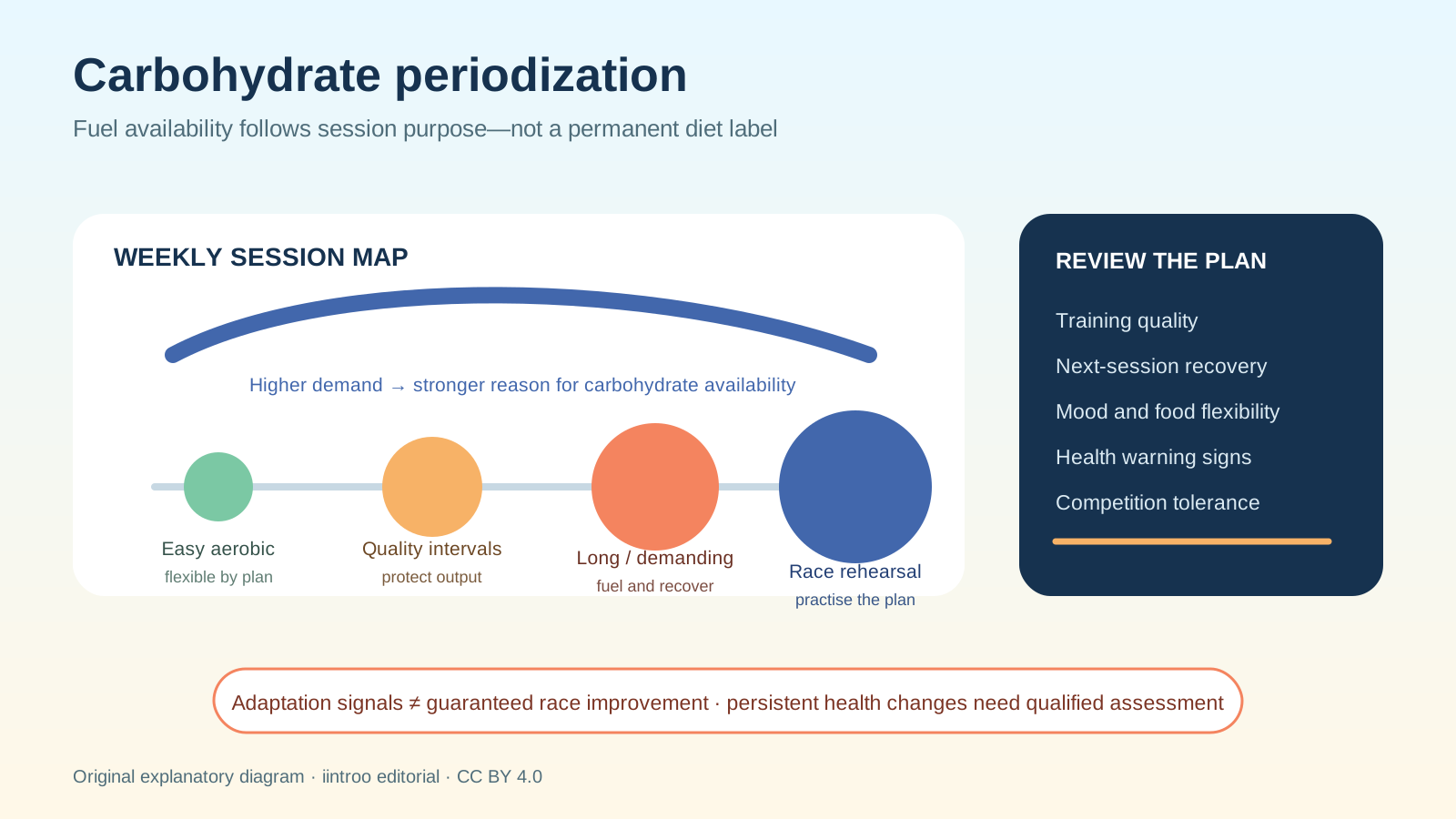
- High-intensity, long, competition-specific and closely spaced sessions generally have stronger reasons for adequate carbohydrate availability than an easy isolated session.
- Restrictive practices can overlap with low energy availability, gastrointestinal problems and disordered eating; individual planning and monitoring matter.
Define train low before judging it
This guide is for endurance athletes, coaches and sports dietitians who encounter phrases such as train low, sleep low, fasted training or low-carbohydrate high-fat. These are not one intervention. A session may begin with lower muscle glycogen, lower liver glycogen, no recent meal or chronically restricted carbohydrate, and each creates a different physiological and practical context. The key question is the purpose of the session and whether lower carbohydrate availability helps that purpose without degrading training quality, recovery or health.
Carbohydrate supports high-intensity exercise and can be increased before, during and after sessions according to demand. Laboratory studies show that lower availability can amplify some molecular signals associated with endurance adaptation. Those signals are intermediate outcomes, not medals. A 2021 systematic review and meta-analysis found weak evidence that periodized carbohydrate restriction improves endurance performance, with varied protocols and small samples. An athlete should not turn a mechanistic headline into daily under-fuelling.
Match availability to the work that matters
A practical plan begins with the weekly programme. Race-pace intervals, long demanding sessions, heat work, technical sessions performed under fatigue, competition simulations and two-a-day training usually place a premium on quality and recovery. Easier aerobic work may sometimes offer more flexibility, but low carbohydrate is not required for an easy session to count. The plan must also account for the next session, travel, sleep, access to food, gastrointestinal tolerance and the athlete's history rather than categorising an entire day as high or low.
Periodization means adjusting supply to demand, not eliminating a nutrient group. Athletes can rehearse the foods, drinks and timing intended for competition while also learning which ordinary meals support different training days. The 2025 UCI Sports Nutrition Project describes nutrition as part of training design and emphasises individual application. It does not create one carbohydrate target for every rider or discipline. Exact amounts belong with a qualified professional because body size, intensity, duration, environment and medical context change the decision.
Protect health and the quality of the programme
Low carbohydrate availability can overlap with low total energy availability, but the two are not identical. The 2023 IOC REDs consensus highlights emerging concern about low carbohydrate availability within a broader assessment of energy intake, training load and health. Persistent fatigue, recurrent injury, menstrual disturbance, reduced libido, mood change, weight loss, impaired recovery or falling performance warrants qualified assessment. A wearable, ketone reading or single glucose trace cannot diagnose glycogen status, REDs or the correct fuel prescription.
Extra caution is appropriate for adolescents, athletes with diabetes or another metabolic condition, pregnancy, a history of an eating disorder, rapid weight change or an already restrictive diet. Fasted or depleted sessions can also make concentration, pacing and safe completion harder for some people. Do not begin them before open-water, remote, traffic-exposed or technically hazardous training without an appropriate safety plan. Symptoms of severe weakness, confusion, collapse or another acute concern require immediate response, not completion for the sake of metabolic adaptation.
Audit outcomes instead of defending a label
If a professionally planned lower-availability session is used, record the reason, the intended training output, perceived effort, mood, gastrointestinal response, recovery and performance in the following sessions. Compare this with a properly fuelled alternative over enough time to see the whole programme, not one unusually good or bad workout. Stop or revise the strategy when session quality, health, food flexibility or recovery deteriorates. Race nutrition should be rehearsed while training, because an athlete cannot assume the gut will tolerate a plan never practised.
Recent reviews of low-carbohydrate and ketogenic approaches remain heterogeneous: effects depend on intervention length, comparator diet, event demands, training status and whether outcomes are laboratory markers or actual performance. Some athletes may adapt to greater fat use without becoming faster, and the ability to oxidise fat does not remove the need for carbohydrate at high intensities. This article therefore offers no gram target, fasting window or diet prescription. The defensible principle is simpler: fuel the important work, preserve health, and use any deliberate low-availability session only for a defined purpose with review.