
Altitude illness in mountaineering: the itinerary is a health control
Fitness does not protect a climber from altitude illness. Plan sleeping-height gains, recognise worsening symptoms and make descent possible before the summit schedule takes over.
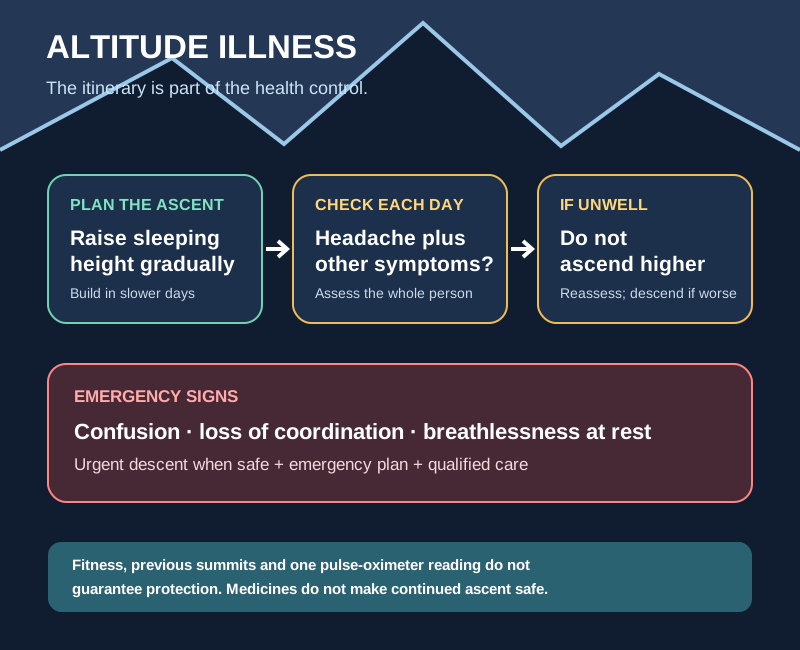
Key points
- Physical fitness does not reliably predict who will develop acute mountain sickness after rapid ascent.
- A worsening headache with nausea, dizziness or unusual fatigue after ascent means the climber should not move higher while symptoms persist.
- Confusion, loss of coordination or breathlessness at rest can signal life-threatening altitude illness and require urgent descent and emergency care.
Treat the ascent profile as part of the safety system
This guide is for trekkers, climbers, expedition leaders and support teams travelling from low altitude to mountain routes. The main modifiable risks are the height at which a person sleeps and how quickly that sleeping altitude rises. A strong aerobic background, previous summit or reassuring pulse-oximeter number cannot guarantee protection.
The CDC and Wilderness Medical Society support staged, gradual ascent. Above about 3,000 metres, a commonly used planning ceiling is roughly 500 metres of sleeping-height gain per day, with an additional acclimatisation night for each 1,000 metres gained. That is an itinerary guide, not a personal guarantee: some climbers need slower progress and route, weather and evacuation constraints still matter.
Recognise acute mountain sickness before it becomes the new normal
Acute mountain sickness is a clinical syndrome after recent ascent. Headache is typical and may occur with nausea, dizziness, fatigue, poor appetite or disturbed sleep. These symptoms overlap with dehydration, viral illness, carbon-monoxide exposure, migraine and exhaustion, so an article or single device reading cannot make the diagnosis.
Do not ascend higher while symptoms are present. Resting at the same altitude and reassessing the whole person is different from pushing toward the next camp because the timetable is fixed. A person whose symptoms worsen despite stopping needs qualified medical advice and a lower threshold for descent.
Separate warning symptoms from altitude emergencies
High-altitude cerebral oedema can present with confusion, marked drowsiness or loss of coordination. High-altitude pulmonary oedema can cause rapidly declining exercise capacity, cough and breathlessness that progresses to rest. These are emergencies, not signs to sleep off at the next camp.
Descend urgently when it is safe to move and activate the expedition emergency plan. Supplemental oxygen or a portable hyperbaric chamber can support emergency management when available and used by trained people, but they do not make continued ascent safe or replace evacuation. Follow local rescue services and qualified medical direction.
Do not turn preventive medicine into a shared expedition prescription
Acetazolamide can be useful in selected situations, particularly when gradual ascent is not feasible or a clinician judges the risk to be higher. It has contraindications and adverse effects and does not erase the need to recognise symptoms. Dexamethasone and other medicines have specific medical roles; sharing pills or copying another climber's dose is unsafe.
A pre-travel consultation should account for the route, previous altitude response, pregnancy, heart or lung disease, kidney disease, regular medication and access to rescue. The safest plan may be a slower itinerary, a lower sleeping altitude or not attempting the route at that time.
Build retreat into the route before leaving home
Record daily sleeping altitudes, identify points where descent becomes difficult, and agree who can stop the climb without selection or financial pressure. The emergency plan should cover communication, transport, weather delay and what happens if the affected climber cannot walk safely.
Children, Para athletes and people with medical conditions need individual planning rather than automatic exclusion or reassurance. A summit decision is never a substitute for clinical assessment, and this guide does not provide personal clearance or a medication plan.