
Early swimming practice: protect sleep before adding more training
A later start can create more sleep opportunity, but longer sleep does not automatically mean faster racing. What swimmers and coaches can review.
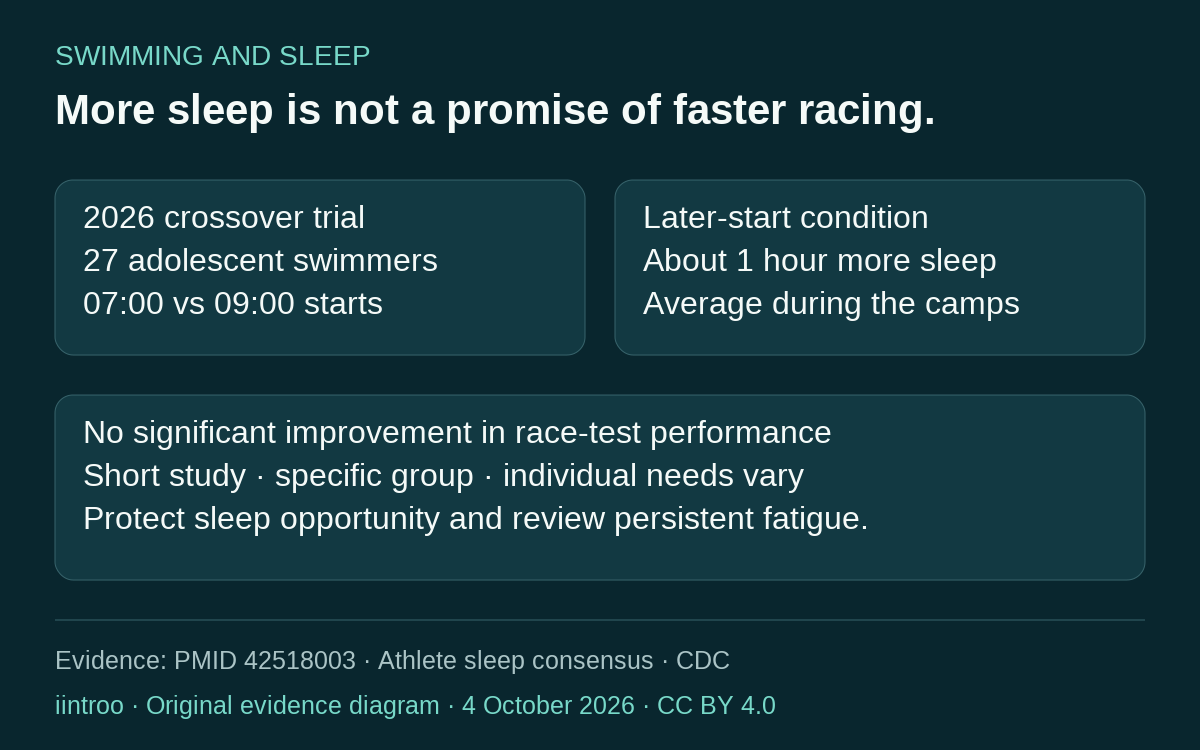
Key points
- An early wake-up can reduce the time available for sleep.
- A 27-swimmer trial found more sleep with a later start, without significant race-test improvement.
- Sleep needs and persistent difficulties deserve individual assessment.
Start with the available sleep window
A swimmer's morning alarm is partly determined by pool access, travel and the session timetable. Sleep planning therefore belongs in the training discussion, alongside the work completed in the water. Athletes differ in their sleep needs, and the 2021 expert consensus cautions against treating one duration as an ideal target for everyone.
Before changing a routine, distinguish time allocated to sleep from time actually asleep. A schedule may look manageable on paper while leaving little room for getting home, eating, winding down and travelling to the next session.
What the newer swimming trial found
A randomized crossover study published in 2026 involved 27 national-level adolescent swimmers during two eight-day camps. Morning sessions began at either 07:00 or 09:00. In the later-start condition, sleep duration was about one hour longer on average. The study did not find statistically significant differences in its recovery measures or 100 m and 800 m performance tests.
This supports an effect on sleep opportunity in that setting, not a promise of faster racing. The camps were conducted in 2023 and the trial was registered retrospectively in 2026. Its small sample, short camp periods and specific athlete group limit what can be inferred about long-term outcomes or other sports.
Sources: 1
Protect habits as well as the timetable
The CDC recommends a consistent sleep schedule, a quiet and comfortable sleeping environment, and avoiding caffeine in the afternoon or evening. It also advises switching off electronic devices before bedtime and avoiding large meals or alcohol close to sleep. These are general habits, not a substitute for changing an unrealistic schedule.
For a travelling squad, it can be useful to discuss which parts of the evening are genuinely flexible and which are fixed. Consider the effects of school, work and transport rather than assuming that every athlete can simply go to bed earlier.
Sources: 3
Use monitoring to open a conversation
A simple record of bedtimes, wake times, daytime sleepiness and training demands can help identify recurring problems. Sleep trackers should not be treated as diagnostic instruments or as a reason to become anxious about a single score. Seek professional advice for persistent sleep difficulties or ongoing tiredness despite adequate opportunity to sleep.
The expert consensus is a narrative review informed by specialist judgement, and it describes limitations in the athlete sleep literature. An individual plan should respond to the athlete's circumstances rather than copying a professional team's timetable.
Questions for swimmers, parents and coaches
Which sessions require the earliest wake-up? Can the timetable protect a realistic sleep window without moving the burden onto school or family life? Who will review persistent fatigue? Use these questions to plan a conversation, then assess any change over time. The goal is a workable recovery routine, not a guaranteed performance gain.