
Youth resistance training: supervision and progression matter more than myths
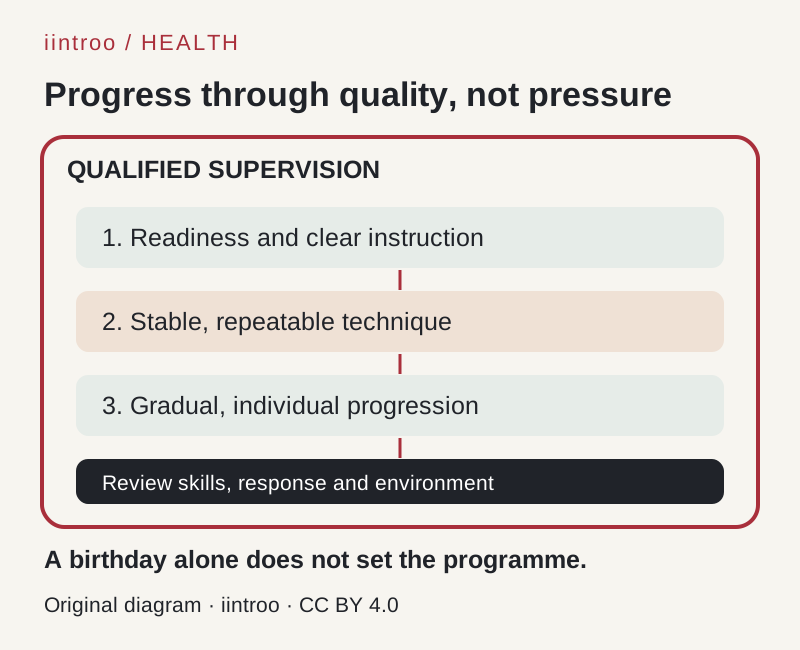
Age-appropriate strength work can support young athletes when technique, qualified supervision and gradual progression lead the programme.
Key points
- Resistance training includes bodyweight, bands and other forms of resistance, not only barbells.
- Qualified supervision and technique are central safety controls.
- Chronological age alone does not define one correct programme or starting load.
Strength training is a category, not one lift
Resistance training can include controlled bodyweight movements, bands, machines, free weights and, when appropriately taught, weightlifting movements. The aim for a young athlete is not to copy an adult competition programme. The programme should match current skill, physical development, training history and the demands of the sport.
The American Academy of Pediatrics reports that supervised, well-designed and technique-led resistance training can improve strength and physical literacy with low injury rates. Its clinical report was reaffirmed in November 2024. That does not mean every exercise or facility is suitable for every child.
Readiness is broader than a birthday
Chronological age is an incomplete guide because young people of the same age can differ in maturation, coordination, attention and experience. A useful starting question is whether the athlete can listen to instructions, control the movement and communicate pain or uncertainty.
A parent, coach and qualified professional should also consider relevant health conditions, current injury and whether the equipment fits the athlete. Medical advice may be needed before participation when a child has a condition or symptoms that affect exercise safety. This article does not set a universal minimum age or clearance rule.
Technique before load
Initial sessions should teach stable movement and safe equipment handling. Progress is earned through consistent technique and tolerance, not pressure to match teammates or social-media demonstrations. The AAP and ACSM both place qualified instruction, sensible progression and an age-appropriate environment at the centre of safe practice.
Training records can note the movement, perceived difficulty and any pain without turning a child's programme into a test of maximum effort. Coaches should stop a set when technique changes materially or the athlete reports concerning symptoms, then review the plan rather than simply adding motivation.
Supervision changes implementation
A 2023 meta-analysis of 44 sport injury-prevention studies found supervised exercise programmes were effective overall, whereas the pooled estimate for unsupervised programmes was not. Those studies were not limited to resistance training or children, so the result should not be treated as a precise injury reduction for a youth weight room.
It does reinforce an important practical point: a written programme is not the same as coached delivery. Supervision includes observing technique, managing the environment, adjusting progression and responding when the athlete cannot complete the task as intended.
Sources: 4
Build a safeguarding culture
Young athletes should be able to ask questions and decline a load they do not understand. Avoid punishment exercise, humiliating comparisons and incentives that reward unsafe attempts. Agree who supervises, how equipment access is controlled and how pain or injury is reported.
Persistent pain, loss of function, dizziness, chest symptoms or an acute injury requires appropriate professional assessment. Strength training can be valuable, but it is not a treatment prescription and should not displace sleep, nutrition, sport skills or enjoyment.