
Achalasia in sport: protect swallowing before optimizing fuel
Achalasia can disrupt swallowing, sleep and nutrition. Training plans should protect against regurgitation and aspiration while specialist care treats the cause.
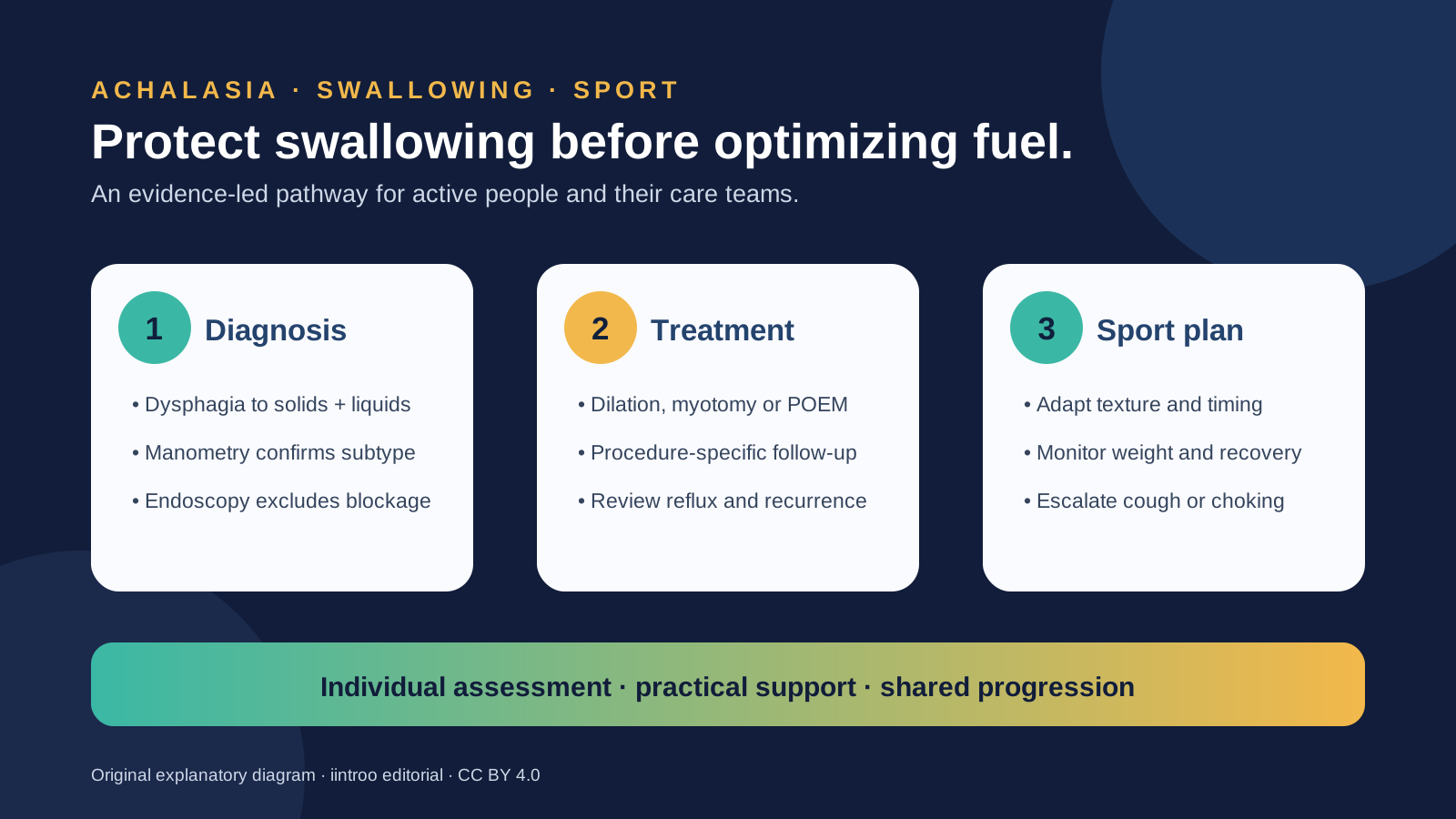
Key points
- Difficulty swallowing both solids and liquids, regurgitation, chest pain or unintentional weight loss needs clinical assessment; a sports diet cannot diagnose or treat achalasia.
- High-resolution manometry is the preferred diagnostic test, with endoscopy and timed barium studies used to exclude other disease and assess emptying.
- Food texture and timing can reduce practical difficulty, but persistent symptoms, coughing or choking, dehydration and weight loss require specialist and dietetic review.
Treat dysphagia as a medical problem, not a fuelling failure
This guide is for active people with suspected or diagnosed achalasia and the teams supporting them. Achalasia is an oesophageal motility disorder: the lower oesophageal sphincter does not relax normally and the oesophageal body loses effective peristalsis. People may have difficulty with solids and liquids, regurgitation of undigested food, chest pain, coughing, disturbed sleep or weight loss. Those symptoms can undermine training, but they are not proof of poor meal planning, anxiety or inadequate chewing. New or progressive swallowing difficulty needs medical assessment, especially when food sticks, weight falls or respiratory symptoms appear.
Current American and European guidelines recommend high-resolution manometry to confirm the diagnosis. Endoscopy is needed to exclude structural disease or malignancy, and a timed barium oesophagram can quantify emptying. Symptoms alone cannot identify the manometric subtype or distinguish achalasia from pseudo-achalasia and other causes of dysphagia. A coach, dietitian or athlete should not attempt to diagnose the disorder through an elimination diet or a hard training session. Severe chest pain, inability to swallow saliva, repeated choking, breathing difficulty, fainting or signs of severe dehydration require urgent medical assessment.
Use texture and timing as support while treatment addresses obstruction
The American Gastroenterological Association's 2026 patient guidance suggests smaller meals, slow eating, thorough chewing, moist or soft textures and sips of fluid as practical ways to make swallowing easier. These ideas can be useful around training, but no universal food list fits every person. Some tolerate blended foods; others manage a wider texture range after treatment. Very cold drinks may trigger discomfort for some people, while reflux and regurgitation can worsen when lying down soon after eating. A gastroenterology dietitian can help preserve energy, protein and micronutrient intake without multiplying avoidances unnecessarily.
Achalasia treatment aims to reduce outflow resistance through pneumatic dilation, laparoscopic Heller myotomy, peroral endoscopic myotomy or, in selected circumstances, botulinum toxin. The 2024 SAGES update supports POEM as one evidence-based option but emphasizes shared decisions and reflux management. Food modifications do not replace these therapies, and pushing more calories into an oesophagus that is not emptying can worsen symptoms. Before a procedure, athletes need the treating centre's fasting and medication instructions; afterwards, texture progression, wound or perforation precautions and reflux care must follow the procedural team's written plan rather than a copied return schedule.
Monitor nutrition without reducing recovery to body weight
A 2025 prospective study of 118 people with achalasia found moderate or severe malnutrition in a substantial minority and lower measures including pre-albumin, vitamin D, iron, skinfold thickness and grip strength than controls. Nutrition improved after POEM, but the study came from one specialist centre and does not prescribe sport targets. A multicentre cohort of 3,410 patients found both underweight and overweight before treatment and variable weight change afterwards. Body mass therefore cannot reveal whether symptoms, swallowing, muscle recovery or micronutrient intake are adequate.
For an athlete, review should include recent weight trajectory, intake, hydration, swallowing effort, cough or regurgitation, sleep, training response and relevant laboratory assessment rather than one scale number. Frequent high-sugar liquid feeds can increase dental and reflux concerns, while an overly narrow soft-food diet may lose fibre and variety. A dietitian can adapt ordinary meals, portable training fuel and recovery options to the person's current swallowing ability and treatment phase. Supplements are not a substitute for evaluation, and iron or other nutrients should not be added merely because performance has fallen.
Return by function, respiratory safety and treatment response
There is no validated achalasia return-to-sport protocol. Planning should distinguish stable conditioning from sessions where regurgitation, bending, inversion, jarring, remote access or water exposure could have greater consequences. A 2026 single-centre study linked aspiration pneumonia with reduced oesophageal sensitivity, meaning symptom intensity may not reliably describe respiratory risk. Persistent night cough, recurrent chest infection, choking, fever, breathlessness or a change in regurgitation deserves clinical review rather than a test workout. Athletes should not train soon after a meal if that repeatedly triggers regurgitation, but the exact interval belongs to an individual plan.
After treatment, progress from daily activity to controlled aerobic and strength work, then restore sport-specific intensity while checking swallowing, reflux, hydration, sleep and recovery. Persistent or recurrent dysphagia should prompt objective reassessment because treatment can fail or symptoms can have another cause. This page cannot select a procedure, prescribe a diet, interpret manometry, set a fasting period or clear an athlete after intervention. The useful sequence is diagnosis, treatment and nutrition protection first, followed by a gradual return that reflects the athlete's actual symptoms, procedure and sport environment.