
Acute hepatic porphyria in sport: avoid trigger myths and plan food, medicines and attacks
Acute hepatic porphyria needs a verified medicine and attack plan. Exercise is not a proven trigger, but fasting, illness and unsafe drugs can change risk.
Key points
- Acute hepatic porphyrias are rare inherited disorders; many carriers never have an attack, and symptoms require appropriate biochemical testing rather than colour or pain alone.
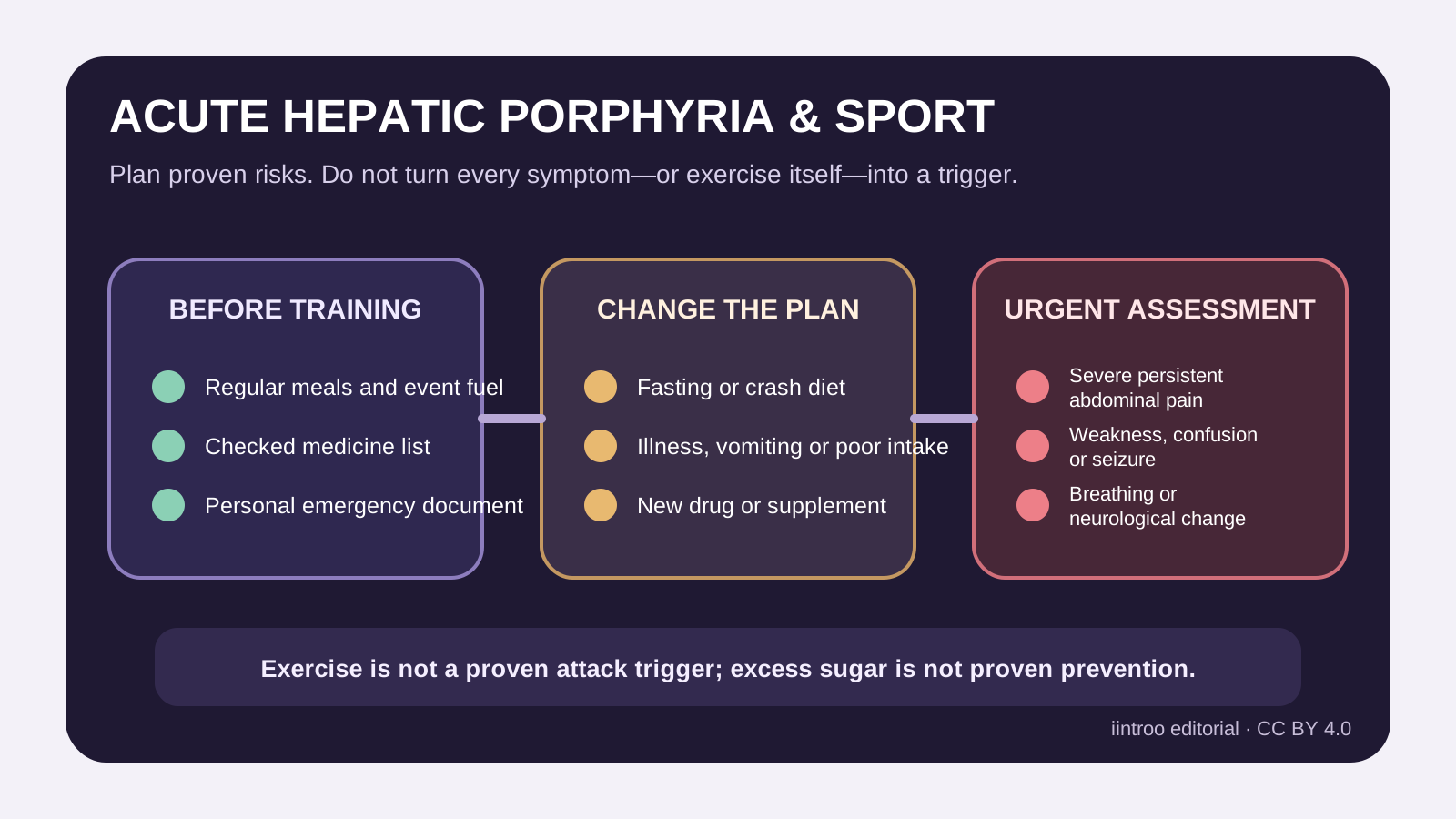
- Exercise has not been established as a direct attack trigger, but prolonged fasting, crash dieting, illness, alcohol and some medicines can increase risk in susceptible people.
- Severe abdominal pain with vomiting, weakness, confusion, seizures or other neurological change needs urgent assessment and the person's specialist emergency plan.
Separate inherited risk from an active attack
This guide is for athletes with specialist-confirmed acute intermittent porphyria, variegate porphyria, hereditary coproporphyria or the very rare ALA dehydratase-deficiency porphyria, plus their support teams. These acute hepatic porphyrias affect haem synthesis and can cause neurovisceral attacks, yet many people with a pathogenic variant never become symptomatic. Abdominal pain, nausea, anxiety, fatigue, dark urine or a difficult training day are not specific enough to diagnose an attack.
The 2026 International Porphyria Network guideline uses clinical assessment and appropriate biochemical testing, particularly urine porphobilinogen and ALA during suspected attacks, before longer-term classification and family work. Other abdominal, neurological, metabolic and medication-related emergencies still need consideration. A coach should know the athlete's agreed warning signs and emergency document, but should not decide that ordinary soreness is porphyria or dismiss severe symptoms because a previous episode was different.
Do not confuse endurance fuelling with attack treatment
Fasting, severe calorie restriction and rapid weight-loss strategies can increase attack risk in susceptible people. Plan regular meals and enough event fuel for the person, journey and recovery; avoid starting a crash diet, prolonged fast or aggressive 'train-low' block without specialist and dietetic input. Illness with vomiting or poor intake changes the situation and should activate the person's sick-day advice. Normal sports nutrition is not treatment for a suspected acute attack.
A review of acute hepatic porphyria notes that exercise itself has not been implicated as an attack trigger and that excess carbohydrate has not been shown to prevent attacks. Loading extra sugar indefinitely can add harm without protection. In hospital, carbohydrate may have a limited role for mild or early attacks or while haem treatment is arranged, but severe attacks need specialist care and can include dangerous hyponatraemia. Athletes and coaches should never improvise an intravenous glucose plan, salt loading or fluid challenge at training.
Check every medicine in the right context
Some prescription, over-the-counter, herbal and supplement ingredients can provoke acute attacks, while many medicines are acceptable. Use a current porphyria medicine database and the prescribing clinician or pharmacist who knows the diagnosis. A database category is decision support, not permission to self-prescribe, stop essential treatment or share medicine. In an emergency, necessary treatment should not be delayed while a coach searches a phone; clinicians can balance urgency, alternatives and porphyria risk.
Before travel or competition, carry the diagnosis and specialist contact, the personal emergency plan, an updated medicine list and enough prescribed treatment where applicable. Check cold-chain or transport requirements with the clinical team. Review anti-doping status separately because porphyria safety and competition rules answer different questions. Avoid unreviewed 'detox', weight-loss, hormone and pre-workout products: undeclared or multiple ingredients make both medical and anti-doping assessment harder.
Recognise an attack and return after recovery
Severe or persistent abdominal pain with vomiting, constipation, marked weakness, confusion, agitation, seizures, fainting, breathing difficulty, very fast heart rate or new neurological symptoms needs urgent medical assessment and the person's emergency pathway. Dark or reddish urine may occur but is neither required nor diagnostic. Do not leave the athlete alone, force food or fluid when they cannot safely take it, or assume anxiety explains a changing neurological picture.
Return after an attack should wait for clinical recovery, stable intake and fluids, restored everyday function and review of the precipitating factors and medicines. Rebuild from light activity to controlled conditioning and sport-specific work while watching strength, coordination, symptoms and recovery. This page cannot diagnose an attack, prescribe carbohydrate, fluid, haem or givosiran, classify a drug, design weight loss or clear competition. It supports a specialist-led plan that keeps exercise in perspective and gives proven triggers and emergencies more attention than myths.