
Alcohol after sport: recovery claims meet a wider health reality
Alcohol is not a recovery tool. Athlete studies are small and mixed, while sleep, judgement, mental health, safety and long-term risk widen the decision.
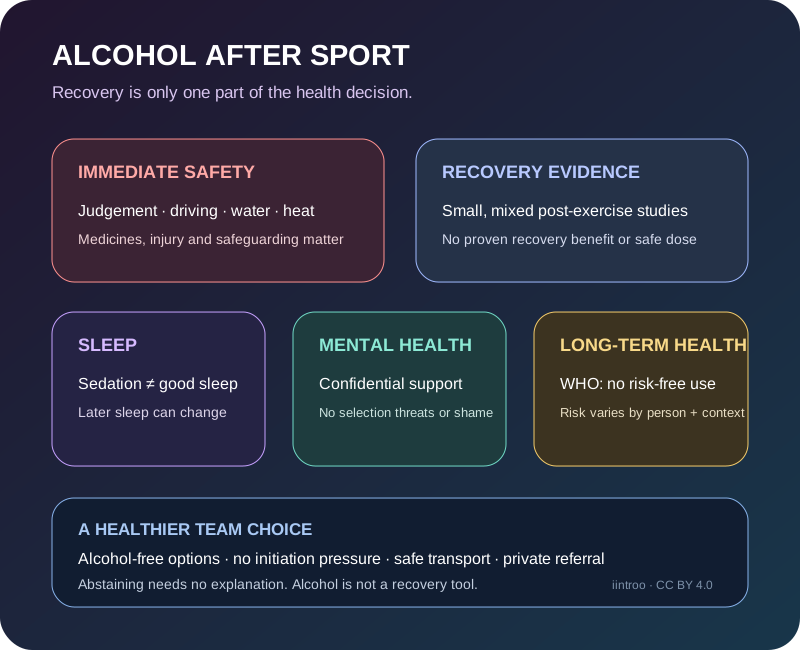
Key points
- Alcohol is not required for recovery and WHO states that no form of alcohol consumption is risk-free for health.
- Small post-exercise studies show some biological changes, including lower muscle-protein synthesis, but mixed performance findings do not establish a safe recovery dose.
- Sleep, judgement, injury, medicines, mental health, driving and safeguarding may matter more than a single laboratory recovery marker.
Recovery is not the only question
This guide is for adult athletes, coaches, families and event organisers. A post-match drink is sometimes framed only as a recovery trade-off, but alcohol also affects judgement, reaction, coordination, relationships, mental health and longer-term disease risk. WHO states that no form of alcohol consumption is risk-free; risk varies with amount, frequency, health, age, sex and context.
That public-health statement is different from claiming that every exposure produces the same harm. It does mean a small sports study cannot define a universally safe or beneficial dose. Alcohol is not a carbohydrate, electrolyte, sleep aid or psychological treatment, and abstaining is a normal performance and health choice.
The recovery evidence is narrow and mixed
A systematic review of 12 post-resistance-exercise studies found no consistent change in several markers or short-term performance outcomes, while cortisol appeared higher and testosterone, amino acids and muscle-protein synthesis lower. Studies used different doses, participants and outcomes, and many were small; absence of a detected effect is not proof of no effect.
Older athlete reviews also emphasise that timing, dose, injury status and the recovery window change the response. Avoid converting a body-mass dose from a paper into a drinking recommendation. The evidence does not establish alcohol as a recovery strategy or a threshold that is safe for every athlete.
Sleep can worsen even when alcohol feels sedating
Alcohol may make sleep onset feel easier, but a systematic review and meta-analysis found changes to later sleep architecture. Competition timing, travel, caffeine, pain and emotional arousal already challenge athlete sleep, so adding alcohol can further complicate the night even if the athlete falls asleep quickly.
Do not use alcohol to manage insomnia, anxiety, pain or post-competition distress. Repeated reliance, rising tolerance, secrecy or difficulty stopping deserves confidential clinical support. A wearable sleep score cannot diagnose alcohol-related sleep disturbance or dependence.
Protect immediate safety before analysing recovery
Do not combine drinking with driving, swimming, cycling in traffic, heat exposure, risky celebrations or medicines and supplements without professional advice. A person who is difficult to wake, breathing slowly or irregularly, vomiting repeatedly, having a seizure, injured, confused or blue or pale needs emergency help; do not leave them alone or assume they can sleep it off.
Young athletes require safeguarding and local-law compliance. Teams should never use alcohol-centred rituals, fines or initiation practices to test belonging. Injury medication, concussion symptoms, dehydration, diabetes, pregnancy and mental-health treatment can materially change risk and require individual advice.
Build an inclusive team environment
The IOC mental-health consensus places substance misuse within athlete health rather than moral failure. Teams need a confidential referral route that is not controlled only by selection staff, plus a clear emergency pathway. Support may involve medical, psychological and social care; this article does not diagnose a disorder or prescribe withdrawal management.
WHO Europe's 2026 guide shows how alcohol-free professional gatherings can be healthier and more inclusive. Sport organisations can provide appealing alcohol-free options, avoid alcohol sponsorship cues in team care, finish official duties before social events and ensure safe transport without pressuring anyone to explain why they are not drinking.