
Athlete sleep trackers: use patterns for questions, not scores for diagnosis
Consumer wearables can help reveal routines across nights, but sleep stages, recovery labels and readiness scores are estimates—not diagnoses or automatic training decisions.
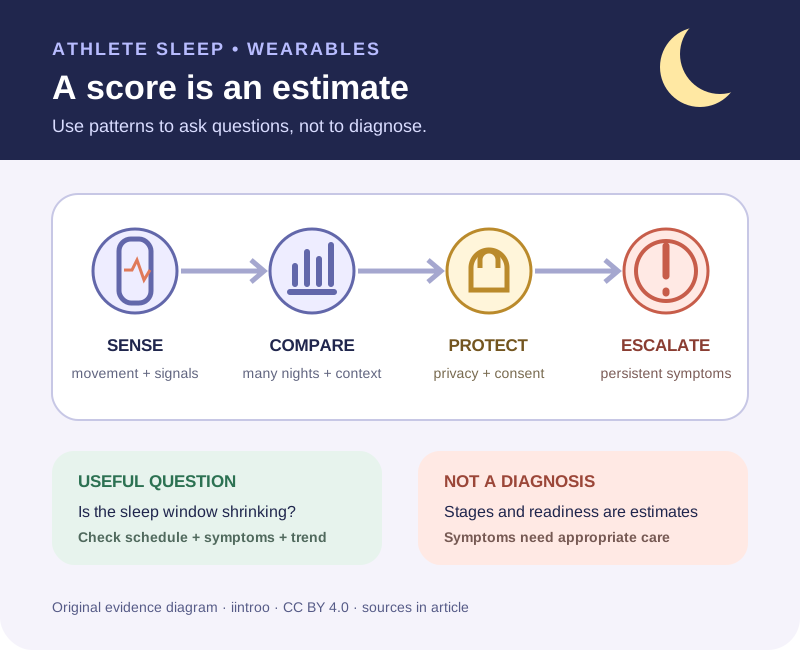
Key points
- Consumer sleep devices estimate sleep from proprietary sensor data and algorithms; their outputs are not interchangeable with polysomnography.
- A 2025 meta-analysis found statistically significant average differences from polysomnography across several key sleep measures, with performance varying by device and metric.
- A trend can open a useful athlete–clinician conversation, but persistent symptoms and suspected sleep disorders need appropriate assessment rather than a better app score.
Know what the device is estimating
This guide is for athletes, coaches, parents, clinicians and performance staff using a watch, ring, band, mattress sensor or phone app. Consumer devices infer sleep from combinations of movement, heart rate, optical signals, temperature or sound and then apply proprietary algorithms. Polysomnography records brain, eye, muscle, breathing and other physiological signals and remains the clinical reference method; the two are not equivalent tests.
The American Academy of Sleep Medicine states that consumer sleep technology should not be used to diagnose or treat sleep disorders. The athlete sleep consensus notes that wearables may improve awareness and permit longer monitoring in normal settings, while also carrying limitations in sleep–wake and stage classification. A polished dashboard does not remove measurement error.
Read validation as device- and metric-specific
A 2025 meta-analysis pooled 24 studies and 798 participants across numerous wrist-worn products. On average, consumer devices differed significantly from polysomnography for total sleep time, sleep efficiency, sleep latency and wake after sleep onset. Subgroup results varied, which means an acceptable estimate for one metric or model cannot validate every score, sleep stage or software update.
A 2026 meta-analysis evaluated healthy adults, while the Sleep Research Society review stresses real-world implementation and population-specific validation. Algorithms, firmware and commercial products change faster than many studies can be completed. Check which version, setting and participant group was tested before transferring a result to adolescents, Para athletes, shift workers, travellers or people with a suspected sleep disorder.
Use multi-night patterns to ask better questions
A wearable may help an athlete notice a compressed sleep window after late training, travel or early practice when the same device is used consistently. Compare several nights with the schedule, subjective sleep quality, daytime alertness, caffeine, illness and training demands. Treat sudden algorithmic changes cautiously and avoid rewriting a programme because one recovery colour turned red.
The 2026 athlete-focused review found potential for longitudinal insight and self-management, alongside risks of misinterpretation and inappropriate recovery decisions. A simple sleep diary can sometimes answer the practical question with less noise. Monitoring should have a purpose, a review point and a plan for what happens if the data and the athlete's experience disagree.
Protect privacy and avoid sleep-score punishment
Sleep data can reveal routines, location patterns, health concerns and behaviour outside training. Teams should explain what is collected, who can see it, how long it is retained and whether participation is genuinely voluntary. A coach should not diagnose, shame, select or punish an athlete from a consumer score, and athletes should have a route to correct context that the device cannot see.
Frequent checking can increase worry or rigid attempts to perfect sleep. If tracking itself creates anxiety, compulsive checking or worse sleep, pause and discuss a simpler approach with an appropriate professional. More data are not automatically better recovery, and a high score does not excuse unsafe sleepiness during driving, training or another safety-critical task.
Escalate symptoms, not just unusual numbers
Persistent difficulty falling or staying asleep, severe daytime sleepiness, loud snoring, witnessed breathing pauses, unusual night-time behaviours, declining mood or repeated inability to stay awake deserves professional assessment. Sudden sleepiness while driving or operating equipment requires an immediate safe stop. Do not wait for the wearable to confirm a disorder or use an app result to start medication or an unprescribed supplement.
Bring a concise record of symptoms, schedule, medication, caffeine, travel and relevant device trends to the appointment if useful. A clinician can decide whether history, examination, a validated questionnaire or formal testing is appropriate. This article does not validate a brand, interpret an individual score or prescribe a sleep treatment.