
American football preseason heat: build acclimatization before adding full equipment
A gradual heat-acclimatization period, WBGT-based practice changes and a rehearsed cool-first emergency plan can reduce preventable preseason risk.
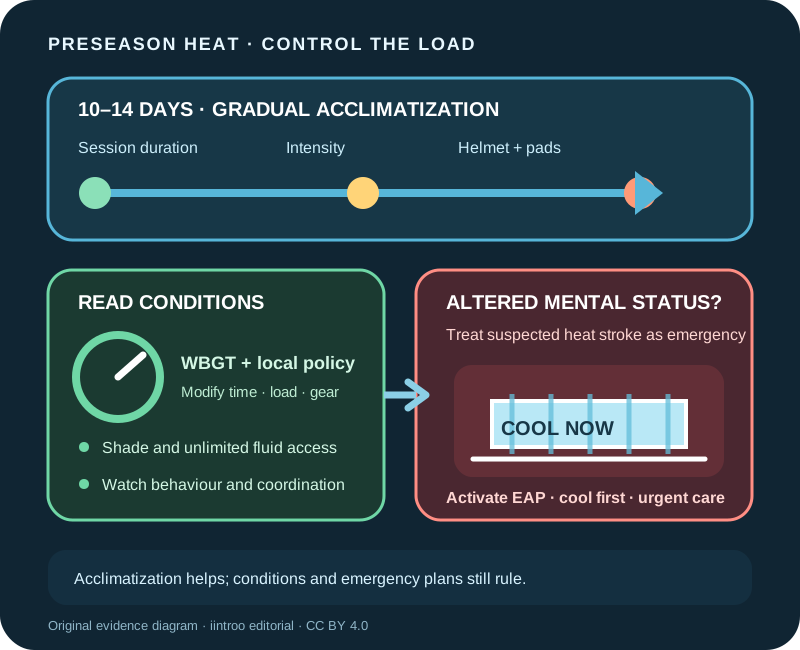
Key points
- Heat acclimatization is a progression over roughly 10–14 days, not a fitness test; duration, intensity and protective equipment should increase gradually under local rules.
- Wet-bulb globe temperature should guide region-specific changes to practice time, work-to-rest ratio, equipment, shade, hydration access and cancellation decisions.
- Altered behaviour or consciousness during exercise in the heat is an emergency: activate the plan and begin rapid whole-body cooling immediately while arranging emergency care.
The opening days carry a predictable load
This guide is for tackle and flag-football players, parents, coaches, athletic trainers and programme leaders. The first practices combine environmental heat, a new training load and, in tackle formats, increasing insulation from helmets and pads. Surveillance in collegiate football found exertional heat illness clustered in the first 14 days, especially the first week, and rose with higher wet-bulb globe temperature. Those group data identify a prevention window; they do not predict which individual will become ill.
A player returning after illness, arriving with limited recent training, using medication that may affect heat tolerance or carrying another medical risk needs an individual plan from the appropriate clinician. Body size, sweat rate and previous heat exposure also vary. A coach cannot infer heat readiness from appearance, a fitness reputation or willingness to continue. The programme controls practice design and emergency preparation before asking the athlete to tolerate the environment.
Acclimatization is a progression, not punishment
USA Football describes a 10–14-day period in which practice duration, intensity and equipment are increased gradually. Local governing-body rules may prescribe exact limits and should take priority. Early sessions should not suddenly combine repeated high-intensity conditioning, long duration and full protective equipment. Extra voluntary workouts do not replace the formal acclimatization sequence, and a late-arriving player may need their own progression rather than joining the team's final stage.
The broader systematic review supports physiological adaptations from heat acclimation, but studies vary in protocol, climate, fitness and outcome. Adaptation lowers strain; it does not make extreme conditions safe or remove the need to modify training. Plan football-specific exposures such as repeated accelerations, contact periods and equipment stages, then track who actually completed them. A written attendance record is more useful than assuming everyone followed the same programme.
Let conditions change the practice
Use an on-site wet-bulb globe temperature reading where available and apply the region-specific policy for the age and competition. A single air-temperature value misses humidity, radiant heat and air movement. Pre-agree the thresholds for moving the session, reducing duration or intensity, increasing shaded breaks, removing equipment, changing drills or cancelling. Unlimited access to fluid and toilets should be normal; forced drinking and universal volume targets are not appropriate.
Continue observation through breaks and after practice. Headache, nausea, dizziness, unusual fatigue, worsening coordination or inability to sustain the session requires removal and assessment. Confusion, irrational behaviour, collapse, seizure or altered consciousness during exertion in the heat raises concern for exertional heat stroke even when the skin is sweaty. Do not wait for every textbook sign or use a forehead, ear or oral thermometer to rule it out.
Rehearse cool first, transport second
Before preseason, the emergency action plan should name who recognises the emergency, calls emergency services, removes equipment, measures rectal temperature when qualified and begins cooling. For suspected exertional heat stroke, whole-body cold-water immersion is the preferred rapid cooling method when feasible. The tub, water, ice, towels, communication and access route must be ready at the field; equipment stored elsewhere is not an operational plan.
Rapid cooling begins immediately while emergency care is activated. In the established sport-medicine approach, cooling takes priority before transport when exertional heat stroke is suspected and trained personnel are present. Maintain airway and circulation monitoring and transfer care according to the local protocol. This article cannot train a responder, authorise rectal thermometry or replace a venue-specific rehearsal with medical and emergency-service partners.
Return follows diagnosis and recovery
Any suspected exertional heat stroke ends participation and requires emergency medical care. Heat exhaustion, syncope and other collapse also need appropriate assessment because infection, cardiac events, metabolic problems and other emergencies can overlap. Record the conditions, practice stage, equipment, observed neurological signs, temperature method if used, cooling start and transfer details for the clinical handover.
Return after exertional heat stroke is an individual medical process, followed by gradual re-exposure and renewed acclimatization. There is no safe universal number of days. The clinician, athletic trainer, athlete and coaching staff should coordinate medical recovery, contributing risks and the staged football workload. Prevention is strongest when the written policy, field equipment and practice culture all support stopping early rather than rewarding concealment.