
Road racing in the heat: recognise heat stroke and make cooling possible
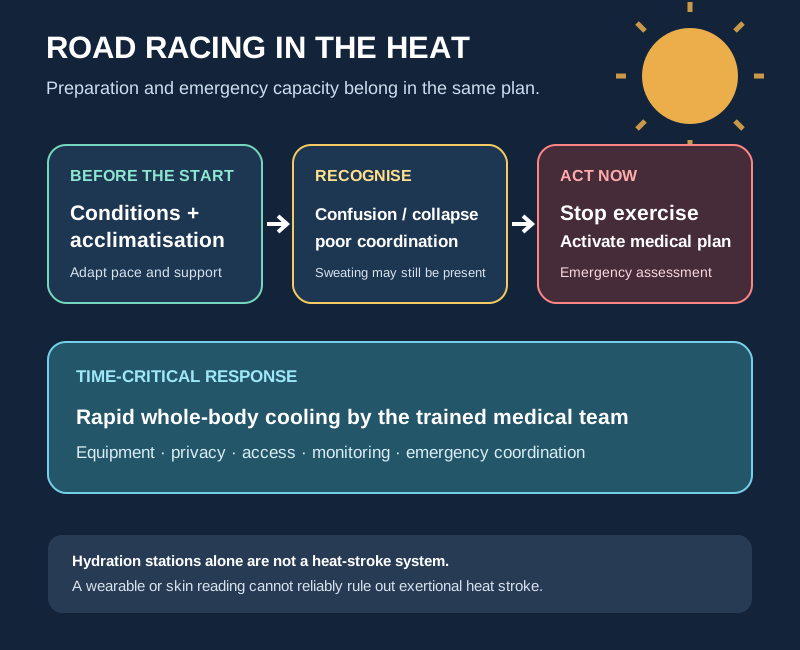
A fast runner can still develop exertional heat stroke. Use venue conditions to adapt the plan, recognise central nervous system change and prepare rapid whole-body cooling before the start.
Key points
- Pace, humidity, radiant heat, clothing, acclimatisation and individual health can all change heat strain; air temperature alone is not a complete risk measure.
- Confusion, altered behaviour, loss of coordination or collapse during hard exercise in the heat can indicate exertional heat stroke and require an emergency response.
- Events need an accessible rapid-cooling capability and a rehearsed medical pathway; hydration advice alone is not a heat-stroke plan.
Plan for the course that will actually be raced
This guide is for road runners, race walkers, coaches, organisers, volunteers and medical teams. Heat risk is shaped by metabolic effort, humidity, radiant load, air movement, clothing, acclimatisation and individual factors. A single forecast temperature or another runner's tolerance cannot define one athlete's safe pace.
Before the start, use the event's current environmental information and official medical instructions. Organisers can adjust start time, course support, communication or competition policy when conditions warrant. Athletes can rehearse an effort-based pace, access to fluids and permitted cooling methods during training rather than introducing an unfamiliar strategy on race day.
Acclimatisation is preparation, not immunity
Repeated, progressive exposure to exercise in the heat can improve heat tolerance. The exposure must still fit the athlete's health, training history and recovery. Travelling early enough to adapt may help, but the time course and response vary and an acclimatised athlete can still become seriously ill.
Recent fever or gastrointestinal illness, medicines that affect thermoregulation or hydration, pregnancy, disability-related thermoregulatory differences and a previous heat illness deserve individual clinical discussion. Do not copy another athlete's fluid volume, salt plan, precooling routine or medication decision.
Treat altered brain function as an emergency signal
Exertional heat stroke involves central nervous system dysfunction with severe hyperthermia. Confusion, unusual behaviour, agitation, staggering, loss of coordination, collapse or reduced consciousness during or soon after hard exercise in the heat should trigger the event emergency plan. Sweating may still be present, so dry skin is not required.
Stop exercise, move the person into trained medical care and activate emergency services according to the venue plan. Worsening consciousness, seizure, breathing difficulty or shock signs require immediate emergency response. A wearable, oral temperature or skin reading cannot reliably rule out exertional heat stroke; diagnosis and core-temperature measurement belong with appropriately trained clinicians using validated methods.
Cooling capacity must exist before the first starter
Rapid whole-body cooling is time-critical when exertional heat stroke is suspected. Event medical teams should have the people, equipment, privacy, water supply, access route and emergency-service coordination needed to begin effective cooling without avoidable delay. Cold-water immersion is a leading method when feasible, with alternative validated approaches planned for settings where it is not.
This is an organisational principle, not a bystander treatment recipe. Follow the trained medical lead, protect the airway and continue monitoring. Transport and cooling decisions must be coordinated with emergency services; a race should not advertise water stations as if they substitute for an exertional heat-stroke response area.
Return after serious heat illness is individual
A runner who has had suspected exertional heat stroke needs medical follow-up before resuming demanding training. Review can consider organ injury, contributing illness or medication, recovery, heat tolerance and the demands of the next event. Feeling normal the following morning is not by itself clearance.
A staged return and any formal heat-tolerance evaluation should be directed by qualified clinicians. Evidence does not support one universal waiting period or test for every athlete, and this article does not diagnose heat illness or provide a personal return schedule.
Sources: 3