
Para athletes in the heat: plan for the impairment, not the label
Heat risk and cooling needs vary across Para athletes. Build an accessible, individual plan instead of applying one rule to every impairment.
Key points
- Para athletes do not share one thermoregulatory profile.
- Cooling research is promising but concentrated in small spinal-cord-injury samples.
- An accessible emergency and cooling plan should be agreed before exposure.
Who should use this guide
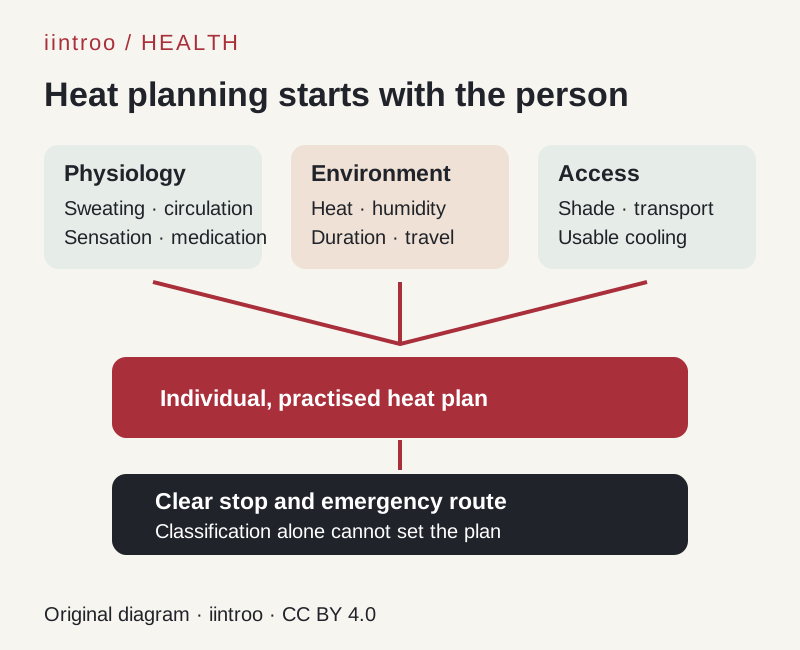
This guide is for Para athletes, coaches, event staff and medical teams planning training or competition in hot conditions. The IPC warns that some impairments create additional heat-related risk, but a Para sport label does not reveal an individual's sweating, circulation, heat production, medication effects, communication needs or access requirements.
Start with the athlete's usual responses and qualified clinical advice. The plan should fit the specific impairment, sport, venue and forecast. It should never assume that every wheelchair user, amputee or visually impaired athlete needs the same strategy.
Why spinal cord injury needs particular context
A 2021 systematic review reported that thermoregulatory mechanisms can be partly or fully disrupted after spinal cord injury. Across the included research, athletes with higher lesion levels—especially tetraplegia—tended to reach higher core and skin temperatures and sweat less during exercise. The review also found wide differences between studies and individuals.
Those findings help explain why sensation alone may not always give an early or complete warning. They do not allow a coach to infer risk from a classification code or diagnose heat illness. Other impairments have different mechanisms and a thinner research base, so assessment must remain individual.
Sources: 4
What cooling evidence can—and cannot—promise
A 2022 review identified 17 studies involving 145 participants with spinal cord injury. Across the pooled analyses, cooling before or during exercise reduced core temperature, skin temperature and thermal sensation. Pre-cooling showed a larger pooled effect on core temperature than cooling during exercise, and effects differed with lesion level.
The participant total was small, protocols varied and the evidence primarily concerns spinal cord injury, often under controlled conditions. It does not establish one vest, spray, timing or temperature threshold for every Para athlete. Equipment also has to be usable, transportable and compatible with skin protection, transfers and competition rules.
Build an accessible event plan
The IPC recommends acclimation, an individual heat strategy and arranging required equipment before travel. The IOC event consensus adds environmental monitoring, shade, cooling access and coordinated medical services. Translate those principles into practical questions: who checks the conditions, where an accessible cool space is located, how the athlete can reach it and who has authority to modify or stop a session.
Practise communication as well as equipment. A plan should account for personal assistance, prostheses or sports chairs, venue transport and any delay between leaving the field of play and reaching medical support. Hydration belongs in the plan, but forcing fluid is not a universal heat solution.
Respond to illness, not a finishing target
Confusion, collapse, altered behaviour or loss of consciousness during heat exposure requires urgent medical action through the event plan or local emergency services. Stop activity and follow trained responders' instructions. Less dramatic but persistent symptoms also deserve prompt assessment; an online guide cannot distinguish heat exhaustion, heat stroke, dehydration or another medical problem.
Review what happened before the next exposure. Any return to training should follow individual medical advice and the event's current rules. This article provides planning principles, not a cooling prescription, diagnostic checklist or clearance decision.