
Aortic stenosis in masters athletes: test the valve under real exercise demand
Aortic stenosis may be silent at rest. Valve severity, symptoms and sport-specific exercise testing should shape participation and follow-up decisions.
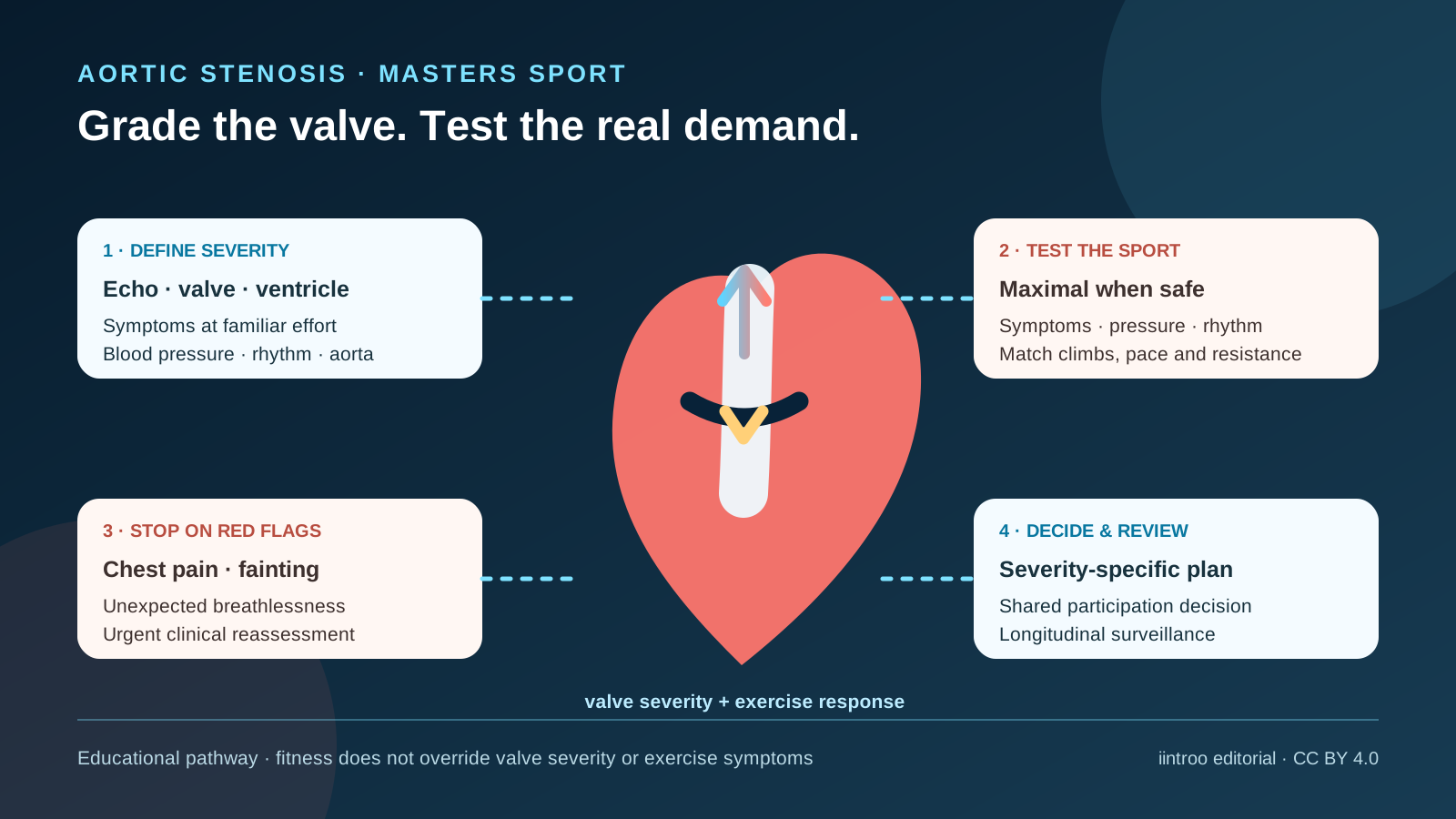
Key points
- Aortic stenosis narrows the valve through which blood leaves the heart; severity is established by clinical assessment and echocardiography, not fitness level or resting symptoms alone.
- Moderate disease requires careful symptom review and maximal sport-relevant exercise testing; symptomatic or severe disease changes the participation decision substantially.
- Chest pressure, unexplained breathlessness, fainting or near-fainting during exercise requires prompt medical assessment and should not be trained through.
Separate athletic capacity from valve severity
This guide is for masters and younger athletes told that the aortic valve is narrowed, calcified or congenitally abnormal. Aortic stenosis increases resistance to blood leaving the left ventricle. Highly trained people can retain impressive performance despite important disease, while ordinary fatigue may be mistakenly attributed to age or detraining. The diagnosis and grade come from clinical review and Doppler echocardiography, interpreted with valve anatomy, flow, blood pressure, ventricular response and body size where appropriate. A wearable estimate of fitness cannot grade the valve.
Ask specifically about chest pressure, unusual breathlessness, dizziness, fainting, palpitations and a decline in pace or recovery at familiar workloads. Symptoms may appear only on climbs, intervals, heavy efforts or competition. Fainting, near-fainting, chest pain or severe breathlessness during exercise requires urgent assessment; the athlete should stop rather than repeat the effort to collect better data. New symptoms in known stenosis also warrant reassessment even when the last scan was described as stable.
Use maximal, sport-relevant testing for the right question
The 2025 AHA/ACC scientific statement supports participation in mild left-sided valve disease and emphasizes comprehensive assessment for moderate aortic stenosis. Exercise testing should reach the athlete's actual demand when it can be performed safely, because a low-level protocol may miss symptoms, an abnormal blood-pressure response, arrhythmia or reduced capacity. Cardiopulmonary exercise testing can add objective information, but it complements rather than replaces echocardiography, rhythm assessment and clinical judgment.
Guidelines do not treat all stenosis as one category. Current American guidance considers shared-decision participation reasonable for an asymptomatic athlete with moderate stenosis and normal stress testing, whereas symptomatic disease should preclude competitive sport while valve intervention is considered. Severe asymptomatic disease generally carries an unfavourable competitive-sport balance except for selected lower-intensity activity. European guidance is more restrictive in some categories. The treating sports cardiology and valve team should explain which framework applies and why.
Match training to haemodynamic demand, not the sport label
A sport name does not define one exposure. Cycling may range from easy flat riding to maximal climbs; strength training may range from controlled submaximal work to repeated straining; team roles and environmental heat also change demand. The plan should describe acceptable intensity, resistance, recovery, competition and symptom-stop rules in concrete terms. Avoid breath-holding or maximal lifting unless the specialist has specifically assessed those demands. Do not use a heart-rate ceiling copied from another athlete as a substitute for testing.
Blood pressure, other valve disease, coronary risk, rhythm disorders and aortic enlargement may alter the decision. Bicuspid valve disease also requires assessment of the aorta, not just the degree of stenosis. Medication should not be started, stopped or timed around competition from general advice. Coaches need only the practical limits and emergency plan the athlete agrees to share; detailed medical records remain private. An automated external defibrillator and rehearsed response improve venue readiness but do not make unsafe participation safe.
Review progression and rebuild after intervention
Aortic stenosis can progress, so follow-up is longitudinal even when the athlete feels well. The interval depends on severity, symptoms, valve anatomy and rate of change. A fall in performance should trigger clinical review rather than an assumption that more training is needed. After valve replacement or repair, exercise resumes only after the team has considered healing, valve function, ventricular response, rhythm, anticoagulation when relevant and the consequences of collision or remote participation.
Return can rebuild daily activity and low-intensity aerobic work before longer duration, hills, intervals, resistance and competition. Objective testing and the original symptom pattern guide progression. Published athlete evidence is limited and includes case reports and expert consensus rather than trials that assign athletes to different sports. This page cannot grade stenosis, interpret an echocardiogram, select a valve procedure or clear competition; it supports prompt symptom reporting, sport-specific testing, shared decisions and scheduled surveillance.