
Archery shoulder pain: manage draw weight before form breaks down
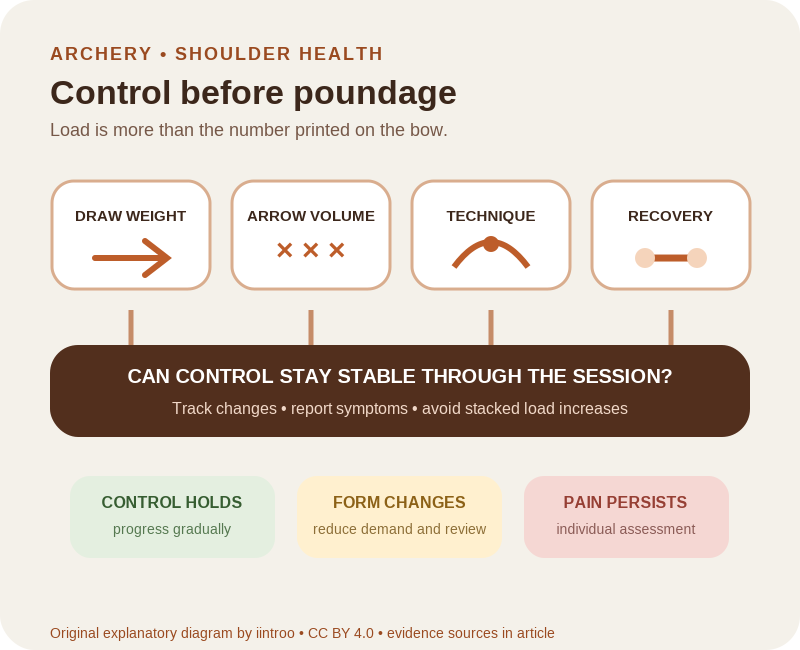
Shoulder symptoms are not a test of commitment. Draw weight, arrow volume, technique, recovery and individual capacity need to be considered together.
Key points
- Draw weight should progress with control, strength and technique rather than ambition alone.
- Survey findings describe common pain locations but cannot predict one archer’s injury.
- Persistent pain, weakness or neurological symptoms need individual assessment.
Who this guide is for
This guide is for recurve, compound, barebow and Para archers, as well as parents, coaches and support teams. Shoulder discomfort can relate to more than one part of the shot: draw weight, total arrows, strength, technique, equipment set-up, recovery and previous injury all matter. Pain is not proof that an archer simply needs to become tougher.
World Archery advises athletes to begin at manageable poundage and progress only as physical capacity and technique develop. Elite draw weights are not entry targets. The useful question is whether the archer can repeat the full shot cycle with stable control, not whether they can pull the bow once.
What the available evidence can and cannot show
World Archery’s athlete-health survey identified the draw-side shoulder, wrist and fingers among reported problem areas. A separate online survey of 396 archers found shoulder and neck or back complaints, particularly around the drawing phase. These findings help locate concerns but do not establish a universal injury rate or a safe number of arrows.
Both sources depend on self-report and include different bow types, experience levels and exposure. They cannot diagnose a painful shoulder or prove that one technical fault caused it. Their practical value is in supporting early reporting and a review of the complete load-and-technique picture.
Progress load without sacrificing control
Avoid increasing draw weight at the same time as sharply increasing arrow volume, competition intensity or strength training. Record the change, the number and type of shots, symptom response and whether technique remains stable late in the session. A coach can observe movement, while a qualified clinician assesses pain, strength and function.
The Bern consensus supports principle-based load management rather than one threshold for every shoulder or sport. There is no evidence-based universal weekly percentage, pain score or return date for archers. A lighter bow or reduced session may be useful during assessment, but this article cannot prescribe the correct poundage for an individual.
Build capacity around the shot
Preparation should reflect the demands of holding, drawing and stabilising the bow. General shoulder and trunk strength, gradual exposure and adequate recovery support the shot, but an exercise list cannot correct equipment or technique by itself. Training should be scaled to age, impairment, experience and the rest of the weekly programme.
Stop treating compensations as normal when the bow shoulder repeatedly rises, the trunk leans, the draw shortens or the athlete cannot control the release. These observations are prompts to reduce the demand and investigate, not a diagnosis. Return decisions should test the relevant tasks progressively and consider confidence as well as symptoms and capacity.
Know when pain needs assessment
Arrange professional assessment when pain persists, recurs with ordinary practice, disturbs sleep, limits range or is accompanied by loss of strength, tingling or numbness. After a fall or sudden event, visible deformity, inability to lift the arm, a cold or pale hand, or rapidly increasing swelling requires prompt local medical care.
Do not train through escalating symptoms to preserve a score or selection place. A clinician can distinguish shoulder, neck and nerve-related problems and coordinate a graded plan with the coach. The appropriate route back depends on the diagnosis, demands of the bow and the individual response; there is no general waiting period.