
Climbing finger pulley injuries: assess first, then rebuild load
A pop, swelling or finger pain while crimping needs a proper assessment. Learn what taping can and cannot do, and why return is individual.
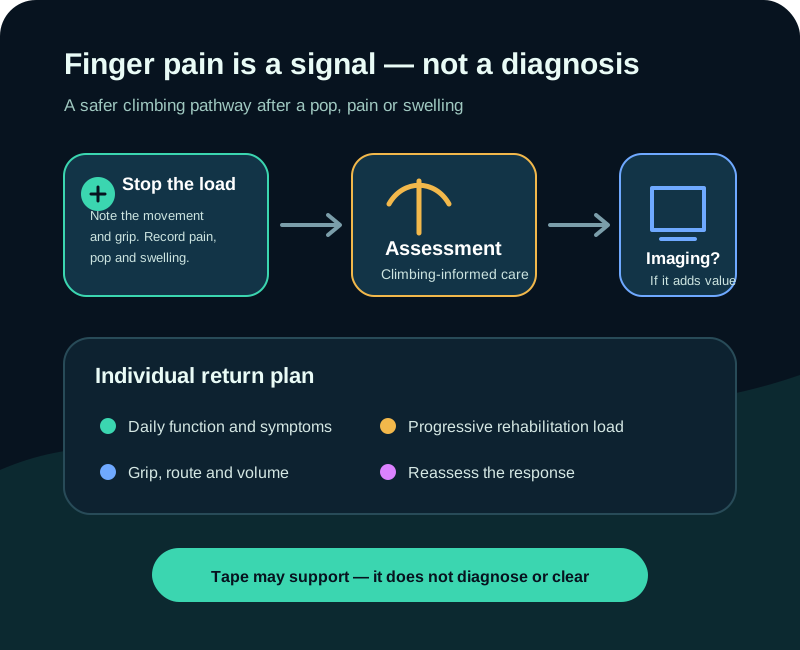
Key points
- Finger pain or a pop cannot identify the injured structure by itself.
- Taping evidence is limited and does not support self-clearance.
- Return should follow diagnosis, progressive loading and individual reassessment.
Who this guide is for
This guide is for climbers, coaches and parents responding to pain, swelling or a pop in a finger during climbing. The finger flexor pulley system is exposed to distinctive loads, especially in crimp positions, but those symptoms do not identify which pulley or other structure is affected. The UIAA advises obtaining a proper diagnosis from a clinician who understands climbing injuries.
Stop the provoking session and arrange qualified assessment rather than testing the finger repeatedly on a wall or hangboard. Marked deformity, loss of movement, altered sensation, severe swelling or an open injury needs prompt medical attention. A traumatic injury with compromised circulation is an emergency.
Assessment comes before a treatment label
History and physical examination guide the initial assessment. Dynamic ultrasound is often used to characterise pulley injury; magnetic resonance imaging may be considered when the clinical question remains unresolved. Imaging is not a do-it-yourself grading tool, and a visible or absent bowstringing sign alone does not settle the diagnosis.
A 2020 systematic review found wide variation in ultrasound measurement procedures and diagnostic cut-offs across only seven included studies. That uncertainty matters: a scan number copied from an article should not be used to classify an individual finger without the technique, position and clinical context being understood.
Taping is support, not proof of readiness
The 2022 systematic review included eight studies and one case report, with 206 climbers, four non-climbers and 23 pairs of cadaver hands. Low-to-moderate-certainty evidence suggested taping may reduce tendon bowstringing, but evidence for pain and return to sport was very low or low and not considered reliable by the reviewers.
A taped finger that feels more secure is therefore not medically cleared. The UIAA factsheet discusses different management for different injury patterns, reinforcing the need to diagnose before selecting tape, splinting, rehabilitation or surgical referral. This article does not teach a taping technique or prescribe an immobilisation period.
Return is a loading process, not a fixed date
A clinician-led plan can consider injury severity, tissue healing, pain, movement, strength, climbing level and the demands of the intended holds. Progression may move from daily function and controlled rehabilitation to graded climbing-specific load. The route, grip choice, intensity and volume all matter; one calendar interval cannot safely fit every pulley injury.
If symptoms rise during or after a step, report the response rather than masking it and advancing. A hand therapist, physiotherapist or sports physician can coordinate progression and determine when further imaging or surgical opinion is appropriate.
Sources: 4
Build a safer training conversation
Record recent changes in wall sessions, board work, grip intensity, rest and previous finger symptoms. Coaches can vary load and avoid sudden spikes without claiming that one warm-up or grip style prevents every injury. Young climbers need particular caution because growth-related finger injuries can resemble adult pulley problems.
Prevention research remains incomplete. The useful standard is a progressive programme with recovery, early reporting and access to climbing-informed care—not a promise that tape, stronger fingers or avoiding one hold will eliminate risk.