
ARFID in athletes: support fuelling without turning sensory or fear-based restriction into blame
ARFID can restrict food variety or volume without weight-shape concerns. Athletes need confidential assessment of nutrition, health, fear and sensory barriers.
Key points
- ARFID involves avoidance or restriction linked to sensory features, fear of aversive consequences or low interest in eating, with meaningful nutritional, medical or psychosocial effects.
- Unlike anorexia nervosa, restriction in ARFID is not primarily driven by weight or shape concerns, although other eating disorders and health conditions must be assessed.
- An athlete can be energy deficient at any body size; treatment and participation decisions require qualified medical, nutrition and mental-health input rather than a coach-led food challenge.
Restriction is not always about body image
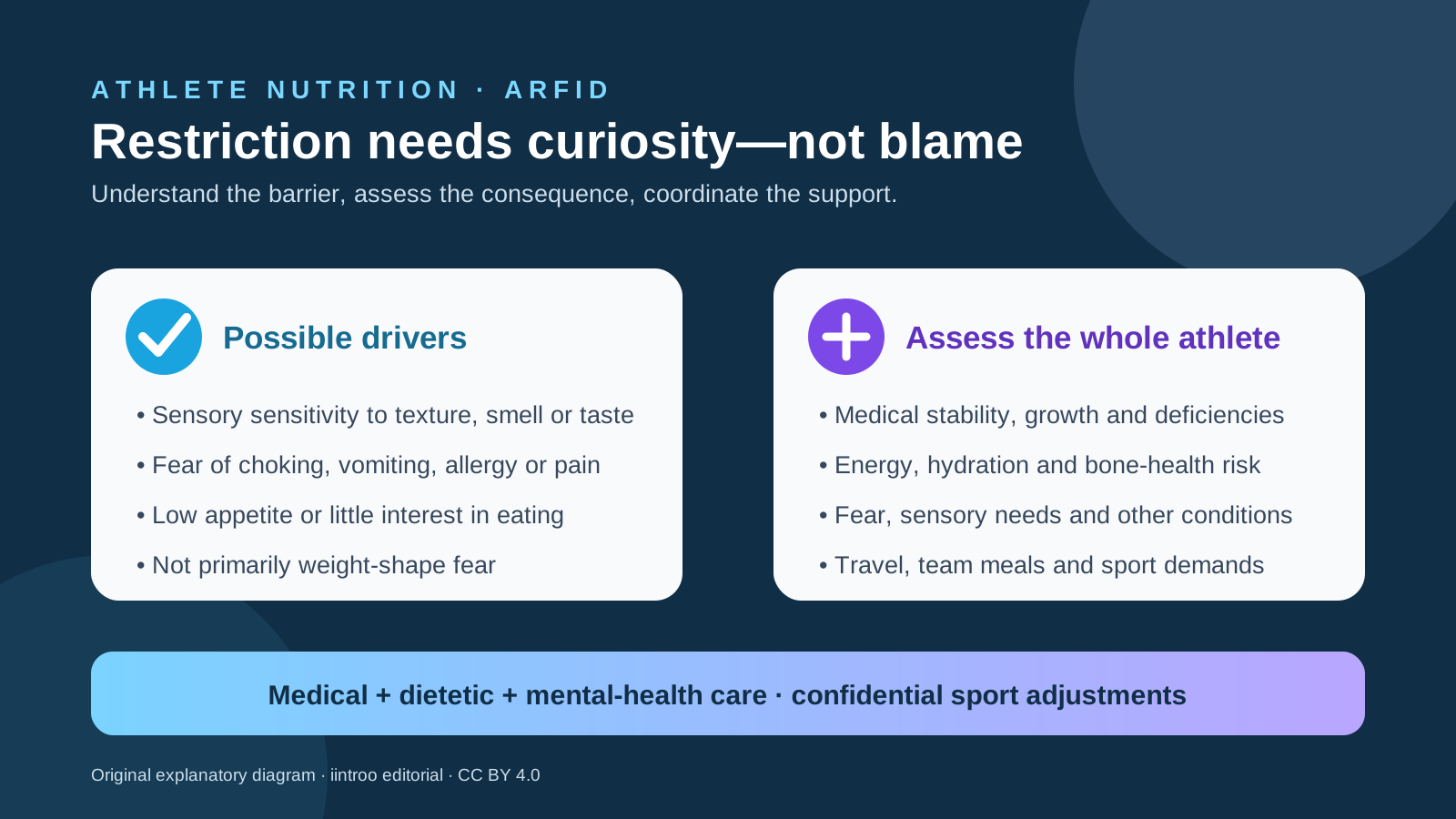
This guide is for athletes, families, coaches and support teams responding to a very limited range or volume of food. Avoidant/restrictive food intake disorder, or ARFID, can involve sensory sensitivity to texture, smell, taste or appearance; fear of choking, vomiting, allergy or pain; or low appetite and little interest in eating. Diagnosis requires consequences such as nutritional deficiency, faltering growth or weight change, reliance on supplements or tube feeding, or major psychosocial interference. Ordinary preference, cultural practice, a temporary illness and performance nutrition choices are not automatically ARFID.
ARFID differs from anorexia nervosa because weight or shape fear is not the main reason for restriction, but that distinction cannot be made from appearance or one conversation. Gastrointestinal disease, food allergy, swallowing difficulty, autism, anxiety, obsessive-compulsive symptoms, depression, medication effects and other eating disorders can overlap. A 2025 systematic review of young people found differing clinical profiles across ARFID, anorexia and bulimia, but study methods varied. Qualified assessment is needed rather than assigning a label because an athlete is selective or struggles at team meals.
Sport can hide or amplify the consequences
Training increases the need for regular energy, carbohydrate, protein, fluid and micronutrients. A narrow diet can make travel, recovery meals, early sessions and unfamiliar competition food harder even when the athlete is not trying to lose weight. The 2023 IOC REDs consensus explains that prolonged or severe low energy availability can affect bone, endocrine, immune, cardiovascular, haematological and psychological function in athletes of any sex. REDs is a clinical syndrome, not a synonym for ARFID, and neither can be diagnosed from a wearable or a calorie estimate.
Warning patterns include falling growth trajectory, recurrent dizziness or fainting, fatigue, cold intolerance, gastrointestinal complaints, repeated illness, delayed recovery, bone stress injury, menstrual or libido change, concentration difficulty, worsening anxiety around meals, reliance on a shrinking list of foods or avoiding travel and social eating. Weight can be stable and still not show whether intake meets needs. A 2026 athlete meta-analysis found substantial eating-disorder and disordered-eating prevalence overall, but screening instruments produced different estimates and were not ARFID-specific.
Assessment should be multidisciplinary and non-punitive
Medical assessment looks for instability, growth and weight history, hydration, cardiovascular signs, gastrointestinal or swallowing disease, allergy, nutritional deficiencies, bone health and other causes. A sports dietitian can map accepted foods, timing, texture and practical barriers without using a weight-centric approach. A mental-health professional with eating-disorder expertise can assess fear, sensory avoidance, comorbidity and treatment needs. The athlete should help decide what sport staff are told; a coach usually needs adjustments and emergency instructions, not therapy details or public weigh-ins.
Do not force a feared food, hide ingredients, threaten selection, remove safe foods or create a team exposure exercise. Psychological and nutrition treatments are structured and individualized, while the current ARFID evidence base is still developing. The 2025 Female Athlete Triad update names ARFID among eating disorders relevant to athletes and recommends comprehensive physician, dietitian and mental-health assessment when an eating disorder is suspected. That guidance supports coordinated care; it does not make the Triad model a diagnostic test for ARFID or apply only to visibly thin athletes.
Make participation decisions from health and function
Immediate medical care is needed for collapse, severe dehydration, confusion, chest pain, significant breathing difficulty, repeated vomiting, inability to maintain essential intake or another sign of acute instability. Urgent mental-health help is required for suicidal intent or immediate danger. Outside emergencies, training changes should be proportionate to clinical findings: some athletes can continue with fuelling support, while others need temporary load reduction or restriction because of cardiovascular, metabolic, bone or psychological risk.
Return is not based on finishing one meal, reaching one number or promising to comply. The clinical team considers medical stability, intake, growth where relevant, laboratory or bone findings when indicated, psychological progress, recovery and the consequences of the sport. This page cannot diagnose ARFID, set calories, design exposure therapy, recommend supplements or clear participation. The evidence supports early, respectful care and protection from low-energy harm; athlete-specific ARFID treatment trials and universal return criteria are not available.