
Endurance running and REDs: when fuelling falls behind training
Understand low energy availability, warning patterns and why a sports dietitian and clinician should assess persistent under-fuelling.
Key points
- REDs can affect both female and male athletes.
- Repeated under-fuelling can happen unintentionally.
- Symptoms and body size alone cannot confirm a diagnosis.
Energy for more than the training session
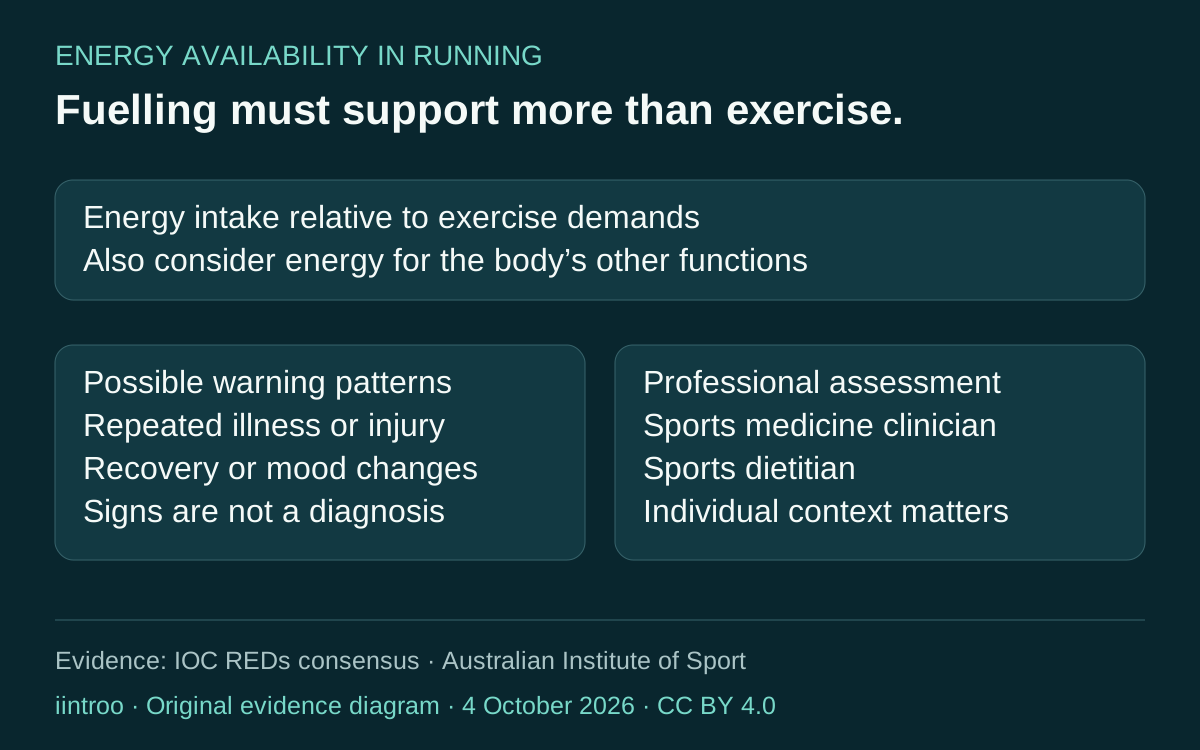
A runner's energy needs extend beyond the kilometres recorded in a training app. Energy availability describes what remains from food intake after the energy cost of exercise, to support the body's other functions. The IOC distinguishes short-term, adaptable exposure to low energy availability from prolonged or severe exposure that can become problematic.
Relative Energy Deficiency in Sport, or REDs, describes impaired physiological or psychological functioning associated with problematic low energy availability. It affects female and male athletes and can involve bone health, reproductive function, immunity and performance. A hard week or a missed meal alone does not establish the syndrome.
Sources: 1
How a mismatch can develop
Under-fuelling is not always intentional. The Australian Institute of Sport identifies increased training demands, short recovery periods between sessions, limited time or money for food preparation, and misunderstanding personal needs as possible contributors. Restrictive eating and weight-control pressures can also matter.
For a runner adding a second daily session or combining training with work and travel, the practical question is whether access to food and time to eat have changed with the workload. This is an example for discussion with a sports dietitian, not a calorie prescription.
Sources: 2
Look for a pattern and ask for support
Recurrent injury or illness, reduced performance, changes in mood, menstrual disruption or concerns about growth in younger athletes warrant attention. These signs can have other causes. Bring the pattern to a qualified sports medicine clinician and sports dietitian rather than trying to diagnose REDs from a symptom list.
A useful appointment can include discussion of recent training changes, eating opportunities, recovery and injury history. Teams should make that conversation confidential and supportive. Weight-focused criticism can make it harder for an athlete to ask for help.
Sources: 2
Assessment needs context
The IOC framework combines clinical findings and the athlete's wider situation; it is not a self-scoring calculator. Measuring intake and exercise expenditure is difficult, and a single threshold cannot resolve every case. Coaches should not interpret a body size, an online estimate or one laboratory result as proof that an athlete is safe or unwell.
The 2023 statement has a linked 2024 publisher correction. Readers using its technical assessment material should consult the corrected publication. This article deliberately avoids reproducing diagnostic scoring tables or prescribing intake targets.
A practical conversation for the next training block
Ask who can help review fuelling when training changes, whether food is accessible around sessions, and how injury or recovery concerns will be raised. Care may involve changes to intake, training and other support according to professional assessment. There is no universal supplement or meal plan that resolves every athlete's situation.
Sources: 2