
Training with a respiratory infection: use symptoms and function, not a calendar countdown
A cold is not a fitness test. Pause for fever or systemic symptoms, screen chest warning signs and rebuild training through a monitored, graded return.
Key points
- Fever, marked fatigue and chest symptoms are reasons to stop and assess rather than train through illness.
- One fixed number of rest days cannot account for pathogen, severity, complications and training demands.
- Return starts below normal load and advances only when symptoms and exercise response remain acceptable.
Start with illness severity, not the importance of the event
This guide is for athletes, coaches, parents and support staff facing an acute sore throat, cough, blocked nose or flu-like illness. Respiratory symptoms can come from infection, allergy, asthma, airway irritation or another condition. A label such as ‘just a cold’ cannot be confirmed from symptoms alone, and competition pressure does not make fever or unusual breathing safer.
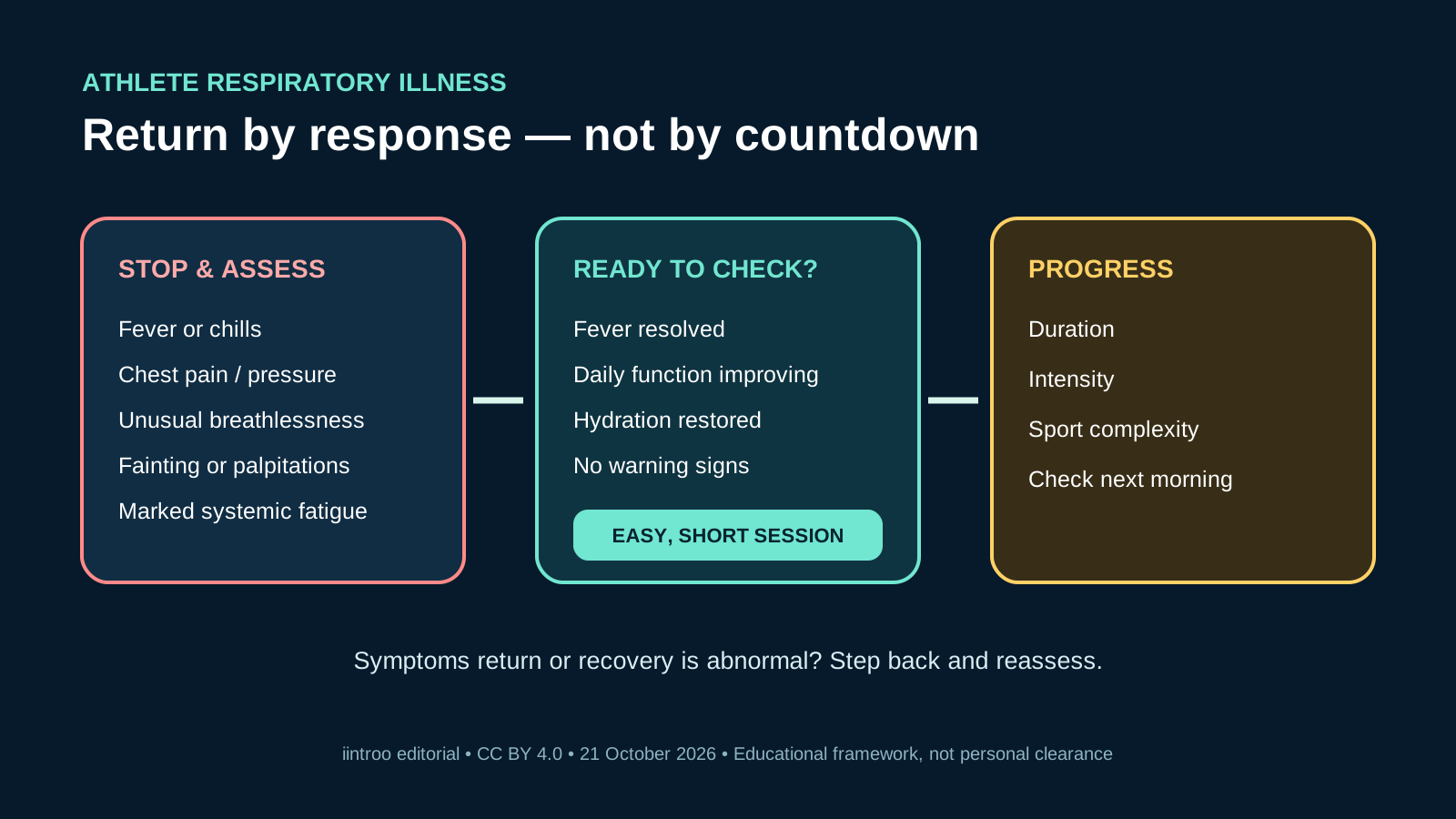
The IOC consensus recommends a clinical decision process rather than the old above-the-neck rule. Fever, chills, pronounced fatigue, muscle aches, shortness of breath, chest pain or pressure, palpitations, dizziness and a resting pulse clearly abnormal for that athlete raise concern. Stop training and seek appropriate assessment rather than using exercise to test whether the illness is serious.
Protect the athlete and the training group
Do not train or compete with fever or dehydration. Febrile illness increases thermal and fluid strain, while analgesics or stimulants can hide symptoms without resolving the problem. Do not share antibiotics, inhalers, decongestants or prescription medicines. Antibiotics do not treat viral infections, and medication choices may carry side effects or anti-doping implications.
Reduce close indoor contact while potentially infectious, follow current local public-health advice, improve ventilation and do not share bottles, towels or mouthguards. Teams should make symptom reporting possible without punishment. Testing decisions depend on circulating pathogens, exposure, vulnerable contacts and local guidance; one negative test does not automatically clear every illness or complication.
Use a short exercise check only after improvement
When fever has resolved without fever-suppressing medicine, hydration and daily function are normalising, and no chest or neurological warning sign is present, a brief low-intensity session can be a monitored return step. Keep it clearly easier and shorter than normal. Record perceived effort, breathing, chest symptoms, dizziness, coordination and recovery rather than chasing pace or power.
Stop if symptoms worsen or recovery is unexpectedly poor. A systematic review found large variation in illness duration and return outcomes, with limited high-quality evidence for precise timelines. That uncertainty is why response to each step matters more than copying a teammate’s schedule. Youth, Para and masters athletes may need adapted monitoring without assuming either frailty or immunity.
Progress load one dimension at a time
Advance duration, then intensity and sport complexity in small steps while checking symptoms during exercise, later that day and the next morning. Restore technical work before maximal intervals, contact, heat exposure or long competition. A 2026 pathogen-confirmed cohort reinforces that illness severity and individual features influence return; it does not provide a universal prescription.
If symptoms recur, step back and reassess. Persistent cough, unusual fatigue or reduced performance may follow respiratory illness but also overlap with asthma, laryngeal obstruction, anaemia and other conditions. Repeated high-intensity self-testing can delay the right assessment. Coaches can record load changes without demanding private diagnostic details.
Know when return becomes a medical question
Urgent help is appropriate for severe or worsening breathing difficulty, blue or grey lips, collapse, confusion, coughing blood or persistent chest pain. Prompt review is also warranted for fainting, palpitations, new exercise intolerance, dehydration, prolonged fever, a worsening course, significant heart or lung disease, pregnancy, immune suppression or concern about a vulnerable athlete.
Return to participation is not return to full performance. A clinician may need to examine the athlete or investigate complications before hard exercise. This article does not diagnose an infection, recommend a drug, set an isolation period or supply a fixed return date; it provides a symptom-led framework alongside current local public-health and medical guidance.