
Financial stress in sport: build support without making disclosure a selection risk
Income uncertainty, debt and career pressure can affect athlete wellbeing. Teams need confidential support routes that sit outside selection decisions.
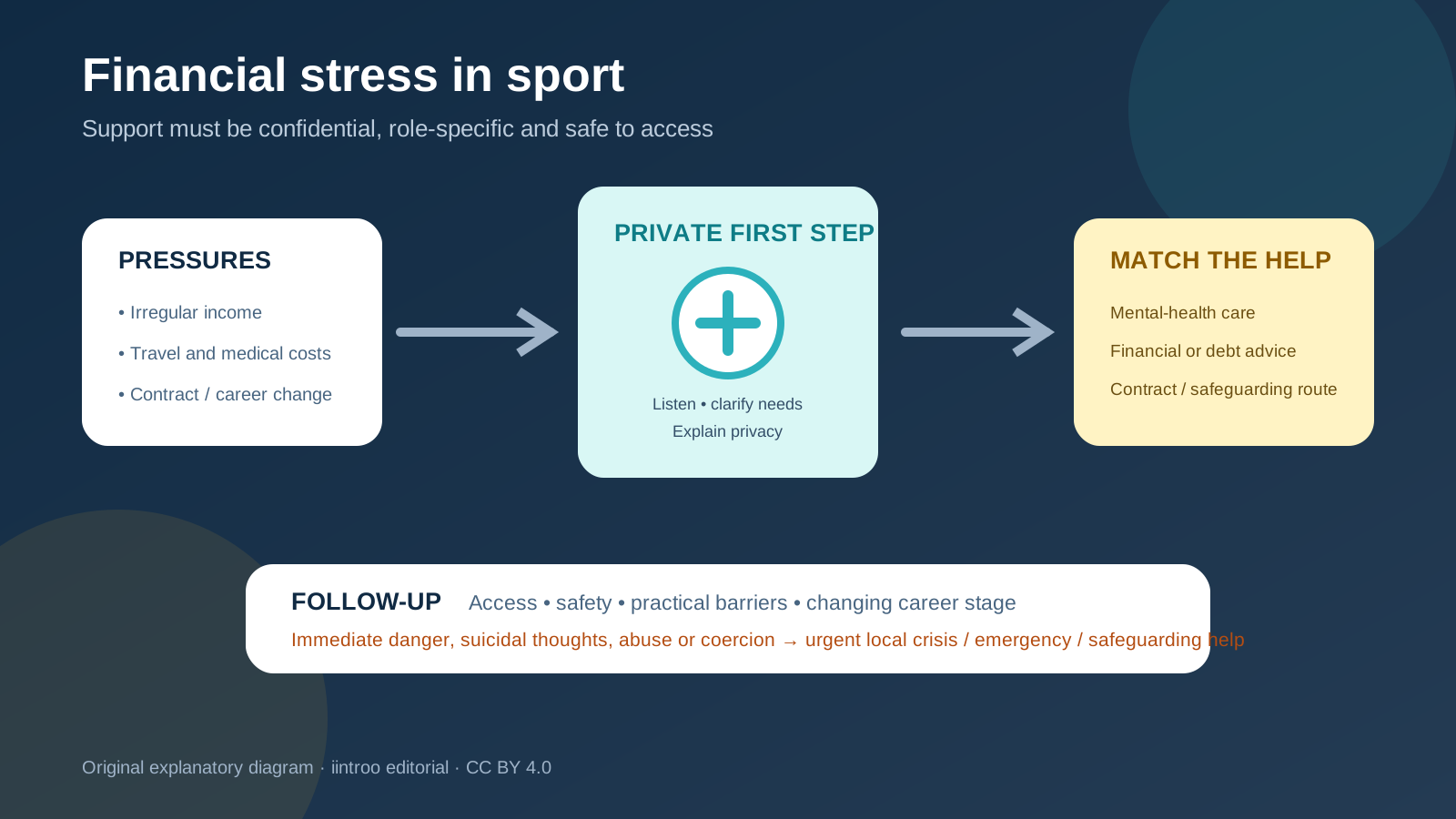
Key points
- Financial strain can interact with anxiety, sleep, relationships, injury recovery and career transition, but it is not itself a mental-health diagnosis.
- A support route is safer when athletes can reach qualified care and independent financial or debt advice without first disclosing details to a selector.
- Immediate danger, suicidal thoughts, abuse, coercion or threats need urgent help through local emergency, crisis and safeguarding pathways.
Name the pressure without diagnosing the person
This guide is for adult athletes, older adolescents, families, agents, coaches and governing bodies. Financial stress in sport may arise from irregular prize money, delayed payments, travel and equipment costs, medical bills, education, family responsibilities, sponsorship uncertainty or the approach of retirement. It can affect sleep, concentration, relationships and willingness to report injury. None of those experiences proves a psychiatric disorder, and income level alone does not reveal distress. The useful first step is a private conversation about what the athlete is experiencing and what kind of help they want.
The 2026 IOC consensus on mental health in elite athletes describes financial constraints as one barrier to accessing care and places socioeconomic context alongside sport-specific pressures. Reviews of elite-athlete symptoms show that mental-health concerns are not rare, but prevalence estimates vary because samples, sports, definitions and screening tools differ. A screening score can open a conversation; it cannot calculate debt, diagnose a condition or determine selection. Teams should avoid treating reduced performance, missed payments or visible spending as proof of a particular illness.
Separate support from selection and discipline
Athletes may stay silent if the only doorway to help is a coach, selector, agent or sponsor who controls opportunity or income. Publish at least one confidential route to a qualified mental-health professional and one route to independent, regulated financial or debt advice appropriate to the athlete's country. Explain who holds the record, what can remain private and the narrow circumstances in which safety or safeguarding duties require information to be shared. A team cannot promise absolute confidentiality, but it can avoid routine circulation of personal details.
Financial advice and mental-health care solve different problems and may be needed together. A psychologist or doctor should not improvise investment, tax or insolvency advice; a financial adviser should not diagnose anxiety or depression. Agents and player associations may help with contracts, while social workers, welfare officers and debt services may address practical barriers. Athlete365 career resources can support education and transition planning, but a general course is not a substitute for urgent care, legal advice or regulated advice on an individual's money.
Build a practical pressure-and-support plan
With consent, map predictable pressure points: contract renewal, travel invoices, injury-related time away, scholarship deadlines, tax dates, family remittances and the end of a season. Then identify the correct contact for each problem, how the athlete can reach them privately, whether interpretation or disability access is needed, and how costs will be covered. Teams can make payment schedules transparent, reimburse promptly and provide protected time for appointments. These organisational controls reduce avoidable uncertainty without implying that budgeting alone cures distress.
Watch for changes that merit a timely check-in: persistent sleep disruption, panic, hopelessness, withdrawal, escalating substance use, compulsive gambling, inability to meet basic needs or pressure from another person to hand over money. Ask directly and respectfully rather than investigating bank records or gossip. Suicidal thoughts, immediate danger, threats, abuse, exploitation or severe impairment require urgent local crisis, emergency or safeguarding action. Do not leave a person alone when there is immediate risk, and do not make continued participation the price of accepting help.
Review access, not just uptake
A programme should measure whether athletes know the routes, can use them outside training hours, trust the privacy arrangements and can reach culturally and linguistically appropriate care. Low uptake may mean low need, but it may also reflect cost, stigma, poor access or fear of selection consequences. Use anonymous service-level feedback where possible and do not publish small-group data that could identify a person. Contractors should have clear qualifications, scope and referral processes; a motivational talk or budgeting worksheet is not a clinical service.
Evidence directly testing financial interventions in diverse athlete populations remains limited. The stronger sources support integrated welfare, confidential access and career preparation, but they cannot promise that one workshop prevents illness or improves performance. This article offers no diagnosis, investment product, debt settlement or legal strategy. It provides a governance test: reduce preventable organisational pressure, keep clinical and financial roles clear, create routes that do not depend on a selector, and review the plan when the athlete's contract, injury, country or career stage changes.