
Athlete retirement: plan the identity, health and support transition
Leaving elite sport can be chosen, forced or sudden. A practical transition plan should connect mental health, identity, education, finances, physical care and trusted support before the final competition.
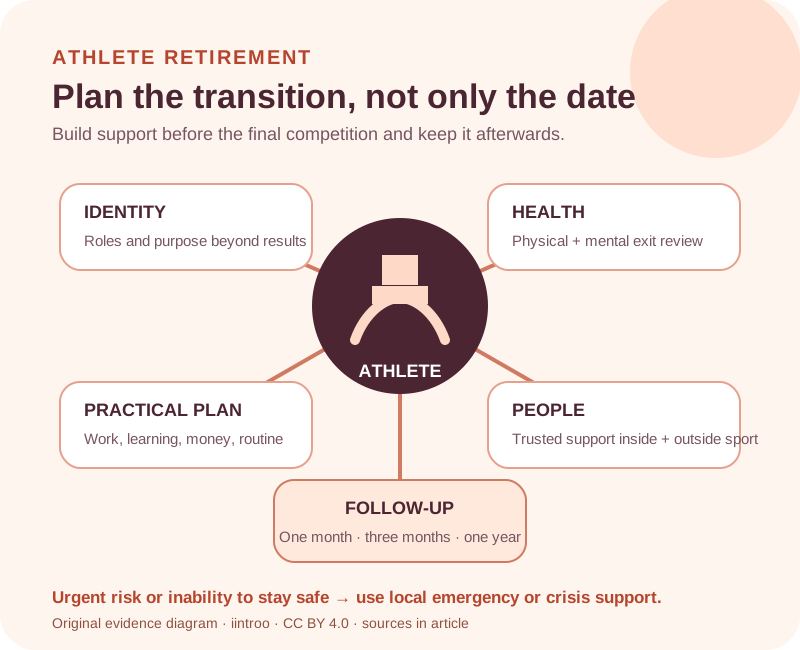
Key points
- Retirement is a process rather than one day, and involuntary or injury-related exits can require extra support.
- Diversifying identity, relationships and work or education before retirement may make the transition more manageable, but it does not guarantee an easy outcome.
- Persistent low mood, severe anxiety, harmful substance or gambling behaviour, or thoughts of self-harm require prompt professional help—not motivation advice from social media.
Start before the final result
This guide is for elite and high-performance athletes, including Para athletes, who are considering retirement or facing deselection, injury or an unexpected end to competition. The 2026 IOC consensus treats retirement as one of several major sport transitions that can affect mental health. Planning is useful before a date is fixed because support, identity and practical options take time to build.
A plan should identify what is known, what remains uncertain and who will stay involved after the athlete leaves the daily sport environment. It can cover health care, education or work, housing, finances, relationships, training habits and access to the club or federation. Retirement planning is not a demand to reduce commitment to sport; it creates options if the pathway changes.
Separate athletic identity from personal worth
Sport can organise an athlete's time, relationships, status and sense of competence. A 2024 survey study of 541 retired athletes found that diversified identity and voluntary retirement were associated with more favourable recalled well-being patterns, while surprise and injury-related retirement were harder for some participants. The retrospective, self-reported design cannot prove that identity diversification causes a better transition.
Athletes can explore roles and interests beyond competition while still active: student, worker, mentor, parent, friend, artist, advocate or community member. The goal is not to erase athletic identity. It is to avoid making selection, performance or physical capacity the only measure of value.
Make an exit health review concrete
The IOC recommends strengthening exit health examinations and connecting athletes to ongoing services. Review current injuries, pain, sleep, medication, menstrual or hormonal concerns, cardiovascular and neurological symptoms, nutrition, alcohol or other substance use, gambling and mental health. Record who will manage unresolved issues when team access ends.
Former athletes are not one clinical group. A 2025 review of high-contact professional sports identified both positive and negative influences involving autonomy, support, identity, osteoarthritis, life events and cognitive concerns, but most included studies were cross-sectional, relied on self-report and underrepresented women. Screening can open a conversation; it is not a diagnosis or a prediction of one person's future.
Build support that survives the team environment
Choose at least one trusted person inside sport and one outside it. Confirm how to contact a qualified mental-health professional, primary-care clinician and career or education adviser without relying on the former team's selection chain. Organisations should explain service duration, confidentiality and referral routes before the athlete exits.
A practical transition calendar can include the first month, three-month and one-year reviews. It should leave space to change direction. Peer mentoring can reduce isolation, but a former athlete should not be expected to act as a therapist. Financial or employment decisions may also need regulated local advice rather than a coach's personal experience.
Know when ordinary adjustment needs urgent help
Mixed emotions, loss of routine and uncertainty can occur without a mental disorder. Seek professional assessment when low mood, anxiety, sleep disruption, eating problems, harmful alcohol or drug use, gambling, anger, withdrawal or loss of function is persistent, severe or worsening. A clinician can assess the whole context and discuss appropriate care.
Thoughts of suicide or self-harm, inability to stay safe, severe intoxication, psychosis or immediate danger require urgent local emergency or crisis support. Do not leave the person alone while help is being arranged. This guide offers general education; it cannot assess risk or replace individual mental-health care.