
Sport injury rehabilitation: mental health belongs in the plan
Injury can affect mood, sleep, identity and connection as well as tissue. Build confidential check-ins, qualified referral routes and psychologically informed goals into rehabilitation without turning a coach into a clinician.
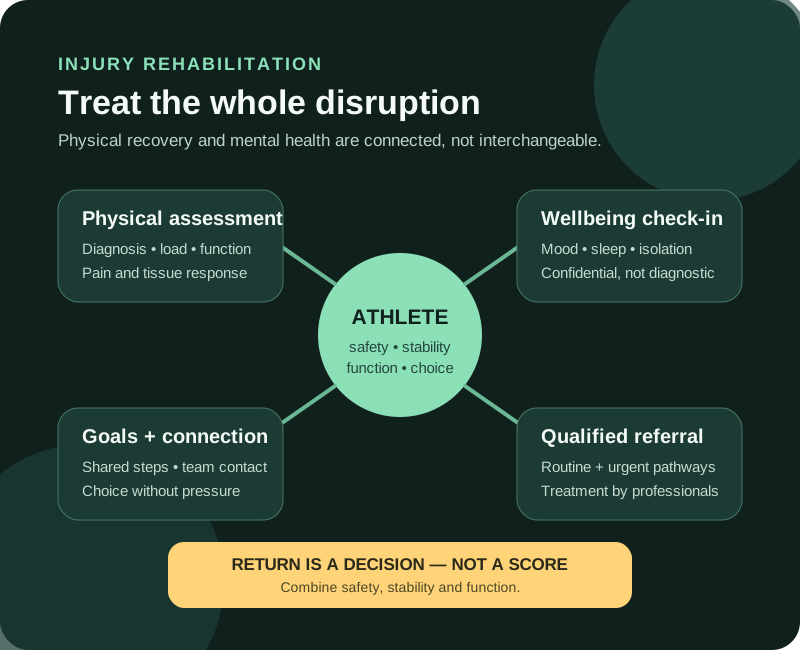
Key points
- Psychological responses to injury should be assessed alongside physical recovery, but distress after injury is not automatically a mental-health diagnosis.
- Coaches and teammates can support connection and referral; diagnosis and treatment belong to appropriately qualified professionals.
- Return to sport should consider safety, stability and function as well as tissue milestones, with no single questionnaire or motivation score acting as clearance.
Treat the injury and the disruption around it
This guide is for injured athletes, coaches, families and rehabilitation teams. An injury can change pain, sleep, routine, team contact, income, education, identity and confidence. Sadness, frustration or worry can be understandable reactions, but persistent or severe symptoms still deserve assessment rather than being dismissed as part of being competitive.
The 2026 IOC consensus recommends that psychological responses to injury be routinely assessed. A 2025 scoping review also found that rehabilitation is an emotional experience and that formal psychological support was often limited. Neither finding means every injured athlete has a disorder or that mental-health symptoms caused the injury.
Create a confidential route to care
Explain who the athlete can approach, what remains confidential, what must be shared for immediate safety and how routine and urgent referrals work. The NCAA recommends a written, rehearsed mental-health action plan that covers identification, treatment, follow-up and re-entry. Clubs outside the college system can adapt the principle to their own health service and legal context.
A coach, physiotherapist or teammate can notice change, listen without judgement and help the athlete reach care, but should not diagnose from mood, motivation or training behaviour. Validated screening can support qualified assessment in an appropriate system; an informal checklist, wellness score or social-media post is not a diagnosis.
Make rehabilitation psychologically informed
Use shared, adjustable goals that connect the day's work to function rather than promising a fixed return date. Give the athlete meaningful choices where clinically safe, explain setbacks and keep appropriate contact with the team or sporting community. Social support can help, but pressure, public comparison or forced positivity can make the experience harder.
Ask about sleep, mood, anxiety, isolation, appetite, substance use, pain-related fear and confidence at suitable points across rehabilitation. Responses can change as the athlete moves from acute injury to loading, skill work and return. The evidence does not support one universal psychological technique, session dose or questionnaire threshold for every injury and sport.
Know when concern becomes urgent
Marked deterioration, inability to function, escalating substance use, severe agitation, psychosis, thoughts of self-harm or suicide, or concern that the athlete cannot stay safe require the local urgent mental-health or emergency pathway. Stay with the person when immediate safety is a concern and follow trained professional or emergency-service instructions.
Do not promise secrecy that conflicts with immediate safety, use disciplinary action as a substitute for care or assume that training will fix a crisis. Treatment may include psychological, medical, social or culturally appropriate support from qualified professionals. This article does not provide diagnosis, therapy or a crisis protocol for a specific country.
Return to sport is more than motivation
The IOC advises that safety, stability and function guide return-to-sport decisions for athletes with mental-health symptoms or disorders. Physical capacity, sport demands, treatment, confidence, the training environment and ongoing support may all matter. High motivation can coexist with risk, while understandable uncertainty does not automatically mean an athlete is unready.
Much of the injury and mental-health evidence is observational, uses different definitions and focuses on elite or adult athletes. A 2026 systematic review reported associations in both directions but could not establish a definitive causal pathway for every athlete. Good rehabilitation therefore monitors the whole person, responds to change and avoids presenting one score or intervention as a guaranteed route back.