
HRV and training readiness: use a personal trend, not a daily verdict
Heart rate variability can inform endurance training, but a watch score cannot diagnose recovery. Combine consistent trends with symptoms, load and wellbeing.
Key points
- HRV describes variation between consecutive heartbeats; it is not a direct measure of whole-body recovery or tissue readiness.
- An eight-study meta-analysis involving 198 participants found no statistically significant overall advantage for performance or peak oxygen uptake over predefined training.
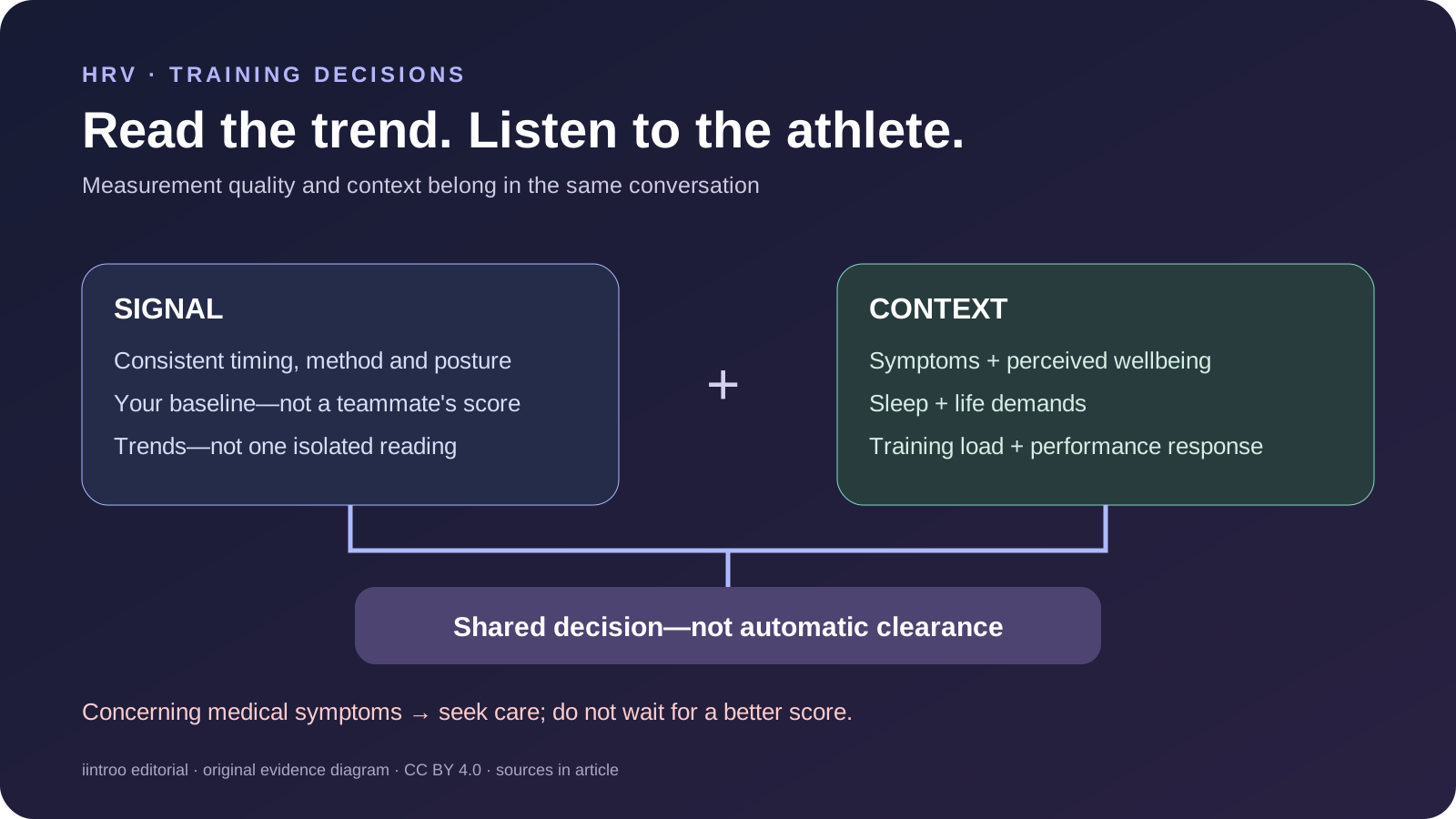
- Consistent measurement and personal trends are more informative than comparing one score with a teammate; symptoms must not be overridden by a green readiness label.
A useful signal is not a whole-athlete diagnosis
This guide is for endurance athletes and coaches interpreting a watch, chest strap or app. Heart rate variability describes fluctuations in the intervals between successive heartbeats. It gives information about cardiac autonomic regulation, influenced by training and wider life demands. Two recordings can have a similar average heart rate but different variability.
That does not make HRV a direct test of muscle repair, injury risk or readiness for every task. A green recovery score does not establish that a painful tendon can tolerate intervals; a low reading does not identify the cause. The decision needs context, and the number should remain an input rather than an instruction that overrules the athlete.
The training evidence is promising but modest
A 2021 systematic review and meta-analysis included eight studies, 198 participants and nine interventions. Compared with predefined training, HRV-guided programmes often used fewer moderate or high-intensity sessions. There was a statistically significant benefit for submaximal physiological measures, but the overall effects on performance and peak oxygen uptake were small and not statistically significant. This is not proof that buying a readiness device makes an athlete faster.
An August 2026 perspective revisits how readings become decisions. It highlights small, short and context-specific studies, inconsistent thresholds and opaque proprietary scores. It is a critical framework, not a new randomised trial or a pooled update. A device may measure a signal well while the rule translating that signal into today's workout remains inadequately validated.
Make measurements comparable before interpreting them
AIS guidance supports choosing a valid, reliable method that the athlete can use consistently. Morning and overnight approaches can both be useful, but their absolute values are not interchangeable. Keep the device, measurement timing and posture consistent where practical, and note changes in the protocol or software. A change of method may require a new baseline rather than a dramatic training adjustment.
The AIS guidance favours rolling trends rather than isolated readings and asks practitioners to consider the training phase, sleep, nutrition and other recovery factors. Do not compare your raw number with a teammate's as a fitness ranking. An unexpected result first raises a measurement-and-context question; it does not supply a universal threshold for cancelling or intensifying exercise.
Sources: 1
Keep a short wellbeing conversation beside the graph
A systematic review of athlete monitoring found self-reported measures sensitive to training-related changes in wellbeing. Fatigue, stress, mood and perceived recovery are not inferior simply because they are reported in words. Use a consistent, manageable check-in rather than collecting so many ratings that honest reporting becomes a burden.
For example, a rower returning from travel might log disrupted sleep, unusual session difficulty and a downward HRV trend. Together these justify a conversation about the plan; the graph alone cannot establish overtraining or illness. Conversely, normal HRV should not dismiss persistent fatigue or a marked performance decline. Agree in advance who reviews concerning patterns and how the athlete can report problems without selection pressure.
Medical symptoms are a separate decision pathway
Palpitations that keep returning, become more frequent or last more than a few minutes deserve medical advice, especially with a personal or family cardiac history. If palpitations occur with chest pain, breathlessness, feeling faint or fainting, seek emergency medical help. Do not wait for a better readiness score or use a training experiment to investigate the problem.
An HRV app is not an electrocardiogram-based diagnosis or a clearance service. A clinician may need a history, examination and appropriate testing to explain symptoms. This article is general education, not an individual training prescription or advice to change medication. The most useful monitoring system leaves room for the athlete's experience and qualified judgement.
Sources: 5