
Mononucleosis in athletes: protect the spleen, then rebuild
Infectious mononucleosis can enlarge the spleen and prolong fatigue. Stop sport during acute illness and use individual medical assessment for staged return.
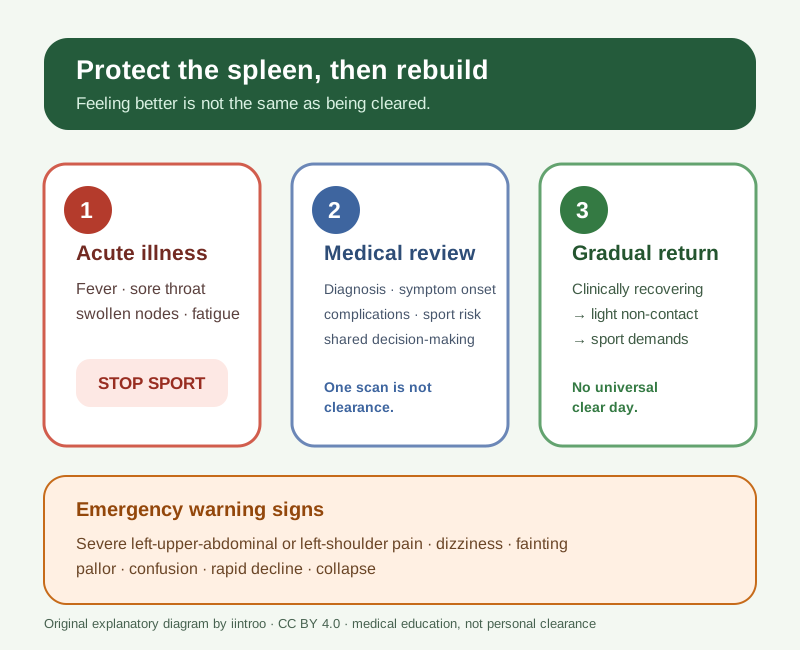
Key points
- Mononucleosis commonly causes fever, sore throat, swollen lymph nodes and fatigue; splenic enlargement may occur even when the athlete cannot feel it.
- Splenic rupture is rare but potentially life-threatening, so contact, collision, heavy straining and fall risk require individual medical clearance rather than self-testing.
- New severe left-upper-abdominal or left-shoulder pain, dizziness, fainting, pallor, confusion or collapse needs emergency assessment.
Recognise an illness that changes sport decisions
This guide is for athletes, parents, coaches and team health staff. Infectious mononucleosis is usually caused by Epstein-Barr virus and can present with fever, sore throat, swollen neck nodes and marked fatigue. Liver-test changes and an enlarged spleen are also common. Symptoms overlap with other infections, so a symptom list alone cannot confirm the diagnosis.
The acute illness is a reason to stop training and obtain clinical advice, not to preserve fitness with a hard session. The CDC notes that many people improve in two to four weeks, while fatigue can last longer. That typical course is not a clearance date, and an athlete who feels better may still have a return decision complicated by splenic enlargement.
Understand why the spleen changes the risk conversation
The spleen may enlarge during mononucleosis and rupture is rare but potentially fatal. Risk is greatest early after symptom onset, yet onset can be hard to date and published cases do not define a zero-risk day. Contact or collision, falling, blows to the abdomen and heavy straining therefore need a more cautious decision than ordinary walking or gentle daily activity.
New severe pain in the left upper abdomen or referred pain at the left shoulder, dizziness, fainting, pallor, confusion, a rapid decline or collapse requires emergency assessment. Do not press on the abdomen, ask the athlete to test it with exercise or transport an unstable athlete without emergency support. Follow local emergency instructions.
Use tests to answer clinical questions, not to self-clear
A clinician may use the history, examination and appropriate laboratory testing to establish the diagnosis and assess complications. Early heterophile-antibody tests can be falsely negative, and other infections can resemble mononucleosis. Antibiotics, antivirals or corticosteroids are not routine performance shortcuts; treatment decisions depend on the clinical situation.
Physical examination is not reliable enough to measure spleen size, while one ultrasound also has limitations because normal spleen size varies and baseline measurements are rarely available. The AMSSM statement supports individual shared decision-making rather than routine imaging as a universal clearance test. A normal-looking scan should not be used alone to overrule symptoms, timing and sport demands.
Reduce team spread without isolating the athlete socially
Epstein-Barr virus spreads mainly through saliva. Do not share drink bottles, utensils, mouthguards, lip products or toothbrushes, and clean shared equipment according to ordinary hygiene procedures. The CDC notes that people may carry the virus before symptoms and for a long time afterward, so there is no practical single isolation day that removes all risk.
Keep the athlete connected to the team through low-demand roles that do not expose them to impact or pressure to train. Protect medical privacy while telling the people who manage shared equipment what controls are needed. Teammates with symptoms should seek their own assessment rather than assume they have the same infection or borrow medicines.
Return gradually after clinical recovery
The athlete should be free of fever, adequately hydrated and clinically recovering before light activity is considered. A commonly cited minimum is three weeks from symptom onset before athletic activity, followed by gradual light non-contact work, but the AAFP and AMSSM sources frame this within individual assessment and shared decision-making. Uncertain onset, persistent fatigue, abnormal findings and sport hazards can change the plan.
Progress from light activity toward training demand while monitoring fatigue, throat or systemic symptoms, abdominal discomfort and next-day recovery. Contact, collision, heavy lifting and high fall-risk sport require explicit discussion with the treating clinician. Recurrence, chest symptoms, breathlessness, fainting or abdominal pain stops progression and needs reassessment; no online timeline can personally clear an athlete.