
Ketone supplements for athletes: no performance guarantee
Ketone drinks raise blood ketones, but pooled trials show no dependable performance gain. Recovery claims, gut effects and contamination still matter.
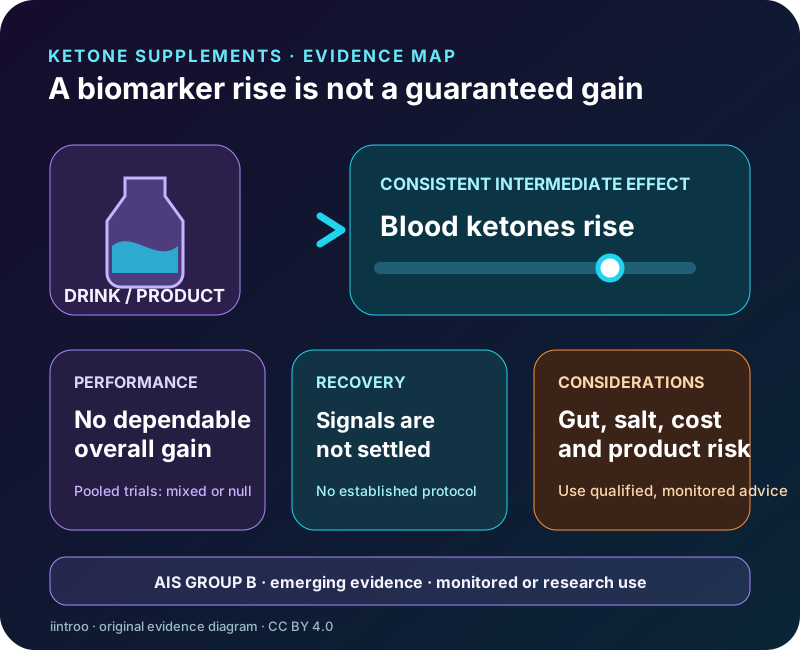
Key points
- Exogenous ketones can raise blood ketone concentration without fasting, but a biomarker change is not proof of better performance.
- Meta-analyses and a 2026 systematic review report no dependable overall performance benefit and substantial variation between protocols.
- AIS places ketone supplements in Group B: emerging evidence suited to research or case-managed monitoring rather than routine use for every athlete.
A higher ketone reading is an intermediate result
Ketone esters, ketone salts and precursors are sold to raise circulating beta-hydroxybutyrate without requiring fasting or a ketogenic diet. They are not interchangeable products: chemical form, active isomer, accompanying minerals, dose and timing change the blood response and possible side effects.
A measurable rise in blood ketones confirms exposure, not an athletic benefit. Energy use during exercise is complex, and shifting substrate use can be neutral, useful in a narrow context or counterproductive. AIS classifies ketone supplements in Group B, meaning emerging support that deserves further research or monitored use rather than routine recommendation.
Pooled performance results do not support a guarantee
A 2022 meta-analysis included eight endurance trials with 80 participants—77 men and three women—and found no significant overall improvement in time trial or time-to-exhaustion outcomes. Small samples, male-dominated recruitment and different drinks and exercise tests limit how far that average can travel.
A 2026 systematic review of 26 controlled studies again described heterogeneous results: some protocols reported benefits, others no change or impairment. Co-ingestion, exercise intensity, training status and acid-base effects may influence outcomes. The review does not identify a universally effective protocol or justify copying a professional cycling anecdote.
Recovery remains an open research question
Post-exercise research has examined glycogen restoration, muscle signalling, sleep and heavy-training tolerance. Some small studies report favourable biological or training-block outcomes, but the AIS notes that recovery and chronic-use protocols are not established. Changes in a laboratory signal do not automatically improve health, adaptation or competition results.
Appetite suppression is especially sensitive in sport. Using a supplement to eat less after demanding training can conflict with energy availability and recovery. An athlete considering any body-composition strategy should involve a sports dietitian and medical team rather than using ketones to bypass food or symptoms of under-fuelling.
Tolerability, product form and context matter
Studies report gastrointestinal symptoms that vary by compound, amount, fed state and exercise context. Ketone salts can also deliver a substantial mineral load, while ester products are costly and may change blood acidity. A small laboratory tolerability study cannot guarantee comfort during a long race, heat exposure or travel.
People with diabetes, pregnancy, gastrointestinal disease, kidney or heart conditions, medication use or unexplained ketones need individual clinical advice. Exogenous ketones are not a treatment for diabetic ketoacidosis, and nausea, vomiting, abdominal pain, deep breathing or altered alertness in a person with diabetes needs their urgent-care plan rather than a supplement discussion.
Reduce supplement and anti-doping risk
Not being named on the prohibited list does not make every commercial product risk-free. Multi-ingredient products can be mislabelled or contaminated. Sport Integrity Australia advises that no supplement can guarantee protection from a positive test and that independently batch-tested products carry less risk than untested products.
Start with the performance problem, food plan and quality of evidence. If qualified staff still identify a reason to trial a product, record the exact batch and monitor benefit and adverse effects in training before competition. This article does not endorse a brand, prescribe a dose or promise recovery or performance gains.