
Beetroot and nitrate for athletes: small gains, variable response
Dietary nitrate may help selected exercise tasks, but benefits are small and variable. Product content, oral bacteria, gut tolerance and testing matter.
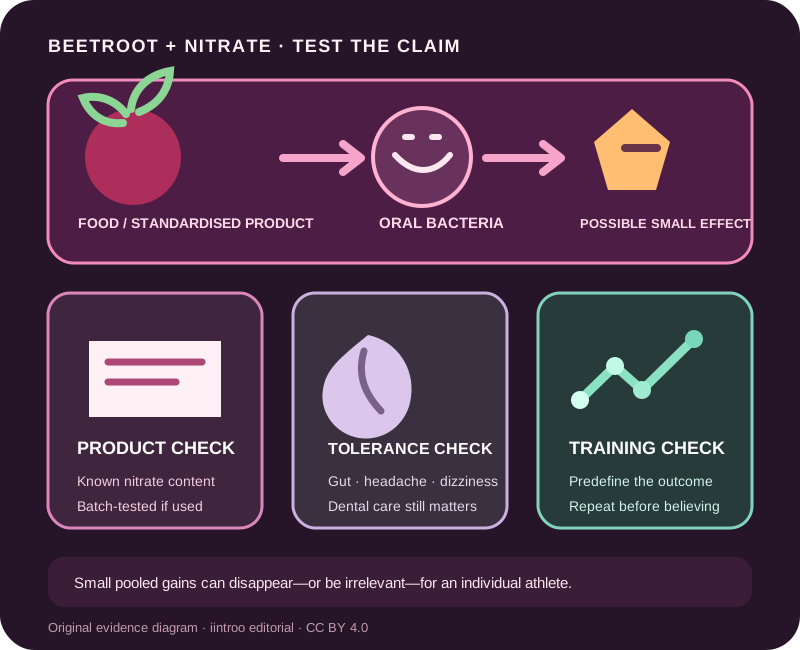
Key points
- Meta-analysis finds a small average performance effect from dietary nitrate, with larger uncertainty across events, training status, products and individuals.
- Oral bacteria help convert nitrate along the nitrate–nitrite–nitric oxide pathway; antibacterial mouthwash can disrupt this pathway, but athletes should not abandon necessary dental care.
- A clearly labelled, independently batch-tested product and a representative training trial are safer than a first-use experiment on competition day.
A small average effect is not a promise
This guide is for adult athletes and support teams considering nitrate-rich food or a beetroot concentrate. The AIS places dietary nitrate in Group A for evidence-supported use in specific situations. A meta-analysis of 123 randomised trials and 1,705 adults found a small average improvement, with the clearest signal in tasks lasting roughly two to ten minutes.
The average effect was modest and does not mean every athlete or event benefits. Products, training status, sex representation, test protocol and environmental conditions varied. Nitrate is not a substitute for training, pacing, carbohydrate availability or sleep, and a statistically significant pooled effect may be too small to matter for an individual athlete.
Food, concentrate and chemistry are not interchangeable
Leafy greens and beetroot naturally contain nitrate, but the amount changes with plant variety, soil, storage and preparation. A vegetable-rich diet provides broader nutrition without guaranteeing the standardised intake used in a trial. Concentrates may state a nitrate amount, while ordinary beetroot juice, powders and homemade preparations may not.
The AIS warns not to confuse nitrate with nitrite and does not recommend improvised nitrate salts. This article deliberately avoids turning research ranges into a personal dose. A sports dietitian can decide whether a standardised product is relevant, how it fits the event and whether medication, low blood pressure, gastrointestinal disease or another health issue changes the risk discussion.
The mouth is part of the pathway—not a reason to neglect it
Oral bacteria reduce nitrate to nitrite before further conversion toward nitric oxide. The performance meta-analysis found that practices harmful to nitrate-reducing bacteria moderated the observed effect, and the mouth-rinse review describes lower salivary or plasma nitrate-related measures after antibacterial mouthwash in included studies.
This does not justify stopping prescribed dental treatment, ignoring gum disease or copying an internet mouthwash ban. Oral health itself matters to athletes. Discuss regular medicated mouthwash with a dentist and the supplement plan with a sports dietitian; coordinate timing only when it is clinically appropriate. Routine brushing and evidence-based dental care should not be sacrificed for a speculative performance gain.
Test the whole protocol in training
If a qualified professional supports a trial, use the exact labelled product and timing in a representative session. Predefine an event-relevant outcome, and record pacing, perceived effort, gastrointestinal symptoms, headache, dizziness, blood-pressure symptoms and changes in urine or stool colour. Repeat under comparable conditions before attributing one good performance to nitrate.
The literature contains more men than women and far fewer Para athletes, and highly trained competitors may respond differently from recreational participants. Multi-day events and mixed demands add another layer. Stop the experiment when there is no meaningful benefit or when symptoms, preparation burden or disrupted eating outweigh it.
Legal does not mean contamination-free
Dietary nitrate is not a prohibited substance, but a commercial product can still contain undeclared or contaminated ingredients. The IOC and Sport Integrity Australia emphasise a food-first approach, expert guidance and independent batch testing to reduce—not eliminate—anti-doping risk. Keep the product and batch record when a supplement is used.
Seek medical advice for fainting, persistent vomiting, severe headache, chest symptoms, an allergic reaction or another concerning response. More product is not automatically more effective. For many athletes, ordinary nitrate-rich vegetables are a useful part of the diet while a targeted concentrate offers no meaningful advantage.