
Caffeine for athletes: performance gains, sleep costs and side effects
Caffeine may improve selected exercise tasks, but response varies and late intake can impair sleep. Use the lowest effective strategy—not more by default.
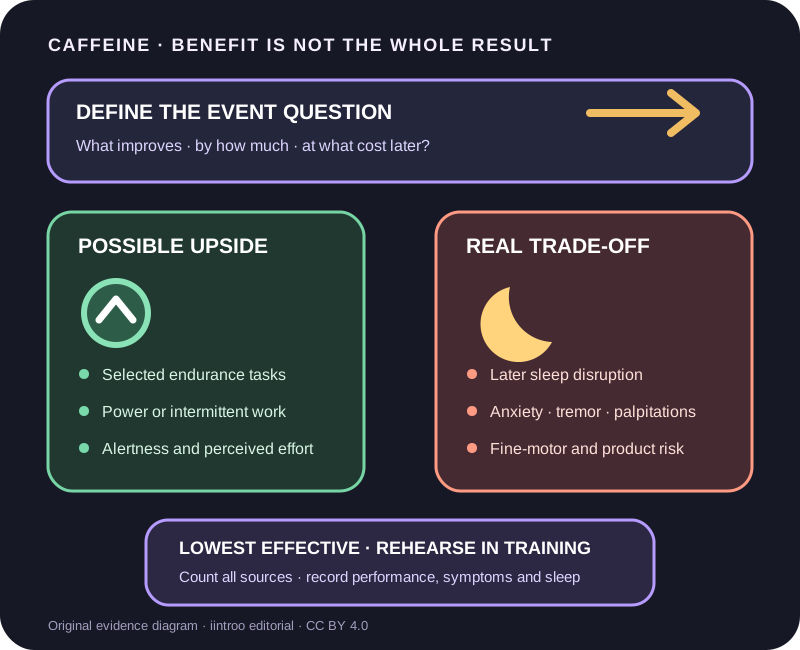
Key points
- Caffeine can improve several endurance, power and intermittent-sport outcomes on average, but the size and direction of response vary between tasks and individuals.
- More is not automatically better: higher exposure raises the likelihood of anxiety, palpitations, gastrointestinal symptoms, fine-motor disruption and poor sleep.
- Late-day competition creates a real trade-off because any acute gain may be followed by poorer sleep and recovery; timing should be tested in representative training.
An average benefit is not a personal guarantee
This guide is for adult athletes and support teams considering caffeine from coffee, sports foods or supplements. An umbrella review of 21 meta-analyses found benefits across several endurance, strength, power, jumping and speed outcomes, with evidence quality generally moderate but some prediction intervals including no benefit. The AIS likewise recognises caffeine as a well-supported performance ingredient while emphasising that the response depends on the event and the person.
Caffeine mainly changes alertness and perceived effort; it does not replace sleep, conditioning, fuelling or pacing. The relevant question is not whether caffeine works in general, but whether a defined source and timing improve the athlete's meaningful event measure without an unacceptable cost. Habit, anxiety, medication, pregnancy, age, sleep need and individual metabolism can change both benefit and harm.
Use the smallest useful experiment
The AIS fact sheet notes that benefit often plateaus before the high intakes used in older studies and advises the lowest effective strategy. This article does not turn population research into a personal dose. A sports dietitian can account for total daily intake, body size, the event, the product, food, medication and medical history. Pure or highly concentrated caffeine is dangerous and has no place in an improvised athlete protocol.
Trial the exact product in representative training, not for the first time at a final or selection event. Predefine the performance measure and record perceived effort, tremor, coordination, heart symptoms, gut symptoms, anxiety and sleep that night. Repeat under similar conditions before attributing a good session to caffeine. Stop when the effect is absent, inconsistent or outweighed by symptoms.
Late events borrow from the recovery window
Caffeine has a multi-hour half-life, with substantial individual variation. A meta-analysis of late-afternoon and evening use in athletes included only 10 studies and 128 participants, mostly men. It found a small reduction in sleep efficiency in the randomised evidence and a non-significant trend toward shorter sleep, while athletes consistently reported worse sleep. Sensitivity analyses make the exact average uncertain, but the recovery trade-off is credible.
For an evening match, the team should compare the possible performance value with travel, early training, multi-day competition and the athlete's known sleep response. A wearable score is not required to notice prolonged sleep onset or repeated waking. Preserve a cool, dark, predictable sleep opportunity and avoid solving fatigue from one late caffeine strategy with more caffeine the next morning.
Side effects belong in the decision
The sport side-effect review found higher prevalence or magnitude of all evaluated adverse effects versus placebo, with higher exposures generally producing more problems. Palpitations and impaired sleep onset were prominent. Anxiety, agitation, tremor, headache, gastrointestinal upset and altered fine motor control may be decisive in precision sports even when the average physiological effect looks favourable.
Seek urgent care for severe chest pain, collapse, marked breathing difficulty, seizure or suspected overdose. Athletes with cardiac rhythm concerns, uncontrolled blood pressure, panic symptoms, relevant medication use or pregnancy need individual medical advice. Children and adolescents are not smaller adults; the existing youth energy-drink guide addresses their separate risk context, and a performance protocol should not be inferred from this adult-focused review.
Legal status does not remove product risk
Caffeine appears on WADA's 2026 Monitoring Program, which explicitly covers substances not on the Prohibited List that WADA tracks for misuse patterns. Monitoring is not the same as prohibition. Athletes still need to check the current list and sport rules at the time of use rather than relying on an old screenshot or a teammate's assurance.
Multi-ingredient pre-workouts can misstate caffeine content or introduce prohibited contamination. Prefer a clearly labelled, independently batch-tested product when supplementation is justified, retain the batch record and count caffeine from coffee, tea, energy drinks, gels and medicines. The safest and most useful decision for many sessions is ordinary food, hydration and protected sleep rather than another stimulant.