
Athletes on long journeys: blood-clot prevention starts with individual risk
Long sitting matters, but most travel-associated blood clots occur in people with additional risk factors. Plan movement, recognise warning signs and leave stockings or medication decisions to individual clinical advice.
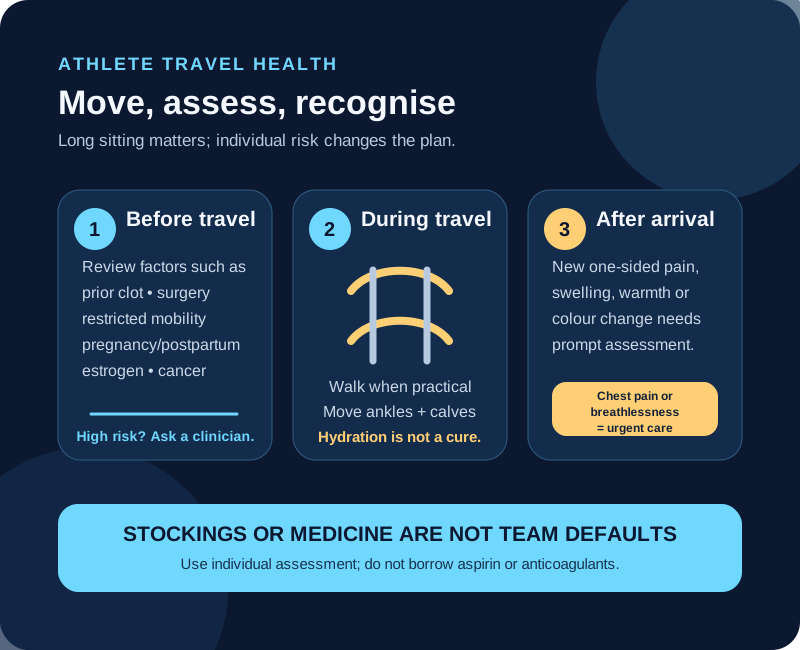
Key points
- Long-distance travel is associated with a small overall venous-thromboembolism risk, and most events occur in travellers who also have individual risk factors.
- Regular leg movement and opportunities to walk are reasonable; hydration supports general travel health but has not been shown to prevent travel-related blood clots by itself.
- Compression stockings, aspirin and anticoagulants are not universal travel routines and require risk-based clinical advice.
Start with the traveller, not the team itinerary
This guide is for athletes, coaches, medical teams and families planning a long flight, bus journey, rail trip or car ride. Limited movement for several hours can contribute to venous stasis, but athletic fitness does not make every traveller high risk and a long journey does not make a clot inevitable. The CDC describes the absolute risk after long flights as low, with most travel-associated events occurring in people who have at least one additional risk factor.
Relevant factors can include a previous clot, recent surgery or trauma, a limb cast or restricted mobility, active cancer, pregnancy or the postpartum period, estrogen-containing medication, a known thrombophilia, obesity, older age or a strong family history. A pre-travel conversation with an appropriately qualified clinician is especially important when several factors combine or the athlete is returning from an injury or operation.
Build movement into the journey
For a long journey, create safe opportunities to stand or walk and use seated calf and ankle movements when remaining seated. An aisle seat can make movement easier on a flight. On a bus or car journey, plan suitable stops instead of relying on a promise to move later. These measures are reasonable because immobility is central to travel-related risk, although the evidence does not identify one perfect interval or exercise sequence for every athlete.
Wear clothing and footwear that do not unnecessarily restrict movement. Maintain ordinary access to fluid and food for the journey, but do not market extra water as a proven anti-clot treatment. The CDC notes that hydration is reasonable and unlikely to harm most travellers, yet evidence is insufficient to recommend it specifically for preventing travel-associated venous thromboembolism.
Do not turn prophylaxis into team folklore
The American Society of Hematology advises against routine compression stockings, low-molecular-weight heparin or aspirin for long-distance travellers without VTE risk factors. For people at substantially increased risk, the guideline conditionally suggests properly fitted graduated compression stockings or preventive anticoagulation, but the certainty of evidence is very low and the decision belongs with a clinician who can assess bleeding risk and the complete medical history.
Do not borrow medication, start aspirin because another athlete uses it, or change prescribed anticoagulation around competition or contact sport without specialist advice. Compression stockings also need the correct size and pressure; a generic team purchase is not a substitute for individual assessment. This article does not provide a drug, dose, stocking pressure or flight-clearance decision.
Recognise symptoms after arrival
Possible deep-vein thrombosis symptoms include new pain or tenderness, swelling, warmth or colour change, usually in one limb. These signs are not specific and cannot be diagnosed from appearance alone. Prompt medical assessment is needed, especially after travel when the athlete also has risk factors.
Unexplained shortness of breath, chest pain that may worsen with breathing, coughing blood, fainting, marked light-headedness or a rapid or irregular heartbeat can indicate pulmonary embolism and require urgent emergency care. Do not ask the athlete to exercise, massage a painful leg or wait for a team training session to see whether the symptoms settle.
Separate travel advice from return-to-sport clearance
A diagnosed clot requires medical treatment and an individual discussion about travel and sport. Anticoagulation can add bleeding risk, which is especially relevant to collision, contact and fall-risk sports. Return decisions should account for the cause of the clot, symptoms, treatment, the sport and the consequences of bleeding; there is no universal date that this guide can supply.
The travel evidence relies heavily on observational studies, different definitions of a long journey and studies of asymptomatic as well as symptomatic clots. Guideline recommendations for preventive medication or stockings are therefore conditional and risk based. A useful team policy makes movement practical, preserves access to individual care and teaches emergency symptoms without labelling every traveller as a patient.