
Mental health after injury: support through recovery
Injury can disrupt far more than training. A practical guide to checking in during rehabilitation, finding confidential support and recognising when prompt help is needed.
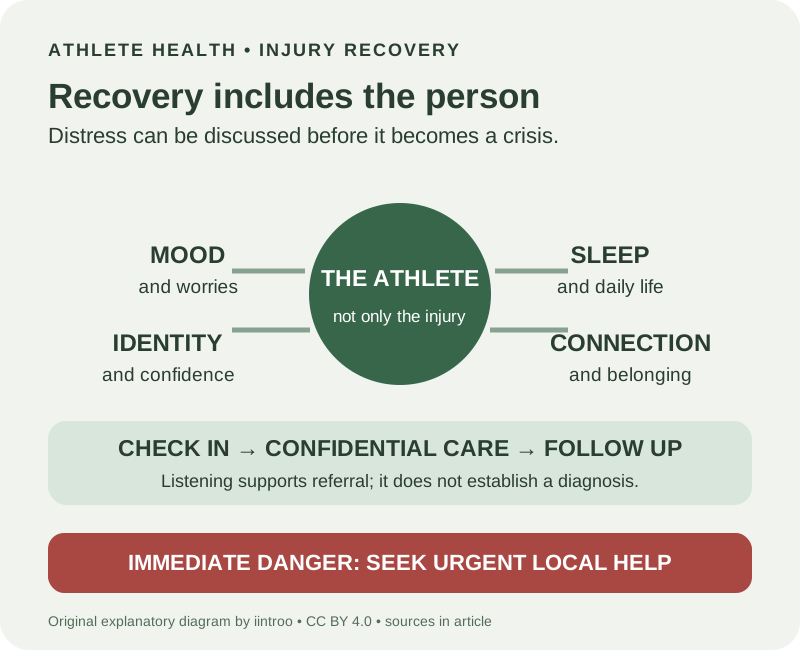
Key points
- Mental health belongs in the injury-recovery conversation.
- Ask how confidentiality works before sharing sensitive information.
- Screening supports referral; it does not establish a diagnosis.
- Immediate safety concerns need immediate professional help.
Make room for the emotional impact
An injury changes daily routines, sport participation and the uncertainty an athlete faces. Feeling distressed deserves attention alongside the physical recovery plan. You do not have to wait for a named mental health condition before discussing how you are coping.
A 2026 systematic review found associations between injury and mental health symptoms in elite athletes. Its varied definitions and largely observational evidence cannot establish cause and effect. The findings do not mean that distress caused your injury, or that every injured athlete will develop a mental health problem.
Start with your own experience: what has changed, what feels hardest, and what would make this week more manageable? Coaches can ask about the person’s experience without trying to explain, diagnose or immediately solve it.
Sources: 4
Build support into rehabilitation
Agree regular opportunities to talk with the rehabilitation team. Discuss worries about reinjury and confidence as well as physical progress. The IOC’s 2026 consensus recommends assessing psychological responses to injury and supporting athletes throughout recovery.
Choose achievable goals together and review them as circumstances change. Keep contact with teammates or familiar sport routines where useful and medically appropriate; ask which activities feel supportive. Coaches can offer involvement without pressure to return early.
Physical improvement and psychological readiness need consideration together. Bring concerns to the treating team rather than using a competition date or a good training session as the sole return criterion.
Sources: 1
Make confidential help easier to reach
Fear of deselection, stigma and uncertainty about confidentiality can discourage help-seeking. A systematic review of athlete help-seeking identified these sport-related barriers, although experiences varied substantially between studies. A clear route to support matters more than assuming everyone knows where to go.
Ask your team doctor, primary-care clinician or an appropriately qualified mental health professional how to arrange a private appointment. Before discussing sensitive information, ask who can read the notes, what information could be shared with the sport organisation, and what limits apply when safety or safeguarding is involved. Avoid assuming that a promise of complete secrecy is possible.
Coaches can explain available services, ask whether the athlete wants help making contact, and follow up without requesting clinical details. Where a team service feels difficult to approach, ask about an independent option, its cost and accessibility. Support should be understandable and usable for the individual athlete.
Sources: 3
Recognise when a professional conversation is needed
Pay attention when changes in thoughts, feelings, sleep, eating or behaviour create distress or interfere with relationships, education, work or rehabilitation. Tell a qualified professional about worsening symptoms, difficulty managing daily life, or using substances to cope. A coach’s observations can support a referral, but cannot establish a diagnosis.
The revised IOC assessment tool, SMHAT2, helps licensed health professionals identify athletes who may need further assessment. Injury and surgery are among the significant events when it can be used. Its screening questions are a starting point for clinical care, not a test an athlete must pass to prove they deserve support.
You can prepare for an appointment by noting what changed, when it began, how it affects daily life and what support you already have. Ask about the next step and who will follow up. The tool was developed for elite athletes aged 16 and older; younger athletes need age-appropriate assessment.
Sources: 2
Act immediately when safety is at risk
Thoughts or statements about harming yourself or someone else need urgent professional help. If there is immediate danger, an attempt, inability to stay safe, or severe agitation or confusion, contact local emergency services immediately and follow the team’s emergency plan where available. Prioritise everyone’s safety and involve trained responders.
Sports organisations should establish and rehearse mental health emergency plans with clear roles and escalation routes. After urgent care, arrange ongoing support with qualified professionals; a single crisis conversation does not replace follow-up.
Sources: 1