
Mindfulness for athletes: a skill option, not a performance cure
Mindfulness may help athletes relate differently to competitive anxiety, but effects weaken against active controls and it cannot replace mental healthcare.
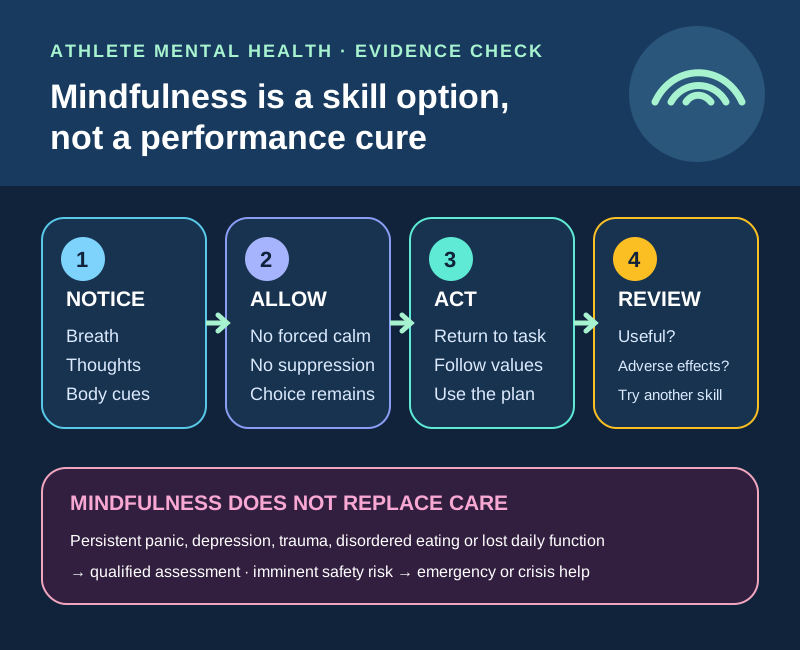
Key points
- Mindfulness trains attention and a less reactive relationship to thoughts and sensations; it is not the same as eliminating anxiety or forcing relaxation.
- A 2026 meta-analysis found lower competitive anxiety overall, but the effect was near zero when mindfulness was compared with active control programmes rather than waitlists.
- Mindfulness can sit inside a broader sport-psychology or mental-health plan, but it is not a stand-alone treatment for severe, persistent or risky symptoms.
Define the skill before promising an outcome
This guide is for athletes, coaches, parents and support teams considering mindfulness for competition or recovery. Mindfulness practices commonly train present-moment attention and a more accepting, less automatic response to thoughts, emotions and body sensations. The aim is not to empty the mind, suppress adrenaline or prove that a calm athlete will always perform better.
Programmes differ in length, teacher training, home practice and whether they include acceptance, compassion or values work. A breathing exercise, a phone app and a clinician-delivered programme are therefore not interchangeable. The 2026 IOC consensus recommends evidence-based mental-health systems and qualified care; it does not present one psychological technique as a universal solution.
Read the anxiety result against the comparison group
A 2026 meta-analysis of 18 controlled trials involving 667 athletes reported a moderate overall reduction in competitive anxiety. However, statistical heterogeneity was substantial. The estimated benefit was moderate against a waitlist but close to zero against active controls, suggesting that attention, expectation, education or another structured activity may explain part of the apparent effect.
Earlier elite-athlete and umbrella reviews also reported possible improvements in anxiety, stress, mindfulness or well-being, while warning about small samples, varied measures and study quality. These results justify offering mindfulness as an option and studying it better; they do not prove that it prevents a disorder, works for every sport or improves medal outcomes.
Keep performance claims modest
Meta-analyses of psychological interventions report potentially useful effects for mindfulness- and acceptance-based approaches, imagery and other skills, but estimates are not stable and robust trials remain limited. Some studies measure self-rated flow or attention rather than objective competition performance, and short follow-up cannot show whether a benefit lasts through a season.
Choose the target before the programme: noticing attentional drift, responding to mistakes, tolerating pre-start sensations or recovering after an injury are different goals. Track a small number of meaningful outcomes and unwanted effects. If practice increases distress, rumination, dissociation or sleep problems, stop and seek qualified advice rather than assuming discomfort proves the method is working.
Fit practice into the sporting environment
A brief, voluntary practice can be rehearsed away from competition and then adapted to a warm-up, reset routine or recovery period. Athletes should be free to choose another evidence-based psychological skill. Coaches can protect time and privacy but should not require personal disclosure, monitor app data without consent or use mindfulness to make athletes tolerate bullying, unsafe workloads or discriminatory environments.
Qualified sport psychologists can combine attention skills with goal setting, imagery, cognitive and behavioural strategies or clinical referral as appropriate. The IOC consensus emphasises that mental health is shaped by the training and competition environment as well as the individual. Changing a harmful system is not replaced by teaching the athlete to breathe through it.
Escalate care when symptoms are more than nerves
Persistent panic, depression, disordered eating, trauma symptoms, substance problems, severe sleep disruption or loss of daily function needs confidential assessment by an appropriately qualified professional. Immediate local emergency or crisis help is required for imminent risk of self-harm, harm to others, psychosis, severe confusion or inability to stay safe.
Mindfulness may be one component of treatment when a clinician and athlete decide it fits, but an app is not screening, diagnosis or therapy. Teams should publish clear referral routes and emergency roles before a crisis. This page provides general education and cannot determine whether a particular athlete should start, continue or stop a mental-health intervention.