
Mouth taping for athlete sleep: a trend is not a breathing assessment
Small, selected sleep studies do not justify taping every athlete's mouth. Snoring, gasping, nasal obstruction and daytime sleepiness need evaluation of the cause—not a recovery hack.
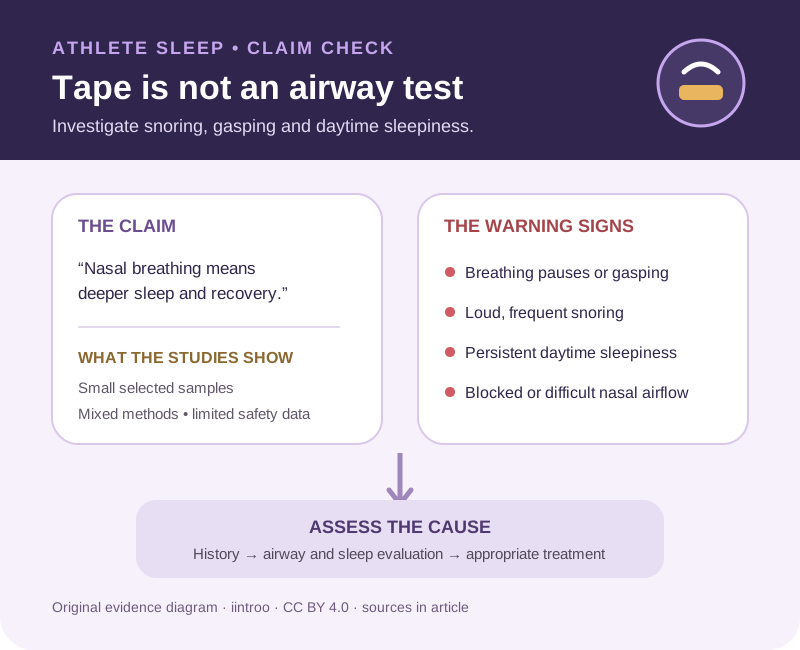
Key points
- A 2025 systematic review found only ten small studies with 213 participants, many excluding nasal obstruction; the evidence did not support indiscriminate mouth taping.
- A narrow 2025 trial studied tape as an adjunct to prescribed CPAP in selected adults with obstructive sleep apnoea, not as a substitute for diagnosis or treatment.
- Loud snoring, witnessed breathing pauses, gasping and persistent daytime sleepiness should prompt qualified assessment rather than self-treatment with tape.
Separate a recovery claim from an airway problem
This guide is for athletes, coaches and support teams seeing mouth taping promoted for deeper sleep, nasal breathing, recovery or performance. Closing the lips does not identify why a person breathes through the mouth. Nasal congestion, allergy, structural obstruction, sleep-disordered breathing, medication, alcohol, illness and other factors can produce similar observations but require different responses.
Sleep supports health and recovery, but the athlete consensus does not recommend mouth taping as a general sleep intervention. A social-media testimonial or improved app score cannot show that airflow, oxygenation or sleep architecture improved. Athletes should avoid turning a visible behaviour into a diagnosis or assuming that forced nasal breathing treats its cause.
Read the mouth-taping evidence at its actual size
The 2025 systematic review included ten studies and 213 participants. Designs, tape or oral-occlusion methods and populations varied; several studies excluded people with nasal obstruction. Two studies reported improvement in selected sleep-apnoea measures, while others found no difference, and authors identified possible harm when airflow through the nose is limited. That is a small, selected evidence base rather than support for population-wide use.
A 2026 review found nasal obstruction was associated with worse sleep-apnoea indicators, while only two mouth-taping studies were suitable for narrative review. Heterogeneity limited generalisation. These findings make assessment of nasal obstruction more important; they do not prove that tape is a safe treatment for an athlete who snores or wakes unrefreshed.
Do not turn an adjunct study into a do-it-yourself treatment
A 2025 randomised crossover study found better adherence when selected adults already using prescribed CPAP added hypoallergenic mouth tape. Participants had diagnosed obstructive sleep apnoea, used a therapeutic device and were studied under a protocol; adverse effects were reported. This does not establish safety for an undiagnosed athlete, someone without CPAP or a person with nasal blockage.
Treatment for snoring or sleep apnoea depends on the cause and can include behavioural, positional, dental, airway or positive-pressure approaches selected by qualified professionals. Tape should not replace prescribed CPAP, an oral appliance, medication or assessment. Teams should not distribute it as a standard recovery product or monitor compliance with a private sleep practice.
Escalate symptoms instead of hiding them
Seek qualified assessment for loud or frequent snoring, witnessed breathing pauses, choking or gasping during sleep, morning headaches, unrefreshing sleep, impaired concentration or persistent daytime sleepiness. Falling asleep while driving, operating equipment or during another safety-critical task requires an immediate safe stop and urgent advice. A normal training session or wearable score does not rule out a sleep disorder.
Nasal obstruction, breathing difficulty, recurrent nosebleeds, facial pain or persistent allergy symptoms also deserve appropriate evaluation. Emergency breathing difficulty, chest pain, blue or grey colour, severe confusion or inability to stay awake needs local emergency care. Do not tape over a symptom while waiting for it to disappear.
Build sleep support around schedule, symptoms and privacy
Start with the athlete's sleep opportunity, training and travel schedule, bedroom environment, caffeine and alcohol timing, medication, illness and subjective alertness. A simple multi-night diary can help organise the conversation. Coaches can protect sleep opportunity and referral access without collecting intimate breathing recordings or asking teammates to diagnose each other.
If a clinician recommends a specific adjunct after assessment, follow that plan and review response and side effects. Otherwise, uncertainty is a reason to investigate, not to copy a viral protocol. This article does not diagnose sleep apnoea, recommend taping or replace individual sleep or airway care.