
Sport without a spleen: separate return decisions from infection readiness
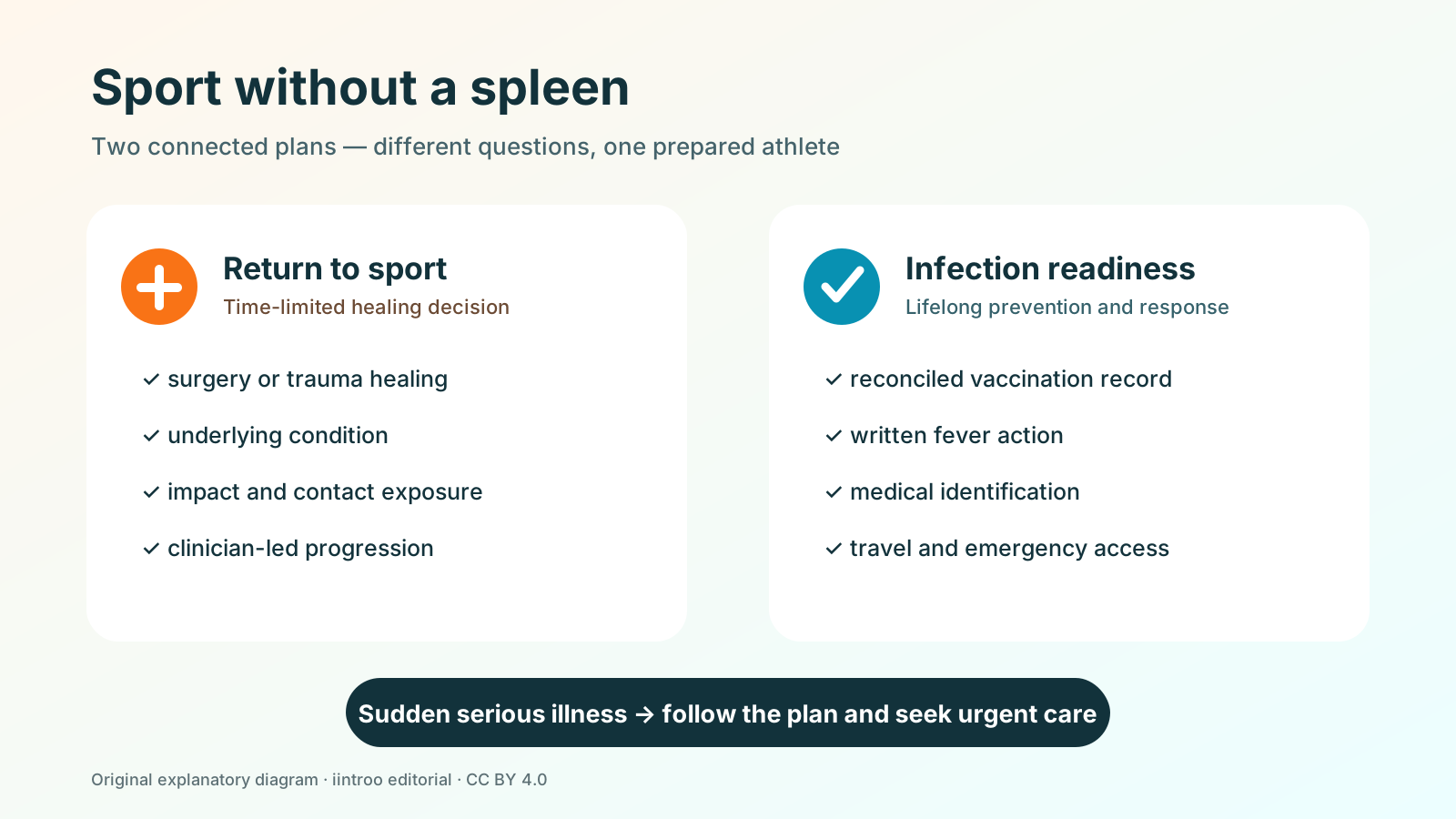
After splenectomy, returning to sport and lifelong infection readiness are different decisions. Build both plans with the treating clinical team.
Key points
- Return after surgery, abdominal trauma or the illness that led to splenectomy is an individual healing decision; living without a spleen is not itself a universal lifelong ban on sport.
- Asplenia increases the risk that some bacterial infections can become severe quickly, so vaccination, fever action and travel preparation should be written before training resumes.
- Fever, rigors or sudden serious illness in a person without a functioning spleen requires urgent medical assessment under their clinician-authored emergency plan.
Keep the short-term return decision separate from lifelong prevention
This guide is for athletes who have had their spleen removed, have congenital asplenia or have a spleen that does not function normally, and for the families, coaches and medical teams supporting them. Two questions are often mixed together. First, is the athlete healed from surgery, trauma or the disease that led to splenectomy and ready for the demands and impact exposure of a particular sport? Second, is the lifelong infection-prevention and emergency plan complete? A satisfactory answer to one does not answer the other.
There is no credible one-size-fits-all date for return. Abdominal healing, pain, strength, wound status, associated injuries, medication, the underlying condition and the chance of a direct abdominal blow all matter. The operating or treating team should set staged activity and contact boundaries. An athlete recovering from recent abdominal surgery is not comparable with someone years after an uncomplicated splenectomy. Likewise, guidance about an enlarged spleen during infectious mononucleosis addresses rupture risk and must not be copied onto a person whose spleen is absent.
Build infection protection around current local guidance
The spleen helps clear certain encapsulated bacteria. CDC and other national guidance therefore identify anatomic or functional asplenia as a risk condition for pneumococcal, meningococcal and Haemophilus influenzae type b disease. The exact vaccines, products, doses and intervals depend on age, previous records, country, immune status and changing schedules. Ask a clinician or vaccination service to reconcile the record rather than using a generic online list, and keep a copy that can travel with the athlete.
Some clinical guidance also considers preventive or standby antibiotics for selected people, but this is not a team prescription. The drug, allergy check, duration and circumstances for use must be written by the athlete's clinician and aligned with local antimicrobial guidance. A standby dose is not permission to continue training or delay care. Influenza vaccination and ordinary infection controls can also reduce avoidable illness, yet no vaccine plan removes all risk. The useful performance habit is reliable follow-through, not false reassurance.
Make fever and sudden illness an operational plan
Severe infection after splenectomy is uncommon, but it can progress quickly. Fever, shaking chills, rapidly worsening illness, unusual drowsiness, confusion, breathing difficulty, a widespread rash, collapse or signs of shock demand urgent medical assessment. Follow the athlete's written plan and local emergency pathway. Do not wait for the next morning, ask a coach to diagnose the cause, or assume that recent hard training explains a sudden systemic illness. If the person is deteriorating, activate emergency services.
The plan should state who to call, where to go, what information to give, and how any clinician-prescribed emergency medicine is used. A medical alert card or identification can tell an unfamiliar responder that the athlete has no functioning spleen. Coaches and travel leaders need only the agreed actions, emergency contacts and medication-handling instructions; they do not need the athlete's full history. Rehearse the route at home venues and reconsider it when the team travels to places with different access to care.
Prepare travel and contact exposure without inventing certainty
International competition can add malaria, animal-bite and remote-care risks. People without a functioning spleen may have a higher risk of severe malaria, so destination-specific advice, bite prevention and any prescribed prophylaxis should be arranged early through a qualified travel-health service. An animal bite needs prompt medical advice because particular infections can be serious in asplenia. Carrying records, a medical alert, insurance details and enough prescribed medicine in hand luggage is more useful than a last-minute supplement or internet antibiotic purchase.
Contact and collision sport decisions should describe the actual exposure, protective equipment rules, venue support and the athlete's recovery rather than implying that padding makes every situation safe. No guard prevents infection and evidence that a particular guard eliminates abdominal injury is limited. Revisit the plan after a new illness, abdominal injury, surgery, medication change or move to a more remote competition. This article does not clear participation, select vaccines or prescribe antibiotics; it helps keep a time-limited return decision and lifelong infection readiness visible at the same time.