
Blood donation and training: plan for recovery and protect iron stores
Whole-blood donation saves lives but temporarily reduces oxygen-carrying capacity and removes iron. Schedule demanding sessions carefully and use the blood service—not guesswork—for eligibility and recovery advice.
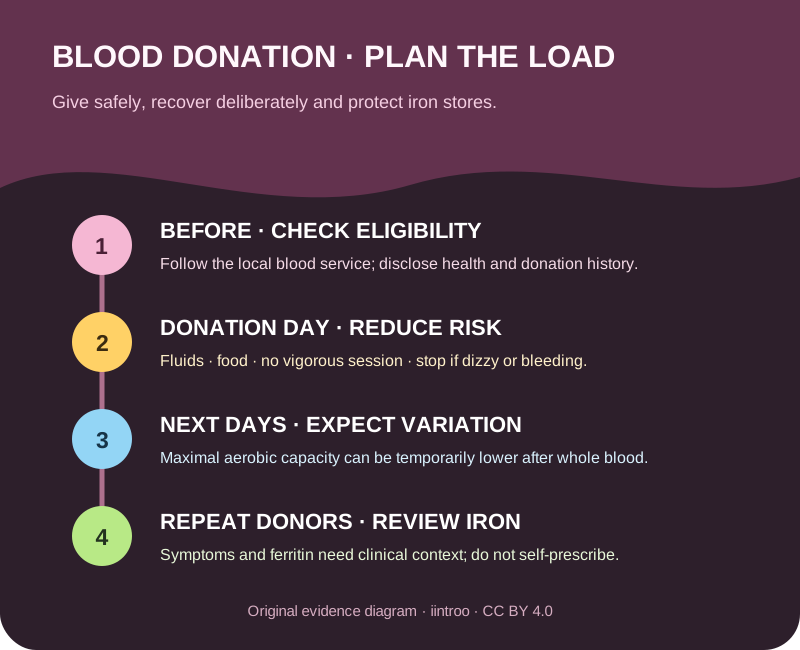
Key points
- A standard whole-blood donation can temporarily reduce haemoglobin, maximal oxygen uptake and maximal exercise capacity.
- Donation haemoglobin screening does not directly measure iron stores, so repeated donation can contribute to iron deficiency before anaemia is detected.
- Follow the local blood service's eligibility and post-donation instructions; do not self-prescribe iron solely to accelerate return to training.
Donation eligibility comes before the training calendar
This guide is for athletes considering whole-blood donation and for coaches planning around it. Blood services protect both donor and recipient, and eligibility rules vary by country, age, health history, travel, medication and donation type. Complete the service's screening honestly and follow a deferral even when a competition is approaching.
Do not donate while unwell or because a team expects it. Younger athletes, pregnant athletes and people with previous fainting, anaemia, iron deficiency or other medical concerns need the local service's rules and individual clinical advice. Plasma, platelets and whole blood remove different components, so one recovery timetable does not cover every donation.
Sources: 1
Expect a temporary aerobic effect, not a fixed return date
A systematic review of 18 low-quality before-and-after studies found that a standard 400–500 mL whole-blood donation was followed by average reductions in haemoglobin, maximal oxygen uptake and maximal exercise capacity during the first one to two days. Haemoglobin remained lower in pooled observations at 14 days. Individual responses and study protocols varied.
The American Red Cross advises avoiding heavy lifting and vigorous exercise for the rest of the donation day, taking extra fluids and stopping activity if dizziness or light-headedness develops. Beyond that immediate advice, schedule key races or maximal tests with a clinician, coach and blood service rather than applying one universal number of rest days.
Protect against fainting and bleeding on donation day
Eat and drink according to the blood service's instructions, remain in the recovery area and keep the dressing in place. If the needle site bleeds, stop, apply pressure and follow the service's guidance. Avoid a session, occupation or travel situation where a faint could cause a fall, collision, water incident or machinery injury.
Seek urgent medical help for chest pain, severe breathing difficulty, collapse with injury, persistent heavy bleeding or new neurological symptoms. Report donation-related problems to the blood service. A sports staff member should not diagnose a reaction or pressure an athlete to continue training because the session is important.
Sources: 2
Haemoglobin screening does not reveal every iron problem
Each whole-blood donation removes red cells and iron. Donation screening is designed to prevent collection from someone whose haemoglobin is below the service threshold, but a normal haemoglobin result does not prove that iron stores are adequate. Repeated donation, menstruation, limited dietary iron and high endurance load can overlap.
A 2026 review of three randomised trials found low- to very-low-certainty evidence that more frequent donation can lower haemoglobin and ferritin and increase deferral and symptoms such as tiredness or dizziness. The evidence does not support inventing a personal interval shorter than local rules. Persistent fatigue, breathlessness, restless legs or performance decline deserves clinical assessment rather than a supplement guess.
Make iron decisions with context
A clinician may consider donation frequency, symptoms, diet, menstrual history and laboratory testing such as ferritin when appropriate. Iron treatment is not harmless: unsupervised use can cause adverse effects, mask another cause of blood loss or be inappropriate for someone with iron overload risk. Food advice should be practical and culturally appropriate, not a promise of rapid replacement.
Blood donation is valuable, and athletes do not need to choose between generosity and health. A workable plan uses the local service's eligibility interval, places the donation away from critical competition demands where possible, records symptoms and repeat donations, and escalates concerns early. Evidence is strongest for short-term physiological change and weaker for an exact sport-specific return schedule.