
Blood in urine after exercise: do not assume every red sample is harmless
Exercise can be followed by transient haematuria, but visible, recurrent or persistent blood needs assessment to exclude urinary, kidney or muscle causes.
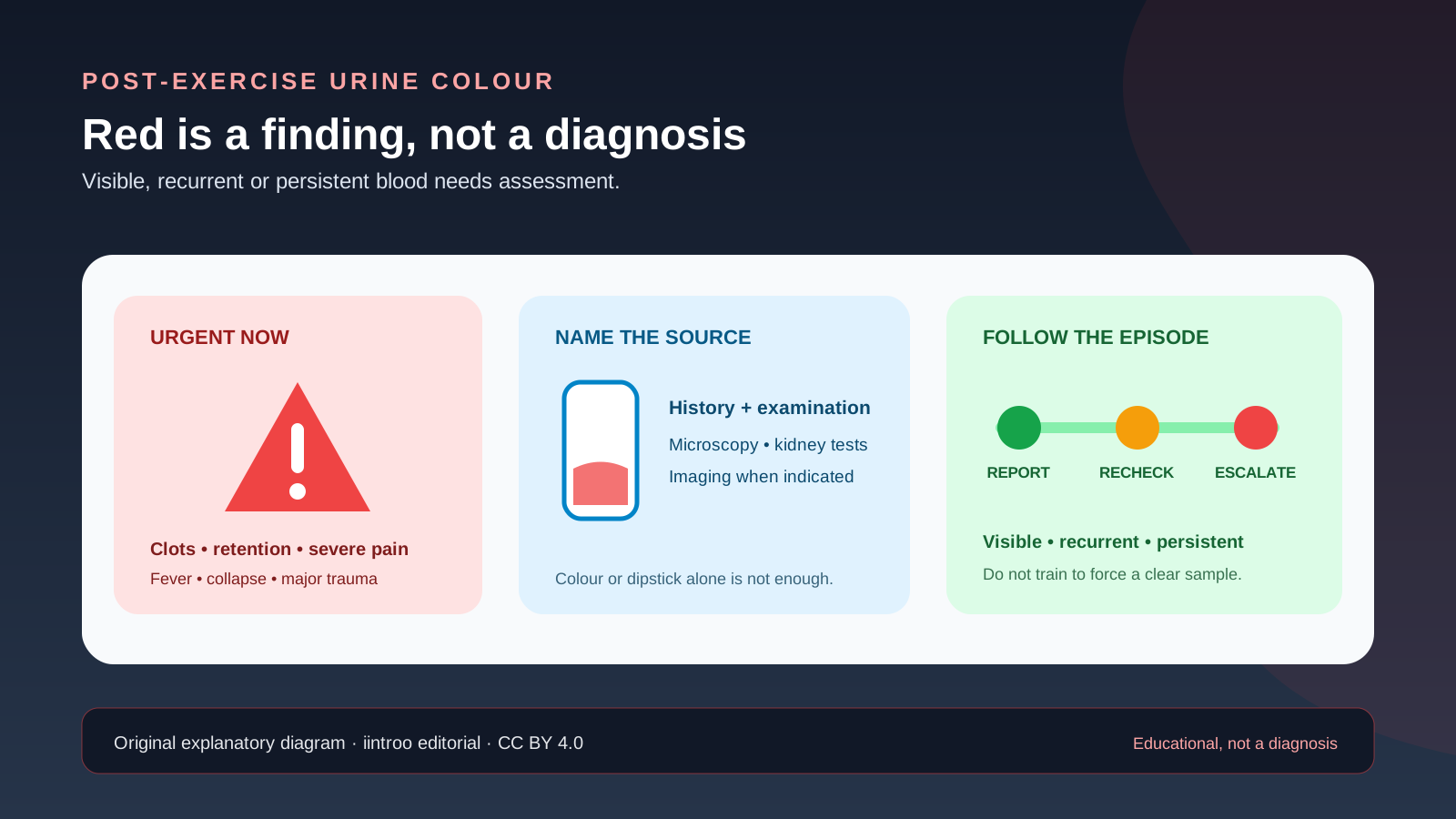
Key points
- Strenuous exercise can be followed by transient blood in urine, but exercise is a diagnosis of exclusion rather than a reason to ignore visible blood.
- Red or brown urine may reflect red cells, haemoglobin, myoglobin, foods or medicines; appearance and a dipstick alone cannot reliably identify the source.
- Clots, inability to pass urine, severe flank pain, fever, collapse, major trauma or dark urine with marked muscle symptoms require urgent care.
Treat the colour as a finding, not a diagnosis
This guide is for endurance athletes, contact-sport players, coaches and event medical teams. Blood that is visible in urine can be alarming, and microscopic red cells may be found only on testing. Reviews describe transient haematuria after strenuous non-contact exercise, particularly running, but reported frequency varies widely with distance, intensity, sampling and laboratory definitions. That variability means a prevalence number cannot tell one athlete whether a red sample is benign.
Red, pink, tea or cola-coloured urine has several possible explanations. Urinary red cells, haemoglobin from red-cell breakdown and myoglobin from muscle injury require different evaluation; foods, menstrual blood and some medicines can also change appearance. A urine dipstick detects heme chemistry and cannot by itself prove intact red cells. Do not label a sample exercise-induced haematuria from colour, a home dipstick or the fact that it appeared after a race.
Know when the same-day decision is urgent
Seek urgent assessment for clots, inability to pass urine, severe flank or abdominal pain, fever, vomiting, fainting, very little urine, major abdominal or back trauma, or symptoms of significant blood loss. Dark urine with severe muscle pain, swelling, unusual weakness, heat illness, collapse or confusion raises concern for exertional rhabdomyolysis and systemic complications. Emergency services may be needed for collapse, altered mental status, shock or another immediately dangerous condition.
Anticoagulant use, known kidney disease, a solitary kidney, sickle cell trait, recent infection, urinary symptoms or a history of stones changes the context and should be disclosed. Contact sport can cause direct urinary-tract trauma, while endurance events add dehydration, heat, repeated impact and medication exposures. Non-steroidal anti-inflammatory drugs are not a treatment for unexplained red urine and can add kidney or gastrointestinal risk in prolonged exercise.
Let history, microscopy and follow-up separate the causes
A clinician may ask when the colour started, whether it occurred throughout urination, whether there is pain, fever or trauma, and what exercise, medicines, foods and supplements preceded it. Examination and urine microscopy can distinguish intact red cells from other heme signals; kidney function, blood tests, culture or imaging may be indicated. The correct pathway depends on age, symptoms and risk factors, so the athlete should not order one scan or antibiotic course as a universal answer.
Transient exercise-associated haematuria often resolves with rest, but persistence or recurrence needs evaluation rather than repeated reassurance. Adult guidelines commonly remove vigorous exercise as a transient contributor before repeat urine testing, yet visible blood still merits medical advice. A normal-looking next sample does not explain why bleeding occurred, and a negative dipstick after heavy fluid intake is not clearance. Teams should document the episode and provide a private route to care.
Return only after the dangerous alternatives are addressed
Training decisions depend on the identified cause and the athlete's recovery. If assessment supports a transient exercise association and symptoms resolve, clinicians may guide a gradual return while reviewing heat, hydration, impact, workload and medication choices. Trauma, stones, infection, kidney disease or rhabdomyolysis follow different restrictions. Drinking excessive water to force clear urine can cause dangerous hyponatraemia and does not treat bleeding.
Evidence on exertional haematuria is largely observational and includes older, small or male-dominant samples. Mechanisms such as bladder wall impact, renal blood-flow change, foot-strike haemolysis and direct trauma may apply differently across sports, and association does not prove the source in an individual. This page offers no diagnosis, test schedule or return date. Its practical message is to report the finding, identify red flags, confirm what the urine contains and investigate episodes that are visible, recurrent or persistent.