
Chronic kidney disease in sport: coordinate training, hydration and lab interpretation
People with chronic kidney disease can be active, but stage, blood pressure, anaemia, medicines, heat and fluid limits make generic athlete advice unsafe.
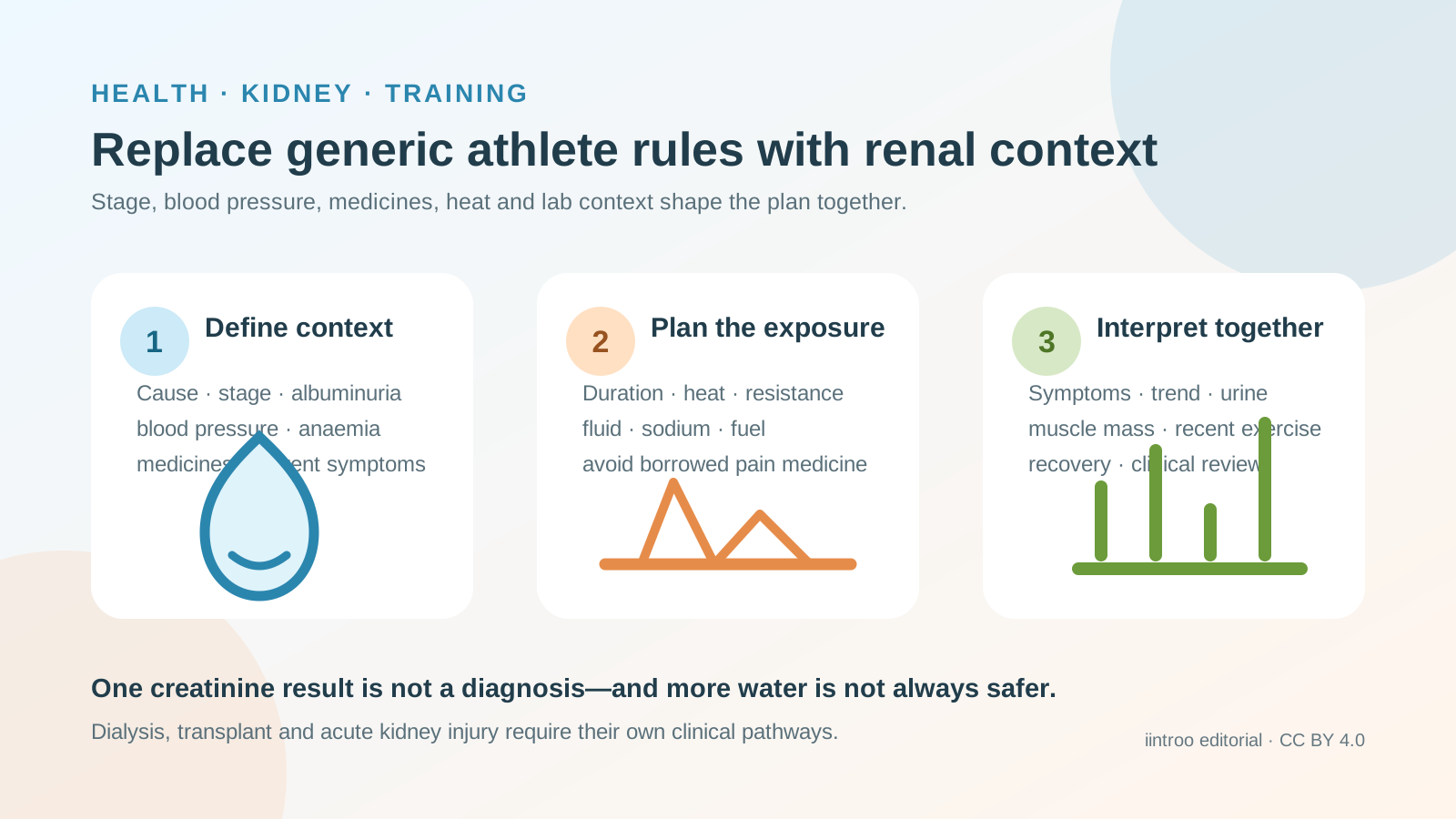
Key points
- KDIGO recommends physical activity compatible with cardiovascular health, tolerance and frailty, but advanced CKD, dialysis and transplant require distinct plans.
- Creatinine can be influenced by muscle mass, diet and recent exercise; one result should not be interpreted as a diagnosis or training clearance in isolation.
- Fluid, sodium, potassium and protein needs are not interchangeable across CKD stages, medicines, dialysis status and sport environments.
Define the kidney context before defining the session
This guide is for athletes with diagnosed chronic kidney disease who are not receiving dialysis or living with a transplant, because those settings need separate clinical plans. CKD covers different causes and levels of kidney function, albumin in urine and risk of progression. Blood pressure, cardiovascular disease, anaemia, mineral and bone health, diabetes, medicines and symptoms can all affect exercise. A stage label alone cannot tell a coach what intensity, heat exposure or competition schedule is appropriate.
KDIGO's 2024 guideline recommends moderate-intensity physical activity for a cumulative 150 minutes per week, or a level compatible with cardiovascular and physical tolerance, while discouraging sedentary behaviour. The recommendation is graded 1D, reflecting limited certainty in the precise evidence base. It supports participation; it does not automatically clear prolonged endurance racing, maximal lifting, altitude, deliberate dehydration or rapid weight loss. Higher-risk goals should be planned with the nephrology team and an appropriately qualified exercise professional.
Interpret fatigue and laboratory results in context
Reduced exercise tolerance may relate to anaemia, cardiovascular disease, muscle loss, sleep problems, treatment effects, deconditioning or another condition. Persistent or disproportionate fatigue, swelling, breathlessness, chest symptoms, dizziness or a meaningful fall in performance deserves review rather than a stronger stimulant or harder conditioning block. Exercise studies in CKD generally support benefits for physical function and fitness when programmes are appropriately designed, but populations and protocols vary and competitive-athlete evidence remains sparse.
Serum creatinine is affected by kidney filtration, but also by muscle mass, recent meat intake, supplements and hard exercise. KDIGO specifically notes that an extreme sport or bodybuilding physique can reduce the accuracy of creatinine-based estimated GFR and that cystatin C or measured GFR may be useful when a decision depends on precision. A high creatinine after training is not proof of CKD progression, while a familiar baseline does not exclude acute kidney injury. Clinicians interpret trends, urine albumin, symptoms, context and other tests together.
Replace generic hydration and protein rules with an individual plan
More water is not always safer. Heat, sweat, event duration, kidney function, blood pressure, medicines and any prescribed fluid or electrolyte limit change the plan. Both dehydration and excessive fluid intake can be harmful. Do not copy another athlete's sodium schedule, force fluid to chase clear urine or use sweat loss alone to override renal advice. Test an agreed strategy in ordinary training and record conditions, intake, body-mass change where appropriate, urine changes and symptoms for the treating team.
KDIGO suggests 0.8 grams of protein per kilogram per day for adults with CKD stages G3 to G5 and advises avoiding high protein intake above 1.3 grams per kilogram per day in adults at risk of progression. That is clinical guidance, not a menu for this page to prescribe. Growth, dialysis, transplant, energy needs and other conditions change requirements. Protein powders, creatine, herbs, potassium-containing products and electrolyte mixes should be reviewed with the renal clinician or dietitian rather than labelled automatically safe or forbidden.
Protect the kidneys during illness, heat and competition
NSAIDs such as ibuprofen and naproxen can be risky in CKD, especially around dehydration, heat or illness. Athletes should follow their clinician's pain plan and should not borrow medicines or stop blood-pressure treatment to race. Vomiting, diarrhoea, fever or reduced intake can change fluid status and medicine safety; use the agreed sick-day advice and contact the treating service. Dark or very reduced urine, severe muscle pain or swelling, confusion, collapse, chest pain, severe breathlessness or rapidly worsening illness needs urgent medical assessment.
Return after illness, acute kidney injury or a treatment change should begin with stable clinical status and an updated plan, then easy repeatable work before environmental heat, long duration, heavy resistance or competition consequence. There is no universal creatinine, eGFR, blood-pressure reading, fluid volume or waiting period that clears every athlete with CKD. This page provides general education, not diagnosis, fluid or electrolyte prescription, protein target, medicine advice or a personal clearance decision.