
Cystic fibrosis in sport: plan exercise around lung health, heat and salt loss
Exercise can support cystic fibrosis care, but heat, salt loss, infection and lung status make an individual plan with the CF team essential.
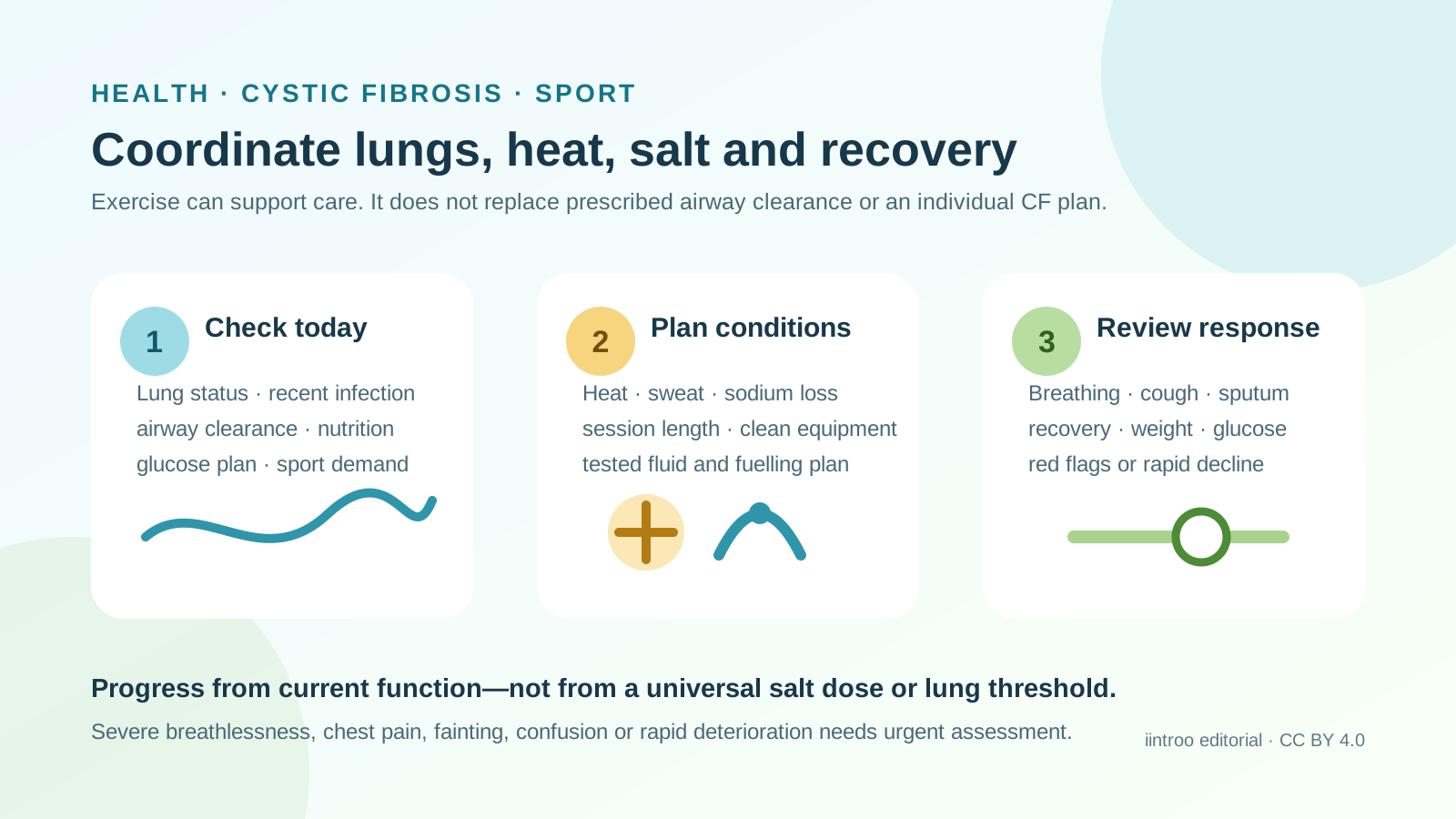
Key points
- Physical activity can support fitness and health in cystic fibrosis, but it does not automatically replace prescribed airway-clearance treatment.
- People with cystic fibrosis can lose more salt in sweat, so fluid and sodium planning should come from the CF team rather than a universal recipe.
- Severe breathlessness, chest pain, fainting, blue or grey colour, confusion, or a rapid clinical decline needs urgent medical assessment.
Start from current CF health, not a generic fitness label
This guide is for people with cystic fibrosis who want to train or compete and for coaches working with the athlete's permission. Cystic fibrosis affects people differently and may involve the lungs, digestion, nutrition, bones and blood-glucose regulation. CFTR modulator treatment has changed health and functional capacity for many people, but it has not made one exercise prescription appropriate for everyone. Baseline lung status, recent exacerbations, airway-clearance routine, medicines, nutrition, cystic-fibrosis-related diabetes and the demands of the sport all matter.
The 2025 European Cystic Fibrosis Society position statement explains how physical activity can be assessed, while ECFS standards place exercise and activity within multidisciplinary care. A step count or watch estimate is not a medical clearance test. When the consequence of exercise intolerance is high, the CF team may use a field test or cardiopulmonary exercise test to understand symptoms and oxygen response. New haemoptysis, chest pain, fainting, severe breathlessness, blue or grey colour, confusion, or a rapid decline needs urgent medical assessment rather than another training trial.
Treat exercise as supportive care, not replacement treatment
A 2022 Cochrane review found that physical-activity and exercise-training programmes probably produce a small improvement in exercise capacity compared with usual care. Effects on lung function and quality of life were less certain, and studies varied in programme, duration and participants. This supports making enjoyable movement part of care; it does not prove that a particular interval session, sport or wearable target treats CF or prevents an exacerbation. Competitive-athlete evidence is especially limited.
Exercise can help mobilise mucus for some people, but a separate Cochrane review could not establish it as an equivalent replacement for airway-clearance techniques. Continue prescribed airway clearance, inhaled treatment, CFTR modulators, enzymes, insulin and other care unless the clinical team changes the plan. Schedule training around treatments in a way that is realistic, but do not skip a therapy because a session felt like chest physiotherapy. Increased cough during exercise can be expected for some people; a meaningful change in sputum, breathing, fever or recovery belongs in the agreed exacerbation plan.
Plan heat, sweat, fuel and glucose with the CF team
People with CF can lose more sodium and chloride in sweat than people without CF, making dehydration and salt depletion relevant in hot conditions, long sessions and heavy protective kit. The solution is not a fixed internet dose. Body size, sweat rate, climate, session duration, usual diet, kidney or heart issues and prescribed treatment alter the decision. Agree a fluid and sodium plan with the CF clinician or dietitian, test it in ordinary training and make sure the athlete can recognise headache, unusual weakness, nausea, cramps, dizziness or a performance change that warrants stopping and review.
Energy needs have also changed for many people in the modulator era, so the old instruction to add calories or salt without assessment may be wrong for an individual. Athletes with cystic-fibrosis-related diabetes need a personalised glucose, carbohydrate and insulin plan for activity; neither a coach nor this guide should prescribe one. Record the conditions, duration, intake and symptoms around demanding sessions so the care team has useful evidence. Avoid deliberately dehydrating to make weight and do not use salt tablets, sports drinks or supplements as a substitute for clinical planning.
Build infection control and return decisions into the sport
Shared gyms, pools and team facilities require ordinary hand hygiene, equipment cleaning, safe water practices and attention to respiratory illness. People with CF can be particularly vulnerable to some pathogens, and close contact with another person with CF may require CF-specific precautions. The athlete should not have to disclose a diagnosis to the whole team; a designated staff member can help arrange cleaning, spacing or travel logistics privately. During fever, a pulmonary exacerbation or a significant respiratory infection, training decisions should follow the CF team's plan rather than a team rule based only on days missed.
Return should be graded from current symptoms and function: easy work first, then duration, then sport-specific intensity and environmental stress. Recheck cough, sputum, breathing, recovery, weight, glucose where relevant and treatment completion. There is no universal lung-function threshold, sodium dose or number of rest days that clears every athlete. This page provides general education, not a diagnosis, airway-clearance change, fluid or salt prescription, diabetes plan, infection clearance or personal return-to-sport decision.