
Disordered eating in athletes: change the culture before demanding a diagnosis
Food rules, body pressure, secrecy and declining health can appear before a formal eating-disorder diagnosis. Build confidential referral routes, stop public weigh-ins and connect the athlete with qualified multidisciplinary care.
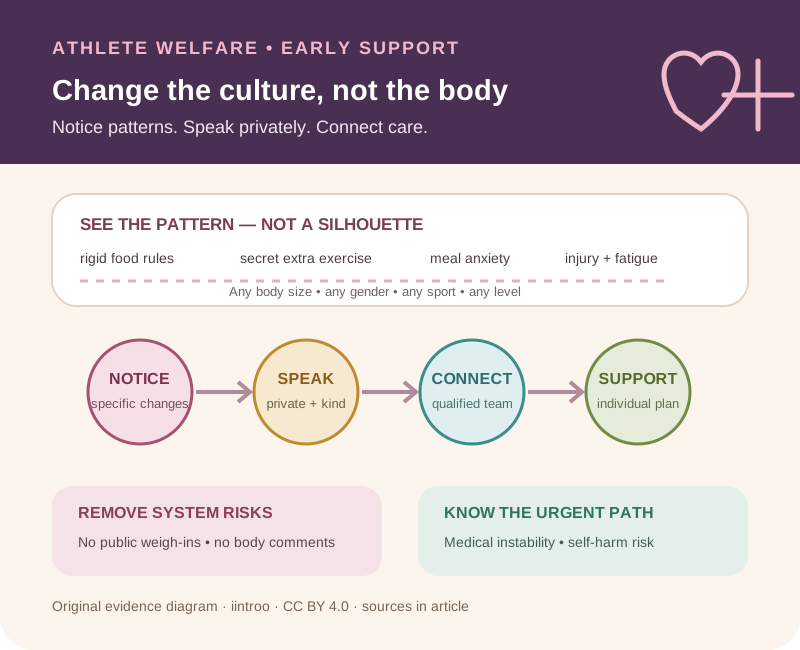
Key points
- Disordered eating can affect athletes of any gender, age, body size, culture, sport, performance level or disability status.
- Behavioural and psychological changes may appear before visible weight change; coaches should not diagnose from appearance, a questionnaire or performance alone.
- Early, confidential support may involve a doctor, accredited sports dietitian and mental-health professional, with training decisions based on clinical risk rather than punishment.
See a spectrum, not a body type
This guide is for athletes, coaches, families, clinicians and sport organisations. The AIS describes a spectrum from optimised nutrition through disordered eating to a clinically diagnosed eating disorder. An athlete can be medically or psychologically unwell at any body size, and the absence of a diagnosis does not make restrictive, compulsive or chaotic eating harmless.
Possible warning patterns include rigid food rules, anxiety around shared meals, secrecy, frequent bathroom use after eating, repeated extra exercise, rapid changes in mood or social behaviour, and worsening recovery, illness or injury. Each can have other explanations. Notice a pattern and open a pathway to care; do not turn a checklist into a verdict.
Start a private conversation about wellbeing
Choose a private setting, describe specific observed changes and use non-judgmental language: for example, concern about repeated dizziness and missed team meals rather than comments about shape or discipline. Ask what support would feel possible and explain the organisation’s confidential referral route. For a minor, follow safeguarding requirements and involve the appropriate parent, guardian or welfare lead.
Do not demand disclosure, debate calories, praise weight loss, threaten selection or make the athlete prove illness to teammates. A coach can listen and refer but should not diagnose, prescribe a meal plan or act as the sole keeper of a serious concern. Emergency risk takes priority over confidentiality promises that cannot safely be kept.
Build the right multidisciplinary assessment
Assessment may involve a doctor, accredited sports dietitian and mental-health professional with eating-disorder expertise. They can consider physical stability, nutrition, training load, psychological distress, medication, injury, bone and reproductive health, growth in younger athletes, and other diagnoses. The 2023 IOC REDs framework can inform clinical risk assessment but is not a self-test or a coach’s clearance tool.
The IOC statement has a linked 2024 publisher correction, so technical users should consult the corrected publication. Disordered eating and REDs overlap but are not interchangeable: low energy availability may be intentional or unintentional, and an eating disorder is a mental-health diagnosis. One does not automatically prove the other.
Remove practices that manufacture risk
Organisations can prohibit public weigh-ins, body-comparison comments, punitive exercise and unsupervised body-composition testing. If body composition is assessed for a legitimate purpose, current best-practice recommendations emphasise qualified personnel, informed consent, privacy, minimum necessary frequency and a clear decision about whether testing is needed at all.
Provide reliable food access around training and travel, educate staff about weight stigma, and make referral possible without automatic shame or punishment. Selection decisions and return-to-play restrictions should be separated from appearance and based on documented health and safety considerations with the athlete’s care team.
Escalate immediate medical or psychological danger
Urgent local medical assessment is needed for fainting, chest pain, severe weakness, confusion, dehydration, vomiting blood or another sign of physical instability. Suicidal thoughts, self-harm risk or inability to stay safe requires the local emergency or crisis pathway. Team staff should know those routes before a crisis occurs.
Training participation during recovery is individual and may change as risk changes. Some athletes can remain involved with modifications; others need restriction or treatment first. This article does not diagnose an eating disorder, set weight targets, prescribe nutrition or provide a universal return date.