
Athletes with epilepsy: match the seizure plan to the sport
Epilepsy should not trigger a blanket ban on exercise. Participation decisions should combine seizure pattern, sport-specific consequences, treatment and an agreed action plan for teammates and event staff.
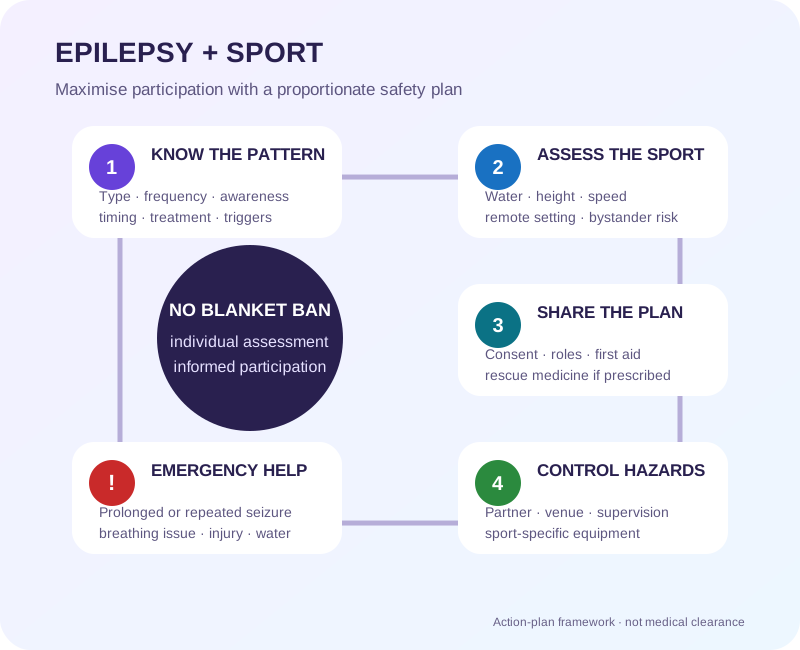
Key points
- The ILAE framework groups sports by the consequence if a seizure occurs; it does not support excluding every person with epilepsy from all sport.
- Systematic reviews suggest exercise can improve fitness and quality of life and, in most studied settings, does not increase seizure frequency, but evidence quality and participant groups vary.
- A prolonged seizure, repeated seizures without recovery, breathing difficulty, serious injury or a seizure in water requires the agreed emergency response and urgent local medical help.
Replace blanket exclusion with individual risk assessment
This guide is for athletes with epilepsy, families, coaches, event teams and healthcare professionals. The ILAE states that people are often kept from sport because of fear and overprotection rather than a sport-specific assessment. Reviews indicate that exercise can improve fitness and quality of life and usually does not increase seizure frequency. Those findings support inclusion, not a claim that exercise treats every epilepsy syndrome.
Participation depends on the athlete's seizure type, frequency, awareness, timing and triggers; treatment effects; the environment; and the consequences for the athlete or bystanders if a seizure occurs. The same diagnosis can lead to different decisions for running on a track, open-water swimming, climbing, motorsport or solo training. A neurologist should guide higher-consequence choices.
Use the ILAE sport groups as a conversation framework
The ILAE groups activities by additional risk if a seizure occurs: Group 1 has no significant additional risk, Group 2 has moderate risk to the athlete but not bystanders, and Group 3 has major risk to the athlete and potentially others. This is not a universal clearance checklist. Seizure freedom, predictable sleep-only seizures or retained awareness can change the assessment, while medication withdrawal or uncontrolled seizures may require restrictions.
Water, height, speed, remote settings, weapons, animals and motorised equipment deserve particular attention. Controls might include direct supervision, a trained partner, route or venue choice, barriers, flotation or other sport-specific equipment, but no single control makes every activity appropriate. Check the current rules of the federation, insurer and venue alongside clinical advice.
Create a consent-based seizure action plan
NICE recommends an up-to-date, agreed epilepsy care plan covering seizure type, treatment, triggers, risk reduction and relevant emergency instructions. For sport, translate that plan into the setting: who knows what the athlete has chosen to disclose, what a typical seizure looks like, who stops play, where rescue medication is kept when prescribed, who is trained to give it and how emergency services are contacted.
Protect privacy and autonomy. The athlete should help decide who receives health information and how it is stored. Teammates need practical instructions rather than a public medical history. Coaches should not change medication timing, invent restrictions or promise confidentiality that conflicts with an immediate life-safety response.
Protect the athlete during a seizure
Move hazards away if this can be done safely, cushion the head, note the time and allow the seizure to run its course. Do not restrain the athlete, put anything in the mouth or force food, fluid or medication not included in the agreed plan. After convulsive movement stops, support breathing and recovery according to first-aid training and local guidance.
Activate emergency help for a seizure that lasts longer than the action-plan threshold, repeated seizures without recovery, breathing difficulty, serious injury, pregnancy, a first known seizure or a seizure in water. Event teams should train with the plan before competition. This page is educational and does not replace certified first-aid training or the athlete's clinician-authored instructions.
Review after a seizure, treatment change or new sport
Do not impose a permanent ban after an event without understanding what happened. Arrange clinical review where indicated, document the circumstances and reassess the sport-specific controls. A missed dose, illness, sleep loss or treatment change may matter, but causes should not be guessed by teammates. Return decisions should come from the athlete and relevant clinician within the applicable sport rules.
Review the plan when seizure pattern, medication, training location or competition demands change. Inclusion also means addressing transport, stigma, mental health and access to trained staff. The goal is not zero activity or zero uncertainty; it is a proportionate, informed plan that maximises participation while respecting risks that cannot be removed.