
Sudden cardiac arrest in community sport: make the plan before the collapse
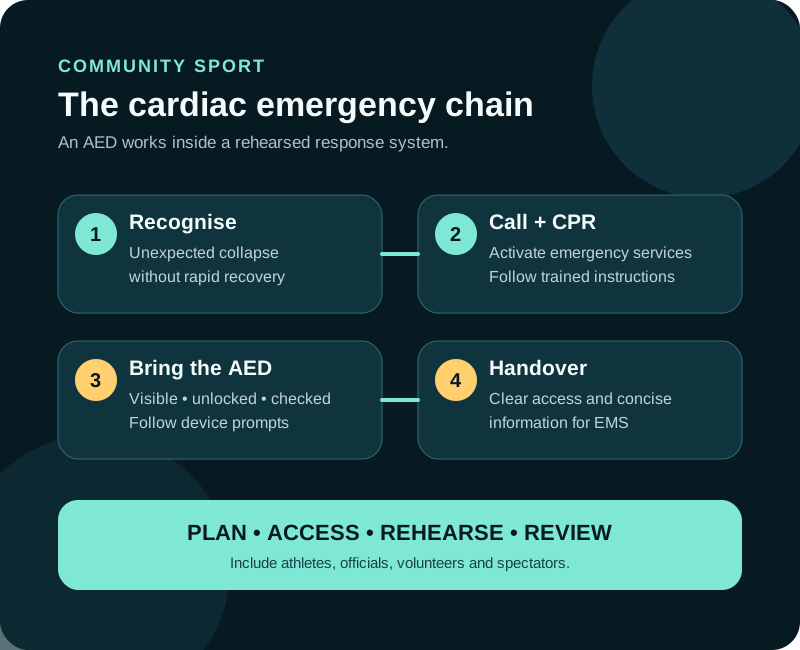
An AED helps only when people can recognise an unexpected collapse, call emergency services, start CPR and reach the device quickly. Build and rehearse the whole response chain.
Key points
- An unexpected collapse without rapid recovery should be treated as possible cardiac arrest while trained responders and emergency services assess the person.
- An AED must be visible, accessible, maintained and linked to a practiced retrieval and communication plan.
- The emergency action plan should cover athletes, officials, volunteers and spectators, not only the field of play.
Plan for the collapse you cannot predict
This guide is for community clubs, training groups, race organisers, venue teams and volunteers. Screening and medical history can identify some concerns, but they cannot remove every risk of sudden cardiac arrest. A written emergency action plan therefore needs to work for any unexpected collapse, including an athlete, official or spectator.
Map the actual venue: give the emergency-service address, gate or access code, meeting point, responder roles, communication method and ambulance route. A plan copied from another venue may fail when a locked door, poor signal or crowded finish area delays the response.
Recognise concern and start the chain
An unexpected collapse without rapid recovery should be presumed to be cardiac arrest until trained assessment shows otherwise. Abnormal or gasping breathing and brief seizure-like movement can be mistaken for ordinary breathing or a primary seizure. Activate local emergency services, send for the AED, and begin CPR according to current certified training and the emergency dispatcher's instructions.
Do not wait for a complete medical history, a team doctor or a pulse check by an untrained person. This article does not replace hands-on CPR/AED education or local emergency guidance, and it does not reproduce advanced field-of-play procedures intended for specialist medical teams.
Make the AED usable, not merely present
Record the AED's exact location, access hours, retrieval route and responsible person. Keep signage clear, inspect the battery and pads according to the manufacturer, and avoid storage that becomes inaccessible when a reception desk, school building or stadium gate closes. Event teams should know whether additional devices are needed across a long course or large site.
The device gives spoken or visual prompts and analyses the rhythm; rescuers should follow their training and its instructions. A nearby AED that nobody can find, unlock or bring to the patient is not an effective control. After use, follow the service and replacement process before the next session.
Rehearse communication and handover
Run a realistic drill with the people who will actually be present. Time recognition, the emergency call, AED retrieval and access for the ambulance. Include crowd management, continuation or cancellation of the event, support for witnesses and a concise handover of what happened and what care was given.
Review the drill and any real incident without blame. Update contact details, venue changes, equipment checks and training gaps. The Heart Rhythm Society consensus recommends regular review and rehearsal; frequency and legal requirements should follow the governing body and local system.
Know the boundary of this guide
Chest pain, unexplained fainting with exercise, marked palpitations or unusual breathlessness before a collapse deserves prompt clinical assessment. Personal cardiac investigation, sports eligibility and return after an event require an appropriately qualified clinician; the emergency plan cannot provide clearance.
Evidence for sport emergency planning combines consensus, registry and observational data rather than randomised trials of real cardiac arrests. The exact staffing and response standard varies by country and venue. The consistent practical message is to prepare recognition, CPR, defibrillation, communication and handover as one system.