
Crohn's disease and ulcerative colitis in sport: plan for flares, travel and fuelling
Athletes with inflammatory bowel disease can train, but active symptoms, anaemia, surgery, medicines and food restriction require an individual plan.
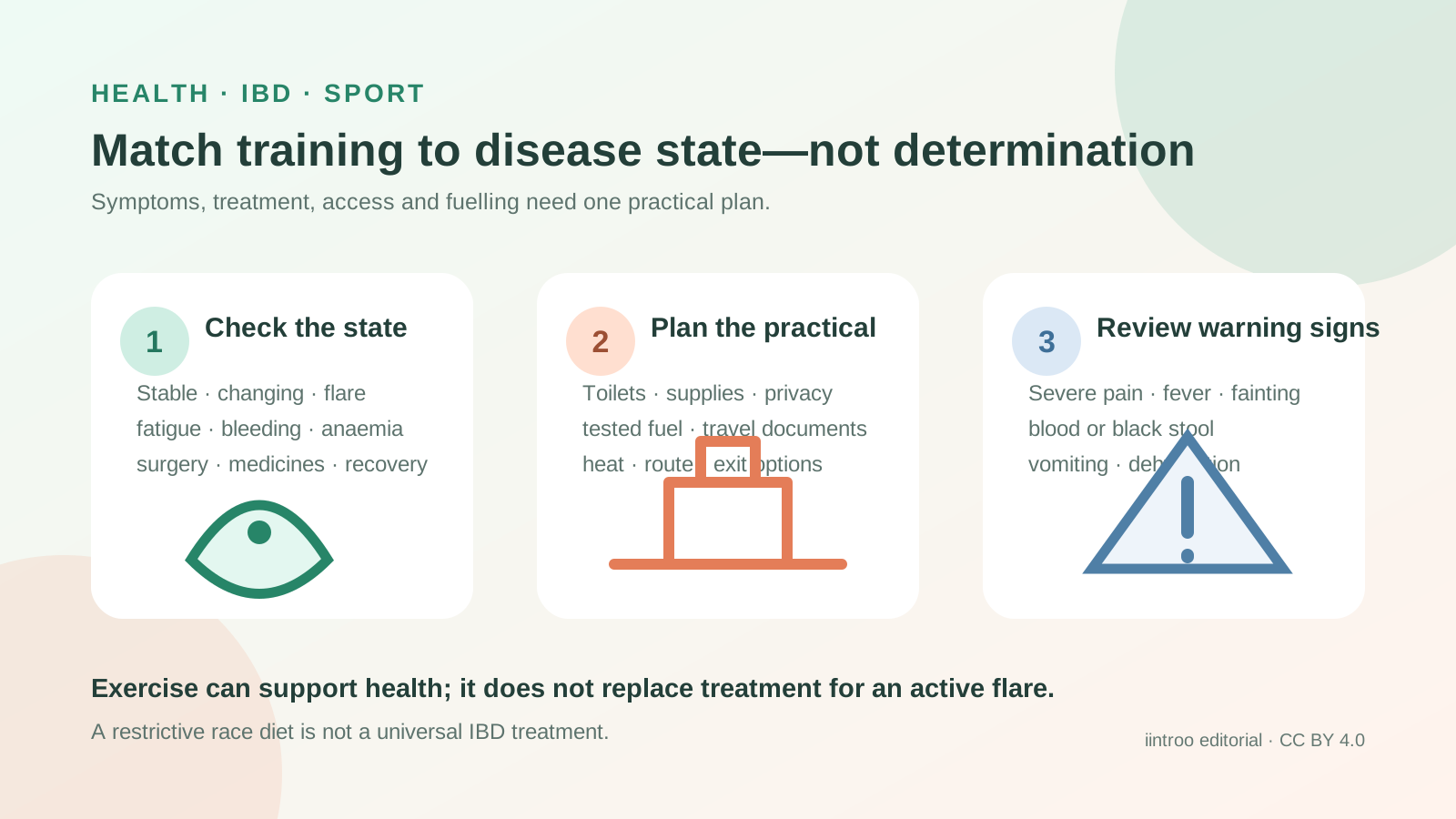
Key points
- Exercise can support fitness and quality of life in people with inflammatory bowel disease, but it is not a treatment for an acute flare.
- Fatigue may reflect active inflammation, anaemia, under-fuelling, sleep disruption, medicines or another condition and should not be dismissed as poor conditioning.
- Blood in stool, persistent vomiting, severe abdominal pain, fever, fainting or dehydration needs medical assessment rather than a race-day food experiment.
Separate stable training from an active flare
This guide is for athletes with Crohn's disease or ulcerative colitis and the teams supporting them with consent. IBD is chronic inflammation of the digestive tract; symptoms and complications vary by disease location, activity, surgery and treatment. Diarrhoea, urgency, abdominal pain, bleeding, fatigue, joint or skin symptoms, anaemia and weight change can affect training, while some people in remission have few symptoms. A diagnosis alone does not define performance or participation.
The 2025 British Society of Gastroenterology guideline and Crohn's and Colitis organisations support physical activity as part of health, while stressing individual adjustment during symptoms and after surgery. Exercise does not replace anti-inflammatory, biologic or other prescribed treatment. A flare is not a fitness problem to overcome by intensity. Record symptoms, bowel frequency, sleep, intake, heat, training load and recovery so the clinical team can judge change in context.
Read the exercise evidence at the right scale
Systematic reviews suggest structured exercise can improve quality of life, fitness, strength, fatigue or body composition in some adults with IBD. Programmes and participants vary, many samples are small, and people with active or complicated disease are often underrepresented. The evidence does not show that a particular workout switches off intestinal inflammation or prevents every flare. It supports making appropriately scaled activity available rather than routine exclusion.
Progress from activity that is repeatable during the athlete's current disease state. During stable periods this may include aerobic, resistance and sport-specific work; during a symptom increase, shorter, lower-consequence sessions near facilities may be more realistic. Review persistent loss of performance or recovery with the IBD team. Anaemia, nutrient deficiencies, low energy availability, medication effects and active inflammation can overlap and require testing rather than a supplement guess.
Plan access, fuelling and travel without inventing a cure diet
Map toilets, carry supplies and spare clothing, agree a private signal for leaving a session and protect medication storage. For travel, plan prescriptions, documentation, food access and the treating service's advice before departure. Heat and long events can compound fluid loss when diarrhoea or an ostomy is present, but fluid and electrolyte needs remain individual. Practise an agreed strategy in training and avoid copying another athlete's sodium or anti-diarrhoeal plan.
There is no single IBD diet for every athlete. Restricting fibre, lactose, gluten or fermentable carbohydrates may change symptoms in a particular context but can also narrow energy and nutrient intake. The AGA diet update emphasises individualised nutrition alongside medical therapy. Work with an IBD-aware dietitian when symptoms, surgery, growth, deficiencies or competition fuelling make the plan complex. Do not use fasting, unverified supplements or NSAIDs as a substitute for disease care.
Use symptoms and treatment changes to trigger review
Blood in stool, black stool, persistent vomiting, severe or increasing abdominal pain, fever, fainting, confusion, inability to keep fluids down or signs of marked dehydration need prompt medical assessment. New calf swelling, chest pain or severe breathlessness also matter because IBD and some contexts can raise clot risk. After abdominal surgery, an abscess, obstruction or major flare, return should follow the surgical or gastroenterology plan rather than a generic waiting period.
Build back from stable intake and hydration, manageable bowel symptoms, everyday function and easy training recovery before adding duration, heat, intensity, contact or remote-course consequence. There is no universal stool frequency, laboratory result, food list or number of symptom-free days that clears every athlete. This page provides general education, not diagnosis, flare treatment, medication advice, a meal plan or personal return-to-sport clearance.