
Low-FODMAP eating for endurance athletes: a short test, not a forever diet
A short low-FODMAP trial may help selected endurance athletes with gut symptoms, but it should preserve fuelling and lead to structured reintroduction.
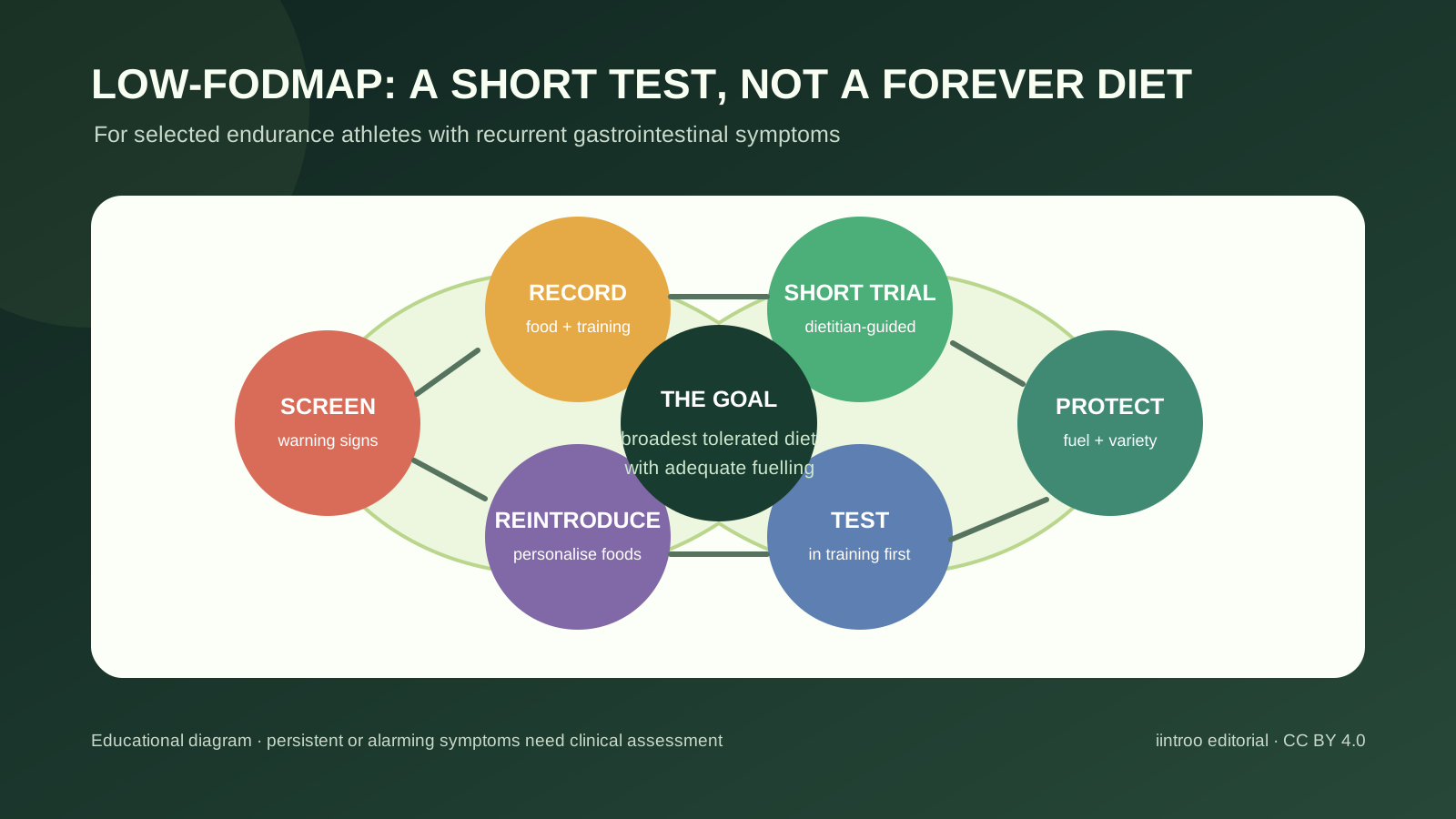
Key points
- Small athlete studies suggest that short-term FODMAP reduction can improve some exercise-related gastrointestinal symptoms, but evidence is limited and responses differ.
- The aim is not permanent blanket restriction: identify triggers, reintroduce foods and preserve adequate energy, carbohydrate, fibre and micronutrients.
- Bleeding, persistent vomiting, unintentional weight loss, severe or night-time symptoms and progressive decline need medical assessment rather than another elimination diet.
Decide whether FODMAPs are a plausible target
This guide is for endurance athletes with recurrent bloating, abdominal pain, urgency, diarrhoea or excessive gas around training and racing. FODMAPs are fermentable short-chain carbohydrates found in many nutritious foods. They can increase intestinal water and fermentation, which may provoke symptoms in susceptible people, but they are not toxins. Exercise intensity, heat, dehydration, stress, fibre, fat, caffeine, anti-inflammatory medicines and poorly practised carbohydrate intake can also contribute, often at the same time.
Start with a symptom and fuelling record rather than a long banned-food list. Note the meal, portion, product ingredients, timing, fluid, intensity, weather, medicines, bowel pattern and menstrual context where relevant. Seek assessment for persistent or worsening symptoms, blood or black stool, repeated vomiting, unexplained weight loss, fever, severe pain, night-time symptoms, fainting or signs of dehydration. Coeliac testing should happen before removing gluten if it is clinically suspected because restriction can obscure diagnosis.
Use the evidence as a trial, not a promise
A small 2018 crossover study reported lower daily and exercise-related symptoms during a short low-FODMAP period, and a 2019 study also found improvement over a brief intervention. Other work found that changing FODMAP content within a high-carbohydrate 48-hour diet did not alter gut integrity or motility after endurance exercise. A 2024 systematic review judged low-FODMAP approaches promising alongside gut training and other strategies, while stressing small samples, heterogeneous protocols and limited performance evidence.
That pattern supports a time-limited, monitored experiment for selected athletes—not a diagnosis, guaranteed race fix or whole-season diet. A sports dietitian can decide whether to alter overall intake or only the meals before key sessions. Change one major variable at a time when possible and test it in ordinary training before competition. Track both symptoms and training quality; feeling less bloated while under-fuelled is not success.
Protect carbohydrate, energy and food variety
Low FODMAP does not mean low carbohydrate. Rice, oats, potatoes, suitable breads, firm bananas, citrus, maple syrup and tested sport products can provide carbohydrate within individual portion limits, while eggs, fish, meat, firm tofu and lactose-free or tolerated dairy can support protein needs. Exact choices depend on culture, access, allergies, ethics and training load. Product recipes change, so read the current label and trial the real race product at the intended dose.
Avoid cutting wheat, dairy, fruit, legumes and vegetables all at once without replacements. Broad restriction can reduce energy, fibre, calcium and dietary variety and may worsen an already strained relationship with food. The 2025 review of exercise-associated gastrointestinal strategies notes potential benefit but also the restrictive downside. Athletes with low energy availability, eating-disorder risk, diabetes, pregnancy, growth needs or another gastrointestinal condition should involve the appropriate clinician and dietitian before experimenting.
Reintroduce, personalise and keep gut training in the plan
If symptoms improve during the planned restriction phase, reintroduce FODMAP groups systematically to learn which foods and portions are tolerated. Monash University's process emphasises challenges, symptom recording and personalisation rather than indefinite elimination. Reintroduction should occur away from the most important race when possible and with the rest of training reasonably stable. The useful endpoint is the broadest diet that controls meaningful symptoms, not the shortest list of foods.
Keep practising fluids and carbohydrate during training because the gut can adapt to repeated intake. Review pacing, heat plan, pre-race fibre and fat, caffeine, NSAID use and anxiety alongside food selection. If the trial fails, do not intensify restriction indefinitely; reconsider the diagnosis and other drivers. This article does not prescribe menus, diagnose irritable bowel syndrome, replace coeliac testing or set carbohydrate targets. Individual fuelling belongs with a qualified sports dietitian and medical review when warning signs are present.