
Athletes with inflammatory bowel disease: build training around health, not secrecy
Crohn’s disease and ulcerative colitis do not require one training rule. Plan around disease activity, hydration, nutrition, bone health and honest symptoms.
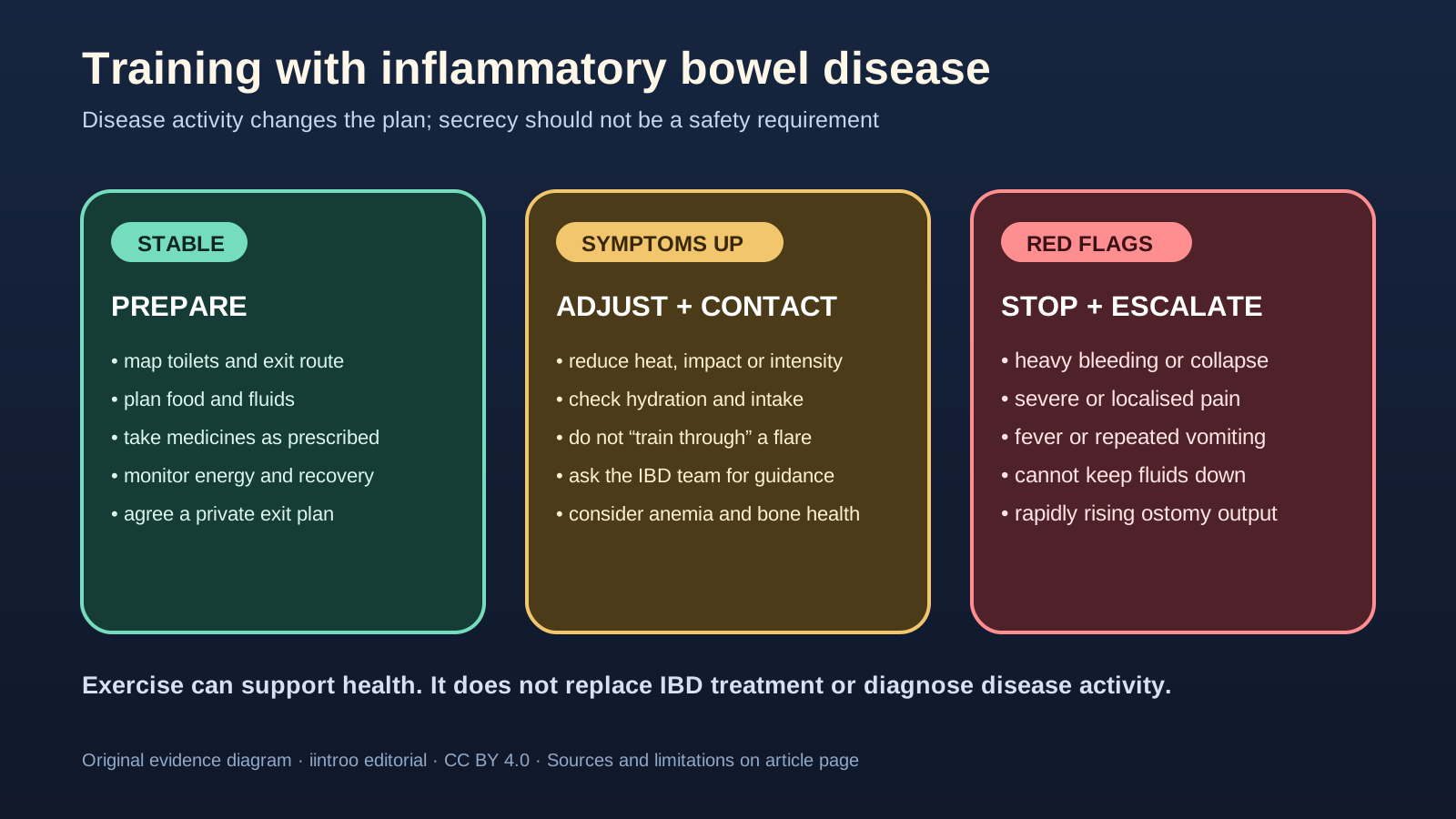
Key points
- Research suggests structured exercise is generally feasible and may improve fitness or quality of life for many people with stable or mildly active inflammatory bowel disease, but athlete-specific trials are limited.
- A flare is not a test of toughness: bleeding, fever, severe abdominal pain, repeated vomiting or inability to maintain hydration needs clinical guidance and may require urgent care.
- Training plans should account for disease activity, anemia and iron status, nutrition, medication effects, bone health, heat, travel and toilet access without changing treatment independently.
Exercise can belong in care without becoming a cure claim
This guide is for athletes with Crohn’s disease or ulcerative colitis, plus coaches and support teams working with their permission. Systematic reviews suggest that planned exercise is usually feasible for people whose disease is in remission or mildly active and may improve aerobic fitness, strength, fatigue or quality of life. Samples are generally small, programmes differ, and few studies examine competitive athletes or severe active disease. Exercise should therefore be supported as activity, not advertised as a treatment that replaces gastroenterology care.
IBD varies over time and between people. Bowel urgency, pain and fatigue may be visible only to the athlete, while anemia, iron deficiency, low energy intake, medication effects or reduced bone density can affect training even when gastrointestinal symptoms seem controlled. A single normal session does not prove a flare has ended. A useful plan starts with the athlete’s current disease status, goals, treatment and access needs rather than a generic list of forbidden sports.
Plan the environment as carefully as the workout
Map toilets, water, transport and a way to leave the session without explanation to the whole group. For travel or competition, identify medication storage, food options, health coverage and a clinician contact before departure. Heat, long events, diarrhea or an ostomy can change fluid and electrolyte needs, but neither plain water nor a fixed salt target suits everyone. A sports dietitian and IBD team can help design an individual approach, especially after previous dehydration or weight change.
Food tolerance is personal and can change during active disease. Avoid turning a short list of tolerated pre-event foods into a needlessly restrictive year-round diet. Track symptoms, energy, hydration, recovery and training together, then look for patterns with the clinical team. Supplements are not a substitute for investigating iron deficiency, anemia or low intake, and iron should not be started or increased solely from fatigue. Athletes subject to testing also need an anti-doping risk check before using any supplement.
Adjust load when disease activity changes
When symptoms increase, reduce intensity, duration, impact or environmental stress according to the person’s response and medical advice. A short walk, mobility work or rest may each be appropriate on different days. Do not prescribe hard exercise to suppress inflammation, and do not assume every abdominal symptom is IBD; infection, appendicitis, medication complications and other conditions can overlap. Coaches should know only the information needed to support safety, privacy and an agreed exit plan.
Systematic reviews have not shown a consistent worsening of inflammatory markers from appropriately prescribed moderate exercise, but evidence is heterogeneous and sparse during flares. That uncertainty matters. Blood in stool, fever, repeated vomiting, severe or localised abdominal pain, fainting, rapidly increasing ostomy output, inability to keep fluids down or signs of marked dehydration should stop training and prompt timely clinical advice. Severe pain, collapse, confusion or heavy bleeding warrants emergency assessment.
Return is a shared decision, not a symptom-hiding contest
Return to full training should consider disease control, hydration, nutrition, energy, blood results when clinically indicated, sleep, medication changes and the demands of the sport. Steroid exposure and inflammation can affect bone health, so persistent bone pain or a suspected stress injury needs evaluation rather than more cross-training. After surgery or with an ostomy, wound healing, equipment fit, contact risk and individual guidance shape progression; there is no universal waiting period.
Athletes should not stop biologics, steroids, immune-modifying medicines or other prescribed treatment to fit a competition schedule without the prescribing team. Likewise, a coach should not request private medical details beyond what is necessary for safe participation. A written plan can state who to contact, what symptoms end a session and how training will be adjusted while protecting confidentiality. This article does not diagnose a flare, set fluid or food targets, change medication or provide competition clearance.