
Lactose intolerance in athletes: manage symptoms without losing useful nutrition
Digestive symptoms after dairy need context, not automatic restriction. Learn about lactose assessment, tolerated foods and protecting nutrition while training.
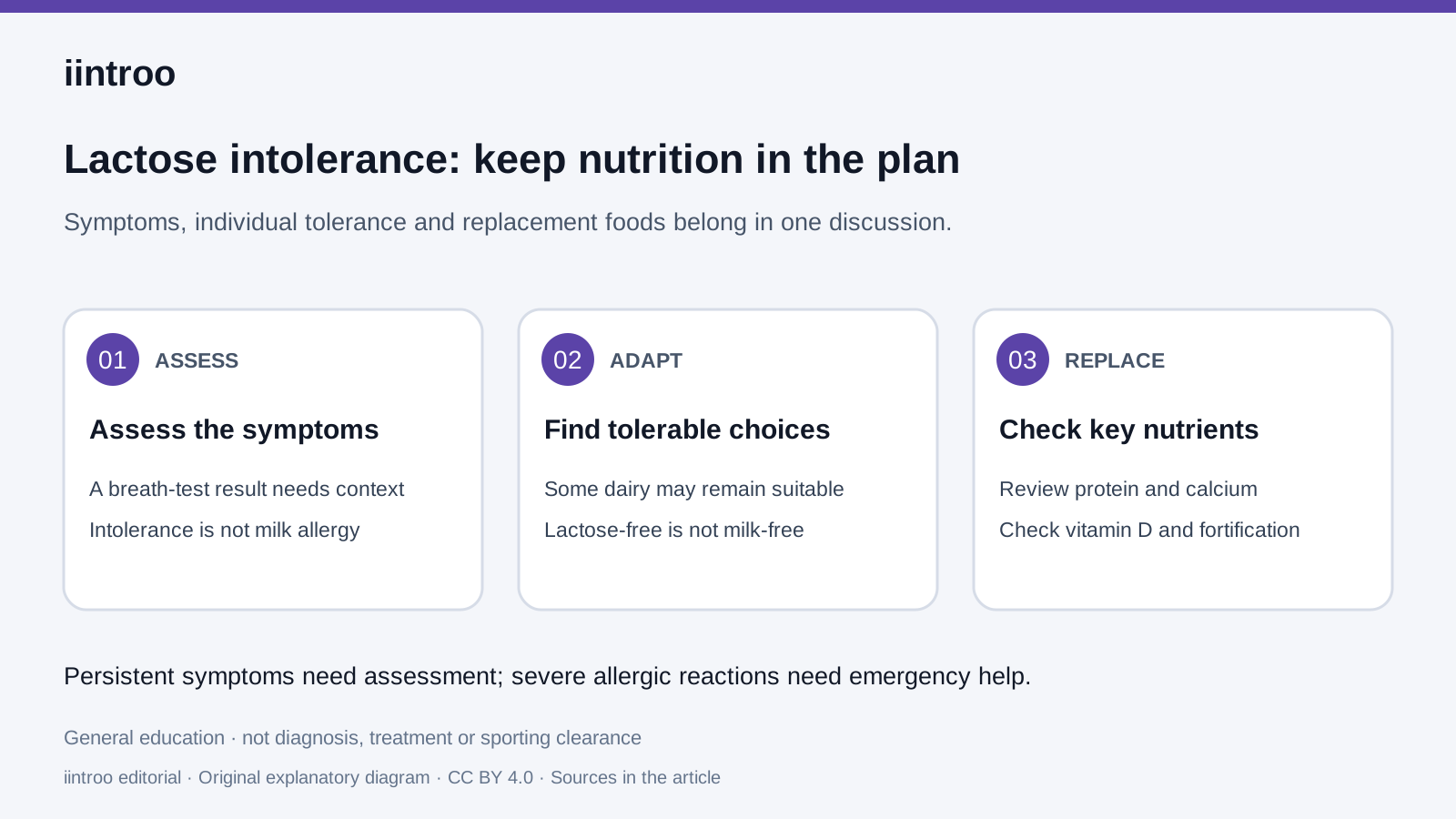
Key points
- Lactose malabsorption and symptomatic intolerance are not the same finding.
- Lactose intolerance is different from milk-protein allergy.
- Reducing lactose does not automatically require removing every dairy food.
A recovery drink is not a diagnostic test
Bloating or diarrhoea after a milk-based recovery drink can interrupt a triathlete's day, but one uncomfortable session does not identify the cause. This guide concerns adult athletes with recurrent symptoms after dairy foods. The aim is to understand the pattern and retain adequate nutrition, not to declare milk essential or harmful for everyone.
Lactose is the sugar in milk. Difficulty digesting it can produce symptoms, but similar complaints occur with other digestive conditions. Record the food or drink, portion, timing and symptoms, including whether they also occur away from training. Bring that information to a clinician rather than deleting several food groups after one race.
Testing needs symptoms as well as a number
Clinical assessment can include history, examination, a supervised dietary trial and a hydrogen breath test when appropriate. The European consensus guideline emphasizes that breath-test evidence of carbohydrate malabsorption needs concurrent symptom evaluation to establish intolerance. A test showing incomplete absorption is not automatically proof that lactose explains every stomach complaint.
The guideline was developed through a Delphi process involving 44 experts from 18 countries, rather than a new trial in athletes. It addresses diagnostic interpretation in adults and children, not an optimal race-day menu. A clinician must consider other possible causes and whether testing is useful. Do not copy a breath-test preparation or challenge dose into a personal experiment.
Intolerance is not milk allergy
Milk-protein allergy involves a different mechanism and can cause a serious reaction. Sudden swelling of the mouth or throat, difficulty breathing, collapse or rapidly worsening symptoms needs emergency help. Do not dismiss these as ordinary lactose intolerance or try another dairy product to check.
Lactose-free dairy still contains milk proteins and is not a general solution for someone with milk allergy. Recurrent bowel symptoms, unexplained weight loss or blood in the stool also warrant medical assessment rather than an increasingly restrictive sports diet. Lactose intolerance can sometimes follow another condition, including coeliac disease or a bowel infection, so treating the underlying problem may matter.
Find tolerable foods and replace what changes
Many people with lactose intolerance tolerate some lactose; the amount varies. A clinician or dietitian may discuss smaller portions with meals, lower-lactose foods such as hard cheese, or lactose-free milk. Yogurt is manageable for some people, not a guaranteed symptom-free choice. There is no need to force a food that repeatedly causes problems.
If dairy intake falls, review calcium and vitamin D as well as the protein supplied by the foods being replaced. Fortified alternatives can help, but check their labels rather than assuming every plant drink has the same nutritional content. A tolerated replacement should fit the whole diet. Removing the familiar recovery snack without replacing its nutritional contribution is not the goal.
Apply the plan to training without promising faster racing
For a triathlete, the practical application is to plan a tolerated post-session meal and accessible travel options before an event. Check the actual ingredients of shakes, bars and prepared foods: similar-looking products may differ. Discuss meaningful changes with a sports dietitian, particularly when the diet is already restricted or intake is difficult to maintain.
The sources here guide diagnosis and everyday nutrition; they do not demonstrate that a lactose-free diet makes an athlete faster. An improvement after changing one meal does not establish causation if several other things changed too. Keep useful notes, seek assessment for persistent symptoms and avoid unnecessary exclusion. This article provides general education, not an elimination protocol, supplement prescription or diagnosis.