
Multiple sclerosis and sport: train around heat, fatigue and changing symptoms
Exercise can support people with multiple sclerosis, but heat, fatigue and fluctuating symptoms need flexible training and a route to clinical review.
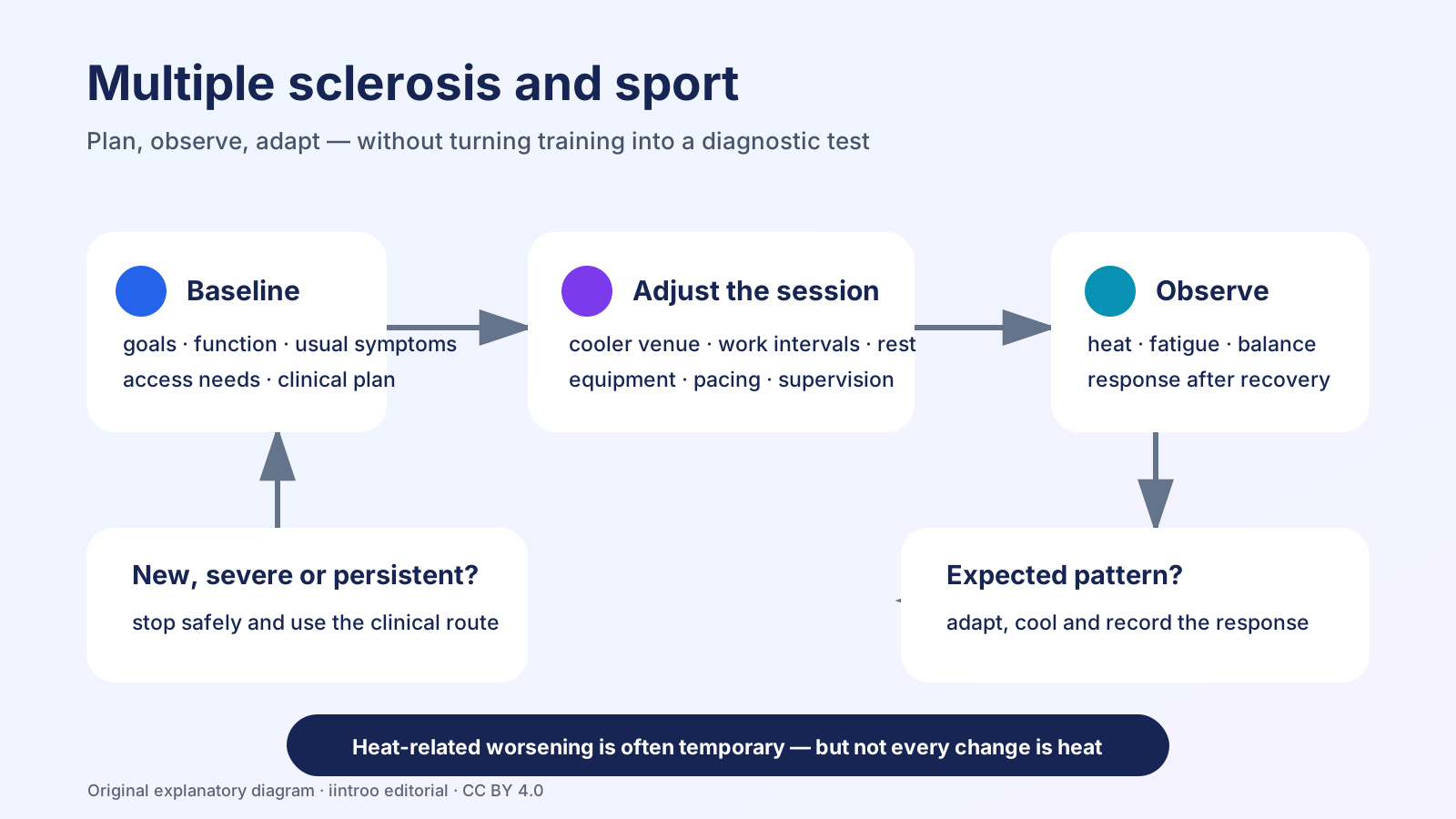
Key points
- Exercise is generally encouraged in multiple sclerosis and can improve fitness, fatigue and quality-of-life outcomes, but the programme should match symptoms and function.
- Heat can temporarily worsen existing neurological symptoms in some people; cooling and environmental adjustments may help, but do not prove that every change is heat-related.
- New, severe or persistent neurological symptoms, infection signs or a marked change from the usual pattern needs clinical assessment rather than self-testing through training.
Start from ability and goals, not from the diagnosis alone
This guide is for active people and athletes living with multiple sclerosis (MS), plus coaches and support teams. MS varies widely: strength, balance, vision, sensation, cognition, bladder function, pain and fatigue can change between people and across time. A sport plan should begin with the athlete's goals, current function, medication effects, previous responses and practical access needs. The diagnosis itself is not a universal reason to avoid aerobic, strength, balance or skill training.
Systematic reviews and exercise guidelines report benefits for fitness, fatigue and health-related quality of life, although programmes and outcome measures differ and studies often involve people with mild-to-moderate disability. That evidence supports offering adaptable exercise, not promising that training will alter the course of MS or suit every relapse and comorbidity. A physiotherapist, rehabilitation clinician or exercise professional familiar with MS can help translate guidance into a progressive programme and adapt equipment, rest intervals or supervision.
Treat heat sensitivity as a planning variable
Some people experience a temporary return or worsening of familiar symptoms when core temperature rises, often called Uhthoff's phenomenon. Hot weather, a warm pool, fever, a long session or heavy protective clothing may contribute. Symptoms commonly ease after cooling, but the pattern is individual. Heat sensitivity does not mean exercise is harmful, and it should not be used to label every new symptom as benign. Infection, dehydration, medication effects and a genuine relapse need different responses.
Useful adjustments can include a cooler time or venue, fans, shade, breathable clothing, planned breaks, cool drinks when appropriate and shorter work intervals. Cooling garments may reduce thermal strain or perceived symptoms for some people, but studies are small and products, protocols and outcomes differ. Test any strategy during ordinary training before competition, check skin tolerance and mobility, and avoid extreme cooling. Hydration should follow conditions and clinical advice; overdrinking is not a treatment for neurological symptoms.
Manage fatigue with load decisions, not willpower tests
MS-related fatigue is not simply low motivation. Sleep disruption, pain, mood, infection, heat, medication, under-recovery and other medical conditions can also affect energy. Track patterns across training, travel and daily life rather than judging one difficult session. Rating perceived exertion, session duration, recovery and symptom response can help an athlete and clinician see whether the plan is tolerable, but a wearable score cannot diagnose relapse or determine readiness by itself.
Build flexibility into the week: an athlete may substitute a technique session, reduce environmental load, use longer recovery or stop early when the agreed thresholds are reached. Progression should be gradual and based on response rather than a copied percentage. Persistent fatigue, repeated falls, unsafe gait change, worsening vision or performance loss deserves review. Coaches should make modification ordinary, protect confidentiality and avoid rewarding athletes for hiding neurological symptoms.
Know what should end the session and trigger review
Stop and move to a safe environment for sudden major weakness, a fall with injury, severe dizziness, loss of vision, confusion, chest pain, collapse or another emergency symptom, then activate local medical help. Contact the MS team promptly for new neurological symptoms, a substantial change from the athlete's usual pattern, symptoms that persist after cooling and recovery, or signs of infection. The treating team determines whether this is heat-related fluctuation, another illness or possible relapse; training is not a diagnostic challenge.
Before events, agree on cooling access, accessible toilets, medication storage, transport, a quiet recovery space and who can help if symptoms change. Review the plan after a relapse, infection, medicine change or major shift in training. This article does not diagnose MS activity, prescribe hydration or cooling, or set an intensity ceiling. It translates evidence into planning questions while preserving the need for individual neurological and rehabilitation care.