
Sport with a pacemaker or ICD: train the athlete, protect the device
A pacemaker or ICD need not automatically end sport. Safe participation starts with the heart diagnosis, device checks and a shared emergency plan.
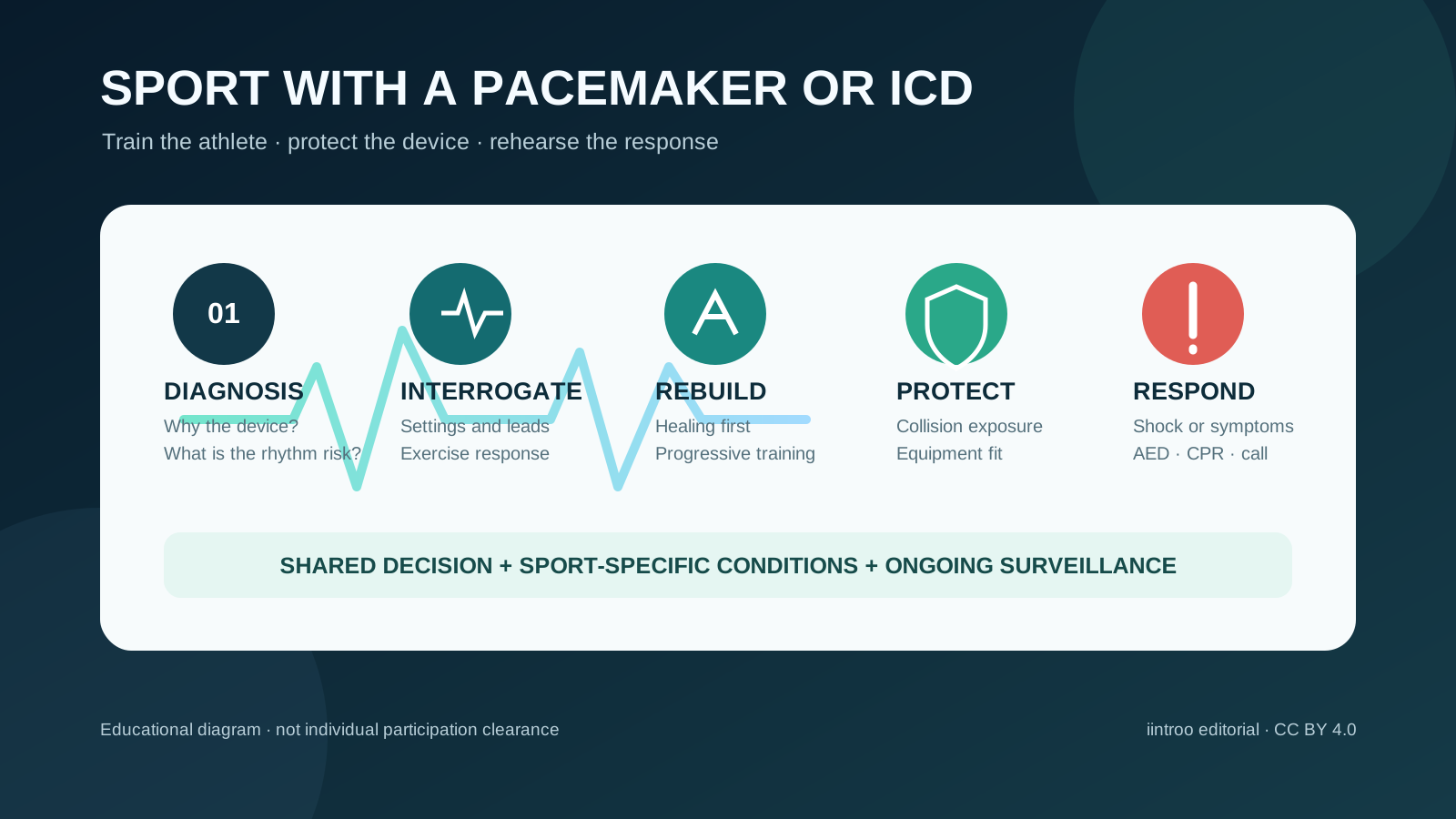
Key points
- The condition that led to implantation can matter more to sport risk than the presence of the device itself.
- Device interrogation, exercise response, wound and lead healing, contact exposure and access to an emergency plan belong in the participation decision.
- A shock, collapse, chest pain, unusual breathlessness, fainting or new palpitations during exercise requires the athlete to stop and follow the agreed clinical plan.
Start with the diagnosis, not only the device label
This guide is for athletes with a pacemaker or implantable cardioverter-defibrillator (ICD), and for families, coaches and sport medical teams. A pacemaker treats selected slow rhythms or conduction problems; an ICD can detect and treat dangerous ventricular rhythms. Neither device cures every underlying heart condition. Cardiomyopathy, channelopathy, congenital heart disease, prior cardiac arrest and other diagnoses carry different exercise questions, so a device card or scar alone cannot decide whether a sport is appropriate.
The 2025 AHA/ACC scientific statement moved away from blanket exclusion and toward expert assessment, shared decision-making and surveillance. It says pacemaker participation can be considered and that participation with an ICD may be reasonable in the right context. That is not universal clearance. The electrophysiology or sports-cardiology team still needs the diagnosis, symptoms, rhythm history, ventricular function, device indication, therapies, sport intensity and consequences of an event before discussing acceptable risk with the athlete.
Check healing, programming and exercise response
Before resuming training after implantation or a generator change, follow the implanting team's restrictions for wound and lead healing rather than using a generic calendar. The 2025 statement includes time ranges for newly placed ICDs, but individual procedures and complications differ. The team may use interrogation, ECG, imaging and an exercise test to check rate response, upper tracking limits, sensing, arrhythmia and symptoms at sport-relevant effort. Programming is a clinical task; an athlete or coach should never change device settings.
Training should then rebuild progressively. Record exertion, symptoms and any device alert, and keep scheduled remote or in-person follow-up. Heart-rate zones may not behave as they did before implantation, particularly when a pacemaker setting or medication shapes the response. Use the intensity method agreed with the clinical team rather than chasing a watch target. New fainting, near-fainting, chest discomfort, unexplained performance loss, sustained palpitations or disproportionate breathlessness should pause training and prompt review.
Treat collision and equipment as separate engineering problems
A collision can injure the athlete, damage the pocket or affect a lead, while a fall may be especially consequential if an arrhythmia or shock occurs. The 2025 statement allows collision-sport participation to be considered with expert counsel; it does not make collision harmless. Discuss the specific position, rules, body contact, projectile risk, harness or strap placement and remoteness. A chest protector may reduce some direct blows but cannot guarantee device or lead safety and should not interfere with required certified equipment.
The prospective ICD Sports Safety Registry followed selected athletes who chose vigorous or competitive sport and found no sports-related death, resuscitated arrest or shock-related physical injury during the reported follow-up, although shocks occurred and lead freedom from malfunction declined over longer follow-up. This evidence informs choice but cannot predict one person's risk: it was observational, participation was self-selected, devices and diagnoses varied, and modern hardware and programming continue to change. Avoid presenting the registry as proof that every sport-device combination is safe.
Rehearse shocks, symptoms and venue response
The athlete, coach and medical lead should know what to do after an ICD shock. Stop activity, move to a safe place and follow the personalised plan. Multiple shocks, a shock with collapse or ongoing symptoms, chest pain, severe breathlessness, injury or failure to recover requires emergency services. Even one shock without persistent symptoms warrants prompt contact with the device team under its instructions. Do not drive, restart training or assume the device has solved the cause without clinical direction.
At higher-risk venues, map emergency access, communication, an automated external defibrillator and personnel trained in CPR; an implanted device does not replace the public emergency response. Carry the device identification and current medicine list while protecting private information. Travel plans should cover monitoring contacts and where specialist care is available. This article does not clear an athlete, choose programming, set a fixed return date or prescribe protection. Those decisions require the treating team and the sport's real conditions.